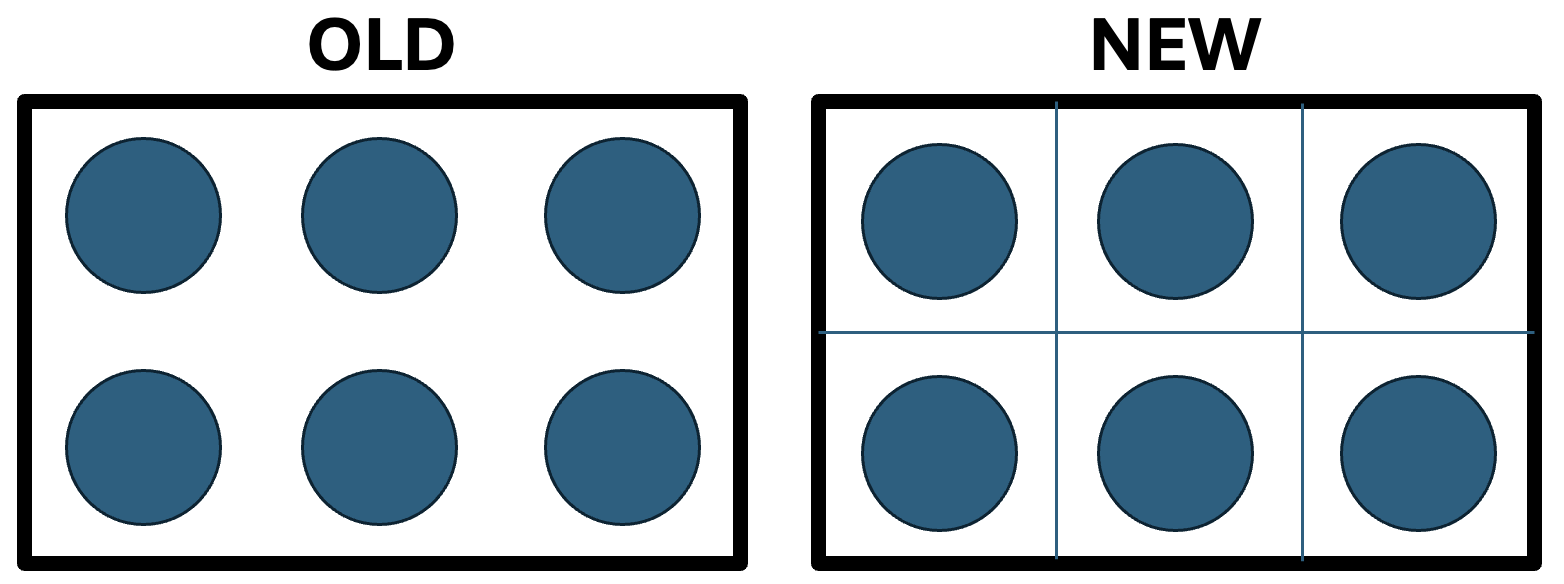
In the old days, the secondary containment around flammable liquid storage tanks could be a single system in which all the storage tanks sat. Today, that is NOT the case. Both NPFA 30 and IFC Chapter 57 require secondary containment to be designed so that an LOPC from one tank cannot affect the other tanks around it. They use the word “subdivided” to specify this.
IFC SECTION 5704
STORAGE5704.2.10.2 Diked areas containing two or more tanks.
Diked areas containing two or more tanks shall be subdivided in accordance with NFPA 30.
NFPA 30, Chapter 22 Storage of Liquids in Tanks — Aboveground Storage Tank...
22.11.2.6 Each diked area containing two or more tanks shall be subdivided, preferably by drainage channels or at least by intermediate dikes, in order to prevent minor spills from a tank from endangering adjacent tanks within the diked area.
22.11.2.6.1 The drainage channels or intermediate dikes shall be located between tanks so as to take full advantage of the space with due regard for the individual tank capacities.
22.11.2.6.2 Intermediate dikes shall be not less than 18 in. (450 mm) in height.
22.11.2.6.3 Subdivision shall be provided according to the requirements of 22.11.2.6.3.1, 22.11.2.6.3.2, 22.11.2.6.3.3, 22.11.2.6.3.4, or 22.11.2.6.3.5, whichever is applicable
This new design will assist in sizing an emergency vent manifolded to a destruction device. Instead of the manifold/header needing to be sized to handle all emergency venting from a single spill/pool fire event, the manifold/header can be sized for a single emergency vent, since ONLY that storage tank would be impacted. And remember, we can ONLY discharge the emergency relief/vent system into a manifold or header when we are sending the flammable vapor to a destruction device; otherwise, the venting/relief discharges to the atmosphere.
These 18″ high intermediate walls are to PROTECT neighboring tanks from over-fill events and leaks – NOT total tank failure. So, as we can see, there is NO requirement that these subdivided containment systems be sized to hold the entire tank plus 10%. Our outer wall of the secondary containment may be taller than 18″ as that wall/volume has to be able to contain the largest tank contents +10%.