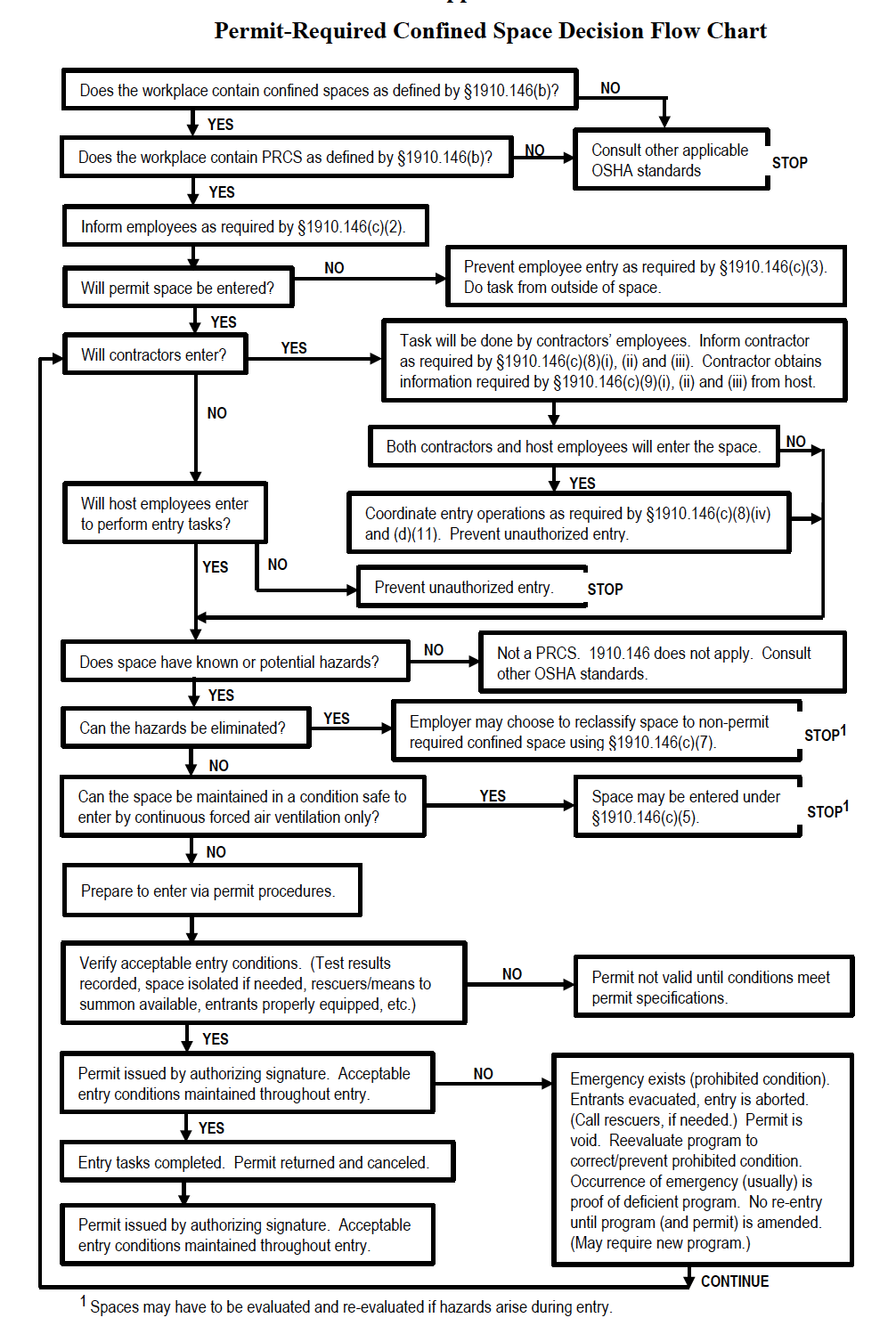
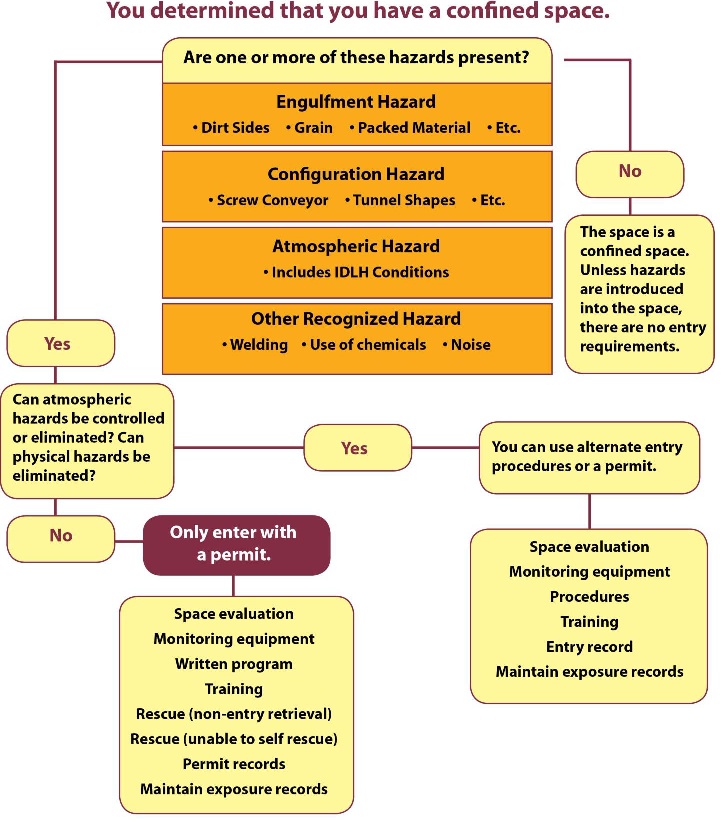
 A permit-required confined space (PRCS) may be reclassified as a non-permit space under the following conditions as outlined in 1926.1203(g):
There is no actual or potential atmospheric hazard within the space.
This means that there are no atmospheric hazards in the space, and none will develop during the entry period. Use of forced air ventilation to control atmospheric hazards is not considered the elimination of the hazard. See standard interpretation.
When looking at atmospheric hazards in confined spaces OSHA is concerned about acute hazards that would impede the entrant’s ability to escape the space. Chronic hazards such as silica, lead, asbestos, etc. would not constitute an atmospheric hazard in a confined space. See standard interpretation.
All hazards of the space must be eliminated.
Typically, this means that the employer can either remove hazards from the space, such as emptying bins, tanks, etc., or the employer can lock out mechanical or electrical hazards of the space. Lockout is considered to eliminate the hazard of electrical or mechanical hazards for the duration of the lockout. Flowable materials (fluids, finely divided solids, etc.) must be “isolated” (see definition in standard) from the permit space in order to eliminate the hazard. See standard interpretation. The employer shall document the basis for determining that all hazards of the space have been eliminated through a certification that contains the following:
Date
Location of the space
Signature of the person making the determination
OSHA should encourage the employer to use the entry permit to document the reclassification to a non-permit space. The entry permit will document that hazard are not there or have been eliminated. This certification is valid as long as the hazards remain eliminated. Once equipment is re-energized the space is again a PRCS. SO/IHs should review these certifications to ensure that they are being conducted each time the hazards of the space are eliminated. The employer is also required to document the basis that all hazards have been eliminated. This could be in a written paragraph, permit, checklist or other form but should clearly explain the hazards of the space and how they have been eliminated.