
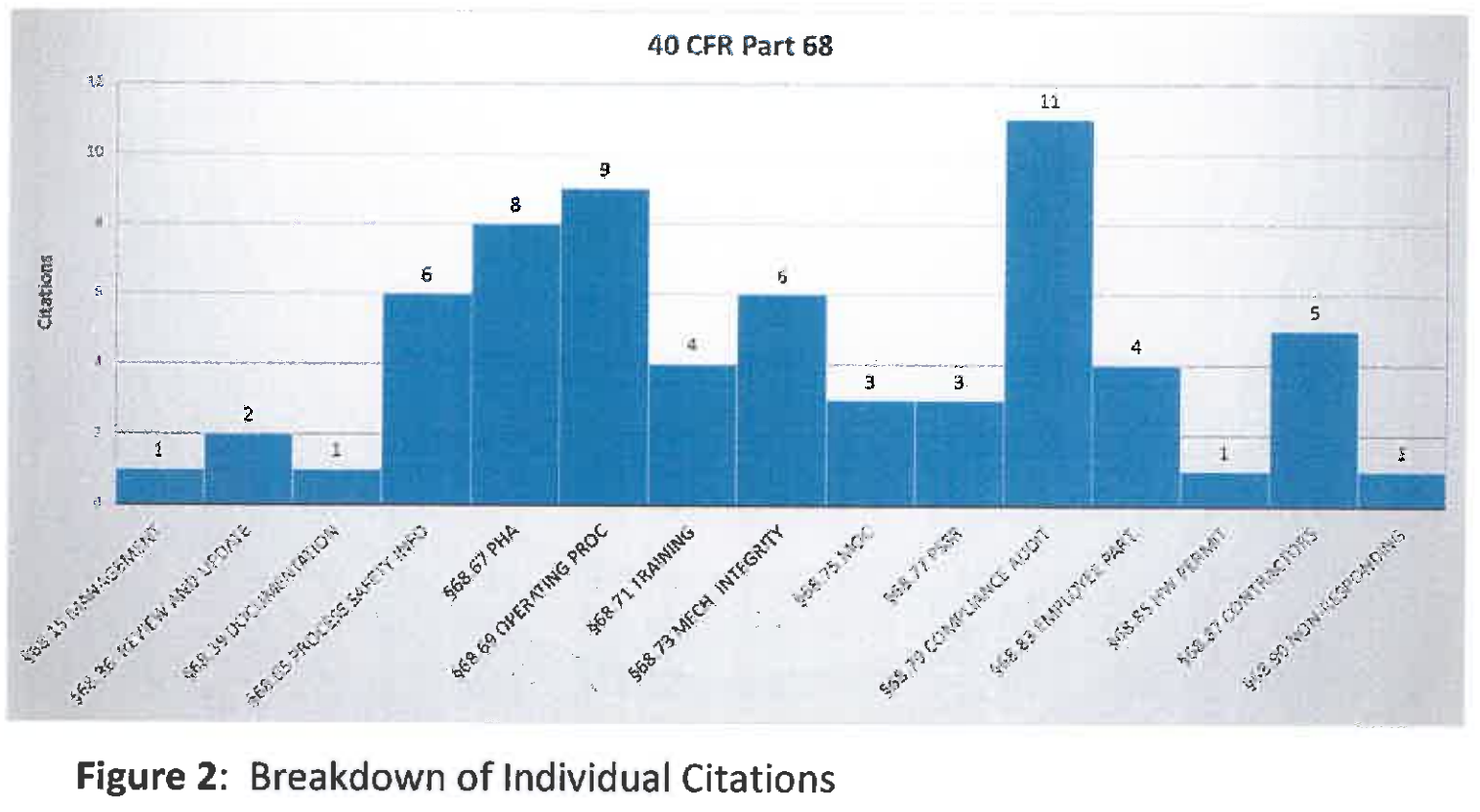
Just an FYI for those of you who have RMP covered processes in the state of NC. Not much different than what we see with federal inspection data, but there are some interesting differences none the less…
Of the two hundred twenty (220) stationary sources under the jurisdiction of this program, EPA identified twenty-one (21) as “High Risk.” For this reporting cycle, eight (8) stationary sources were targeted for inspection for an inspection rate of 38%
Inspections: Of the remaining one hundred ninety-nine (199) stationary sources, forty (40) were targeted for inspection. Of those scheduled, forty-three (43) facilities were inspected for the reporting cycle for a 22% inspection rate
Investigations into accidental chemical releases are initiated by DAQ whenever initial reports appear to involve or have the potential to involve a regulated substance at a facility. Audits are conducted whenever the investigation determines that the incident may have resulted in a catastrophic release as defined by 40 CFR Part 68. For this reporting cycle, nineteen (19} reports of accidental chemical releases involving regulated substances at facilities were identified. Of those, none appeared to have resulted in a catastrophic release. Of those reported incidents:
RMP stationary sources: Eighteen (18) incidents were determined to have occurred at stationary sources subject to 40 CFR Part 68. Of those incidents, fourteen (14) involved the release of anhydrous ammonia. Since none of the reported incidents appeared to result in a catastrophic release, investigations into each of the incidents were limited to ensuring that the subject stationary source conducted incident investigations as mandated by §68.60 or §68.81 when appropriate.
General duty: One (1) incident was determined to have occurred at a stationary source with less than threshold quantities of the regulated substance and therefore only subject to the general duty clause as mandated by the Clean Air Act Section 112(r)(1). Since it did not appear to have resulted in a catastrophic release, investigation into the incident was limited to ensuring that the facility was not subject to 40 CFR Part 68.
For the reporting cycle, fifty-two (52) separate inspections resulted in thirteen (13} compliance actions totaling sixty-five (65) individual citations
Notice of Deficiency (NOD): NODs are issued for “minor violations” observed during the 112(r) inspection at a facility (first offense). Of the compliance actions referenced above, nine (9) resulted in NODs.
Notice of Violation (NOV): NOVs are issued to subject facilities with a prior history of non-compliance, continued non-compliance with issued NODs, and for minor violations at facilities with a history of catastrophic releases. Of the compliance actions referenced above, four (4) resulted in NOVs.
Notice of Recommendation for Enforcement (NRE): NREs are issued to any facility that is in violation (second and subsequent offenses or first offense for a facility with a history of accidental releases), numerous and/or severe violations (first offense and thereafter), and for the failure of a facility to submit a Risk Management Plan to EPA. Of the compliance actions referenced above, none resulted in NREs.
Top 5 Citations:
#1 – Compliance Audits (11)
#2 – SOPs (9)
#3 – PHA (8)
#4 – PSI and MI (tied with 6)
CLICK HERE for the full 2016 report and I highly recommend you read the full report; they have done a really nice job identifying and analyzing risk.