
INCIDENT OVERVIEW
An ammonia release resulted in the temporary shutdown of an ammonia plant in an industrial food processing facility.
Ammonia refrigeration systems are designed to operate at 250 pounds per square inch gauge (Psig). The major components of the system like compressors, evaporators, liquid receivers, piping, and fittings, etc. are installed in a machinery room. The compressor sucks refrigerant gas into a cavity, gradually reduces the volume of the cavity, and discharges the refrigerant as a high-pressure gas. Lubricating oil is very significant to keep the compressor in good operating condition. To prevent refrigerant gas and oil leakage from the compressor, a reliable mechanical seal assembly is used for the shaft seal of the rotor. A mechanical seal assembly is mainly composed of a “rotating ring” installed on the rotor shaft and a “stationary ring” installed in the seal cover. The rotating ring rotates with the shaft and slides against the stationary ring while maintaining a micron class gap. The lubricating oil provides a seal for this micron class gap. A machinery room is an airtight room that is equipped with ammonia detectors. The ammonia detector automatically starts the ventilation system and also actuates an alarm upon ammonia detection.
FAILURE SCENARIO(S)
In the machinery room, the ammonia from the compressor was released through the shaft seal during the night time, which triggered the audio ammonia alarm.
The ammonia monitor located outside the machinery room initially showed 500 ppm and then suddenly dropped to 98 ppm, this could happen as the ammonia detector was just above the compressor and a sudden release like a cloud of ammonia may have triggered the detector to the highest reading.
A refrigeration maintenance contractor was contacted. The refrigeration contractor’s personal monitor was showing 3ppm.
FACTS AND EVIDENCE
Plant activities:
There are two compressors in this system. The main compressor is mostly being operated and the other compressor is a backup compressor. The backup compressor was rarely used, not more than 5% of the time.
The compressors are programmed so that whenever the main compressor will shut down then the backup compressor will automatically start.
The main compressor had an automatic shut down on high oil temperature for a few reasons but most likely interruption of ammonia to the oil cooler as it fed the system with ammonia to cool the oil. Thus, the seldom-used backup compressor was automatically started.
The backup compressor had not been used for a long time, so the oil in the seal reservoir wasn’t monitored and there was not enough oil in the seal reservoir.
Leak detections:
The maintenance contractor found the ammonia leak using his personal monitor.
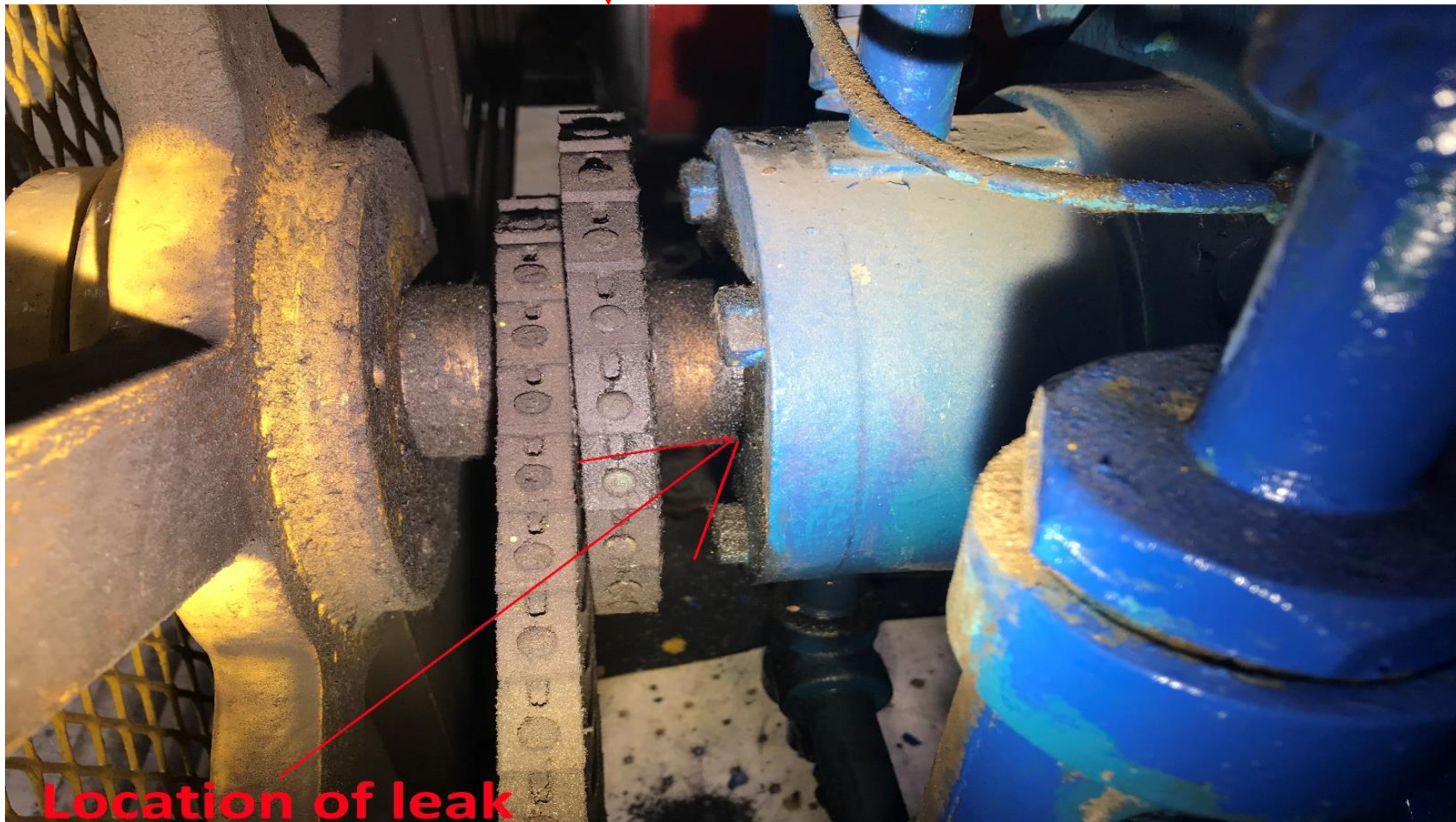
The leak was found at the shaft seal of the backup compressor.
The maintenance contractor filled up the oil in the seal reservoir.
The ammonia concentration came down to zero in the room.
The backup compressor was running normal after the leak was fixed.
CAUSES AND CONTRIBUTING FACTORS
The cause of the ammonia release was very likely due to a lack of lubrication between the compressor shaft seal faces. This caused the seal to fail allowing ammonia to be released through the micron class gap between the seal faces.
The lack of seal lubrication was due to a low oil level condition within the compressor seal reservoir.
A contributing factor was that there was no monitoring system in place for the seal reservoir oil level.
Source: https://www.technicalsafetybc.ca/sites/default/files/alerts/C%2015744-928694%202020-AP-16.pdf