
Several years ago, we discussed this picture in terms of a Relief Design Basis, the NH3 vent header sensor placement in terms of NFPA 70 HAZLOC, and the risk of doing maintenance/calibration on the sensor when the process is live. As usual, I got some nice feedback, and the usual haters chimed in that I was off my rocker once again, stating their usual mantra… “that is industry practice and how they are all done.” Well, I just got word that the scenario I mentioned in 2017 hospitalized a contractor with serious injuries. The set up was NOT the one shown below, but darn near exactly like it: downward discharge, the sensor and control panel were just under the RV discharge, and they were both located on the roof (e.g., out of ear-shot of the machinery room alarms). The process was live, and the contractor was called in to test/calibrate the header sensor as they had just had a release via an RV, and the header alarm did not actuate. Here is the image from my 2017 post and what happened last month:
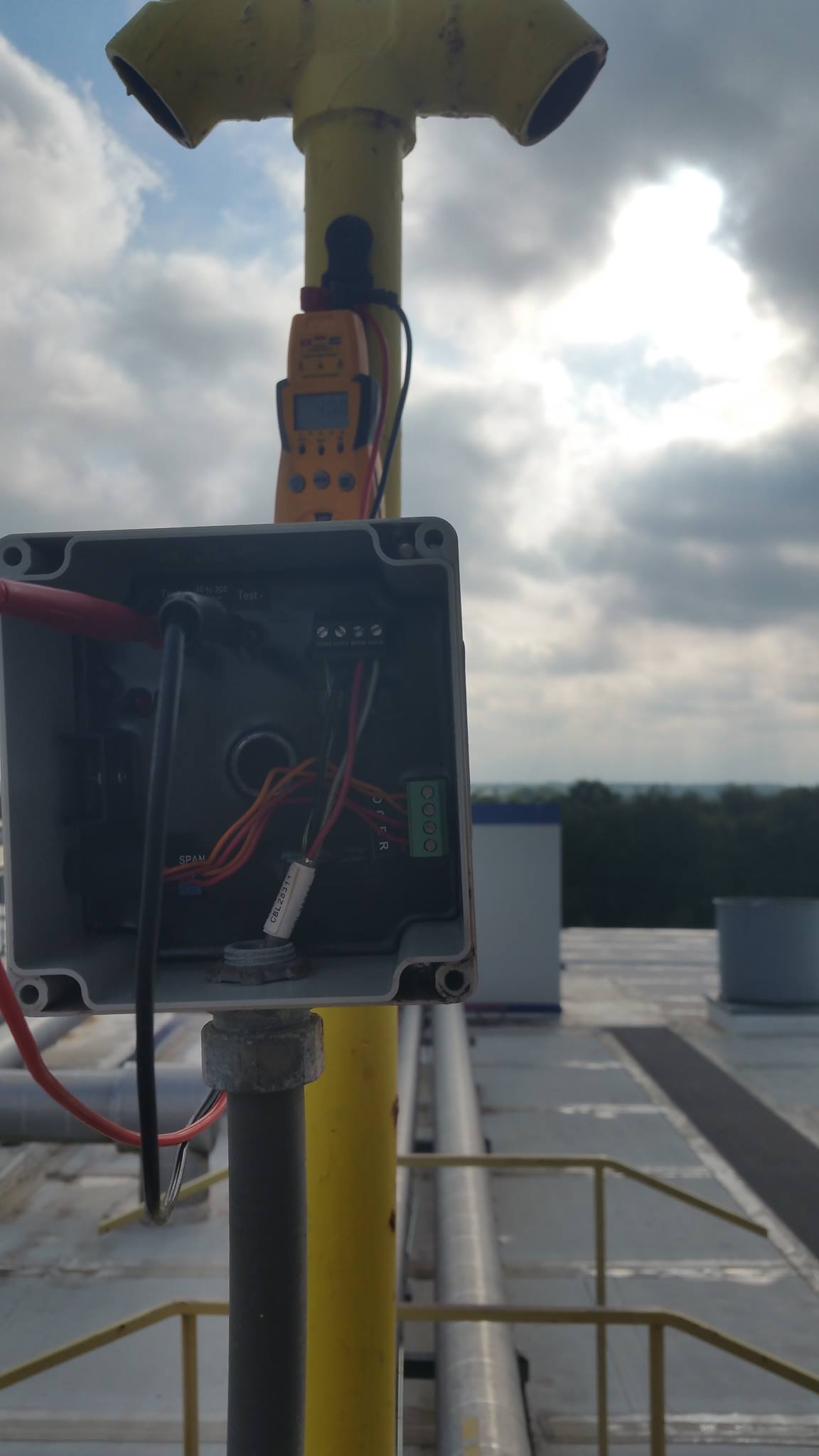
The contractor, not one qualified by the systems vendor for this work, was standing at the control panel troubleshooting. The process was live and was “acting funking” as it had since the day of the release a couple of days prior to his incident. The weather was reaching 110°F Heat Index, so it was super hot and humid. The system was at max capacity as the compressor high-pressure alarms were sounding routinely through the days leading up to the release and since the process was restarted since the emergency shutdown. The contractor, one who has worked on the process before – BUT NOT the header detection system or any type of NH3 detection system, was on the roof working on the header alarm system. Right next to him are two (2) evaporative condensers, which are at full capacity (water and fans running), so it was rather loud.
Unbeknownst to anyone on 1st Shift, the 2nd shift crew leader had made the decision, without any MOC or approvals from management, to silence the compressor alarms; however, how he/she did this also compromised the high-pressure interlock. NOTE: I am not privy to how this was done, and it was intentionally not shared with me as the business felt it was not necessary for the investigation involving the contractor’s hospitalization and because “OSHA did not ask how”. (see my head exploding!)
We do know this was done with foul intentions as he did not make a note of this in the logbook and although the facility is not super disciplined when it comes to MOCs, they are when it comes to their refrigeration logbook.
As the contractor was working on the header detector, there was no high-pressure alarm (even if it had sounded it was very questionable if the contractor would have heard it) and no shutdown interlock and thus the relief valve on the compressor lifted. The statement from the contractor said he knew something had changed as there was a vibration in the pipe that had not been there moments before, but before he realized what had happened, he was engulfed in ammonia. He fell off his ladder and does not remember anything after that. It was estimated by the facility that this contractor laid on the roof for 20-30 minutes before he was discovered. He suffered respiratory injuries as well as skin and eye injuries. Spent three (3) in the hospital and has now informed his employer he will be filing suit against his employer and the host facility. He has not been released for work as of this posting (to our knowledge).
There are a number of failures that led to this contractor’s injuries:
1) The relief header DISCHARGE MUST BE UPWARDS and UNOBSTRUCTED! Had this design been met, this contractor would have had ZERO exposure to NH3 (Line of Fire!)
2) No contractor control procedures in place so ONLY the shift lead knew the contractor was on the roof working on the header detector
3) Deactivation of a Safety Instrumented System(s) without a MOC
and my biggest issue
4) running the process OUTSIDE its SAFE UPPER LIMITS on a routine basis
5) not addressing the issues that led to the previous emergency shutdown, before returning the process to operation.