
 A company was fined $200,000 for a chlorine leak incident on Sept 4, 2016, in which seven people were taken to hospital. The incident involved a chlorine leak in a cylinder stored in a chlorine storage facility. The leak triggered an alarm from one of the facility’s chlorine detectors and a worker activated the chlorine gas emergency scrubber and exhaust system. Two workers donned protective equipment and attempted to stop the leak but were unsuccessful. The facility then called the local FD for help at around 9:20 a.m.
Three fire engines, four hazardous materials vehicles, three ambulances, and two support vehicles were dispatched to the scene. A specialist team plugged the source of the leak, while another team used three water jets to dilute the chlorine vapor in the air. Operations ended at noon on the same day.
Two FD officers and five members of the public outside the workplace were momentarily exposed to the leaked chlorine gas, which is corrosive. They experienced problems ranging from eye irritation to difficulties in breathing and were taken to a hospital before being discharged on the same day.
Investigations revealed that the company had failed to…
maintain the integrity of the plug of the container in which the chlorine was stored. The plug was severely corroded, which resulted in the leak.
The company also failed to implement a detailed and effective emergency response plan. The emergency response plan for a chlorine leak scenario assumed that the chlorine would leak slowly as a gas instead of as a liquid under pressure. It did not have a documented emergency response for a liquid chlorine leak.
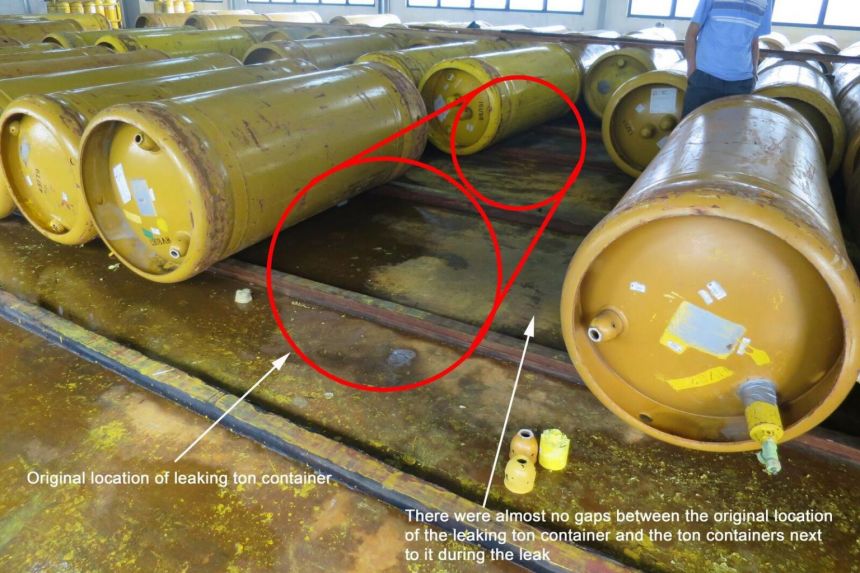
On the day of the leak, the container should have been rolled so that the leaking plug would be positioned at the top. This would have converted the liquid leak to a gas leak and slowed the rate of the leak significantly to allow responders to approach the container and seal the corroded connection to stop the leak. However, when the incident occurred, the worker who responded could not roll the leaking container tank as it was stored among many other containers, with no space to maneuver it properly.
The facility neither installed its emergency scrubber and exhaust system according to design nor maintained a safe air change rate in its workplace. Investigations also found that the rate at which the contaminated air was extracted did not meet general ventilation standards.