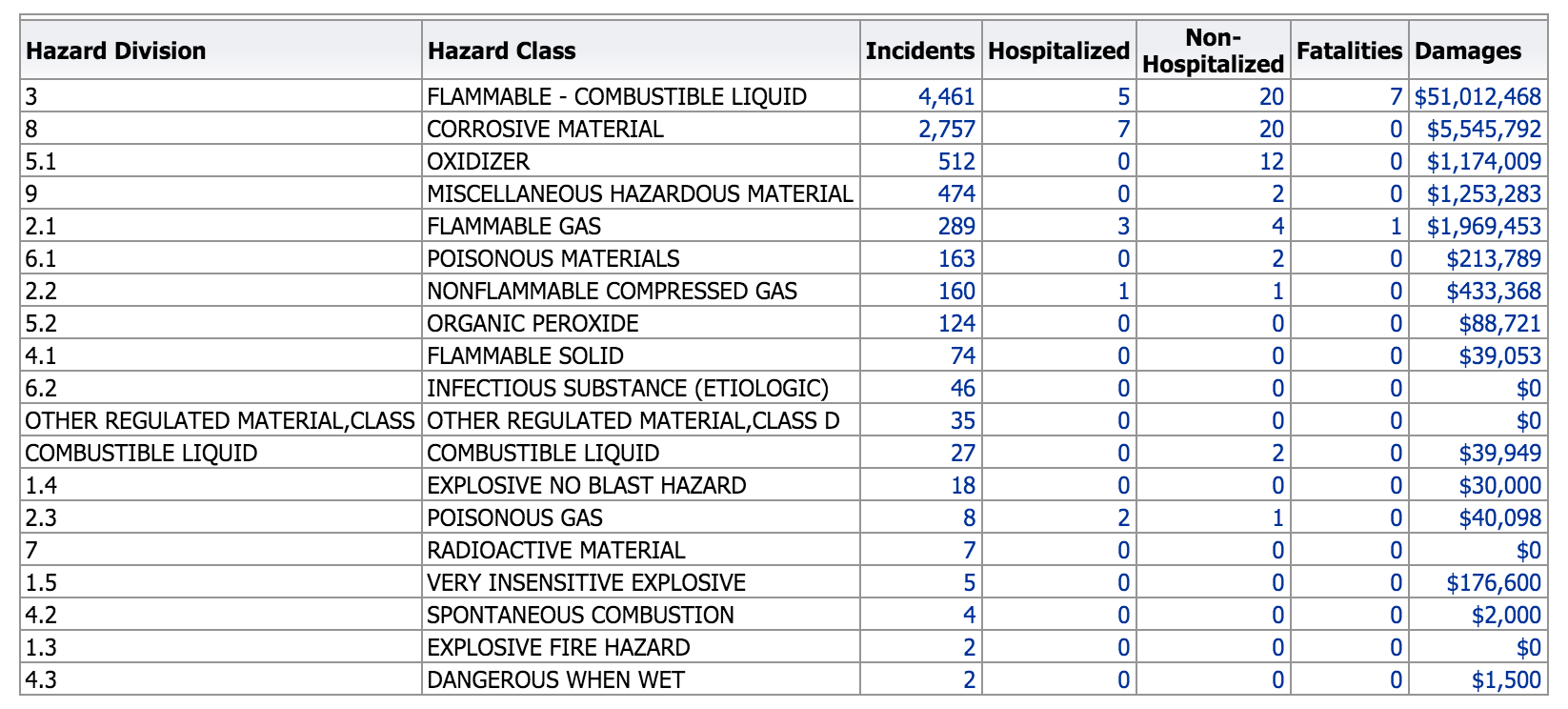
In 2015 we saw six (6) unloading accidents that involved serious injuries to workers, with some of the workers injured being those who were in the WRONG place at the WRONG time. Here is a summary of these six (6) incidents. PLEASE take notice that 4 of the 6 incidents involved UNLOADING HOSES. These temporary connections are almost always our weakest link in our process and such we MUST give these activities and their connections SPECIAL ATTENTION…
#1 Pressurized Hose (CLICK HERE for DOT report)
Hydrite blends and hauls products for Washing Systems to customers of Washing Systems. A representative from Washing Systems typically meets the Hydrite drivers at Washing System customer facilities. Hydrite’s driver, Rob XXXXX, arrived at Cintas in Rockford, IL at 7:50 a.m. on 1/13/15 with Tanker LT1796 to deliver Advance, Structure, and Express
from a 3 compartment trailer. Mike X of Washing Systems met Rob X at the Cintas plant, and they discussed the product delivery amounts. Mike told Rob that they could not off-load all of the Structure because there would not be enough room in the tank. Mike also told Rob that the Express would go into 2 tanks and that they would start with Advance, then Structure, and end with Express. By delivering in this order, which is non-hazardous to caustic, the same transfer hose could be used.
Rob unloaded the Advance first. The air from blowing out the line was released through the receiving tank. Rob then transferred all of the Structure except for approximately 100 gallons. At that point, Rob shut the valve at the tanker and the storage tank. Rob “walked the hose back” to the bleeder valve (Chicago fitting at the tanker discharge), which was set up to deposit residual material into a bucket. Mike from Washing Systems disposed of this material in Cintas’ drain.
Lastly, Rob (wearing full PPE – suit, gloves, boots, goggles, and face shield) connected the hose to the Express compartment and on the other end connected to the smaller Express tank. Rob transferred 550 gallons of Express to the small Express tank and closed the inlet valve to the small Express storage tank. Rob then went to the tanker and shut the discharge valve at the tanker.
Rob and Mike discussed how to bleed off the pressure in the line. Rob decided to run the excess into the storage tank. Rob connected the air to the bleeder connection at the tanker discharge and opened the bleeder valve to blow out the line. Rob walked back inside the Cintas plant. Mike was located at the inlet valve to the small Express storage tank, and Mike told Rob that he had already opened and closed the inlet. Mike told Rob that the line was empty and to switch the line to the other tank. As a result, Rob went outside to move the air line from the bleeder to the tanker compartment. Rob went inside to move the hose to the 2nd Express tank. When Rob loosened the second ear, the hose still had enough pressure that it blew off the connection and blew mist of the Express product to where Mike and Keith (Cintas) were standing – about 40 feet away. Evidence of the material on the floor could be seen up to 50 feet away. Mike and Keith were both exposed to this material but were not wearing full body PPE. (Per Mike, Cintas does not require full body PPE if an employee is standing 20 feet away from the transfer site). Mike was wearing safety glasses. Mike and Rob helped Keith to a safety shower where Mike and Rob assisted Keith.
The root cause of the incident was failure to adequately bleed the line (failure to follow our standard operating procedure TR013AF). Although the driver has been trained on these procedures, and has successfully done this for years, this failure resulted in an injury. That driver has been disciplined. All drivers at the MK facility have been retrained on the need to bleed pressure. The line could have been bled by disconnecting the air to the bleeder, and then using the bleeder valve to bleed the excess pressure. Drivers who are actively unloading must physically verify that the line has been bled before it is disconnected. In addition, the Cintas employee did not use an eyewash, and instead used Coca Cola, which is acidic. Drivers were reminded that if they are involved in a bulk transfer, they must locate the nearest eyewash and safety shower in addition to wearing the required personal protective equipment.
#2 Propane Hose Connection (CLICK HERE for DOT report)
The employee did not get the fill nozzle securely tightened and when he opened the nozzle the pressure blew it off the cylinder valve he was getting ready to fill. The propane sprayed the right leg and right side of waist and groin area. The employee was hospitalized for observation and discharged on 07/31/15. The employee sustained 1st and 2nd degree propane freeze burns. He has not returned to work. The employee will be trained on filling cylinders per the Ferrellway.
#3 Hose Coupling Connections (Human Error) (CLICK HERE for the DOT Report)
During unloading of SULFURIC ACID WITH MORE THAN 51 PERCENT ACID, the CTMV driver moved the line and the line uncoupled, spraying the driver. The driver then walked away to rinse the material off. The driver was not able to close the valves to mitigate the release due to injuries sustained from the hazardous material. All remaining material was
drained out of the CTMV through the uncoupled unloading line. Subsequent investigation revealed that the coupling was not defective, and that the driver did not fully tighten the coupling prior to unloading the hazardous material.
#4 Used and CAPPED hose still under pressure (CLICK HERE for the DOT Report)
Driver was delivering load of styrene to goodyear tire and rubber. Goodyear operator came out and told trimac driver to ground his unit and the wheels. Operator directed trimac driver to cut the load cable off of the discharge cap. The goodyear operator said he would set up the system to off load the product. Trimac driver went to the hose rack and saw that the end plug of the customer off loading hose was chained to the hose rack. Trimac asked if he would remove the chain and take the plug out with the customer owned hose on the ground. He was instructed to take the hose out with it chained to the rack. Trimac driver bent over hose (about 2.5 feet off the ground) and removed the end plug. There was a small amount of product still in hose under pressure. The customer owned check valve had leaked back into the hose. The operator did not relieve all the pressure in the customer hose. The styrene under pressure sprayed from the hose. The trimac driver had product sprayed on his face, into his eyes, and on his chest and waist area.
#5 WRONG MATERIAL to WRONG TANK (CLICK HERE for the DOT Report)
Bleach tote labeled incorrectly (330 gallons) “Muriatic acid tote”. Driver loaded incorrect tote onto the truck and arrived at destination & began pumping muriatic acid into bleach tank. (700 gallons) (approx 60 gallons Pumped into 700 gallon tank). Once driver realized product was incorrect he stopped the pump & evacuated area. Emergency response was called & plant was evacuated.
#6 Tank Overflow (CLICK HERE for the DOT Report)
PVS-Nolwood was transferring 50% sodium hydroxide to the customer’s 1000 gallon storage tank. PVS-Nolwood was pumping product from IBC’s to the customer tank using an air diaphragm pump. Product was released from the tank overflow pipe and into the tank secondary containment The pump was shut down immediately. Approximately 1-2 gallons was discharged into the tank’s secondary containment.The hose used to fill the 1000 gallon tank was filled with 50% sodium hydroxide and needed to be purged of product. During the purge process 8-10 gallons of product was released into the box trailer and the customer’s shop floor. Absorbent pads were used to soak up liquid product.
1. Review and update unloading process at customer site
2. Review and update as needed the driver safety checklist
3. Train drivers on updated process and procedure as appropriate
4. Review and discuss tank capacity and transfer operations with material transfer personnel
5. Review Stop Work activities or actions with material transfer personnel.