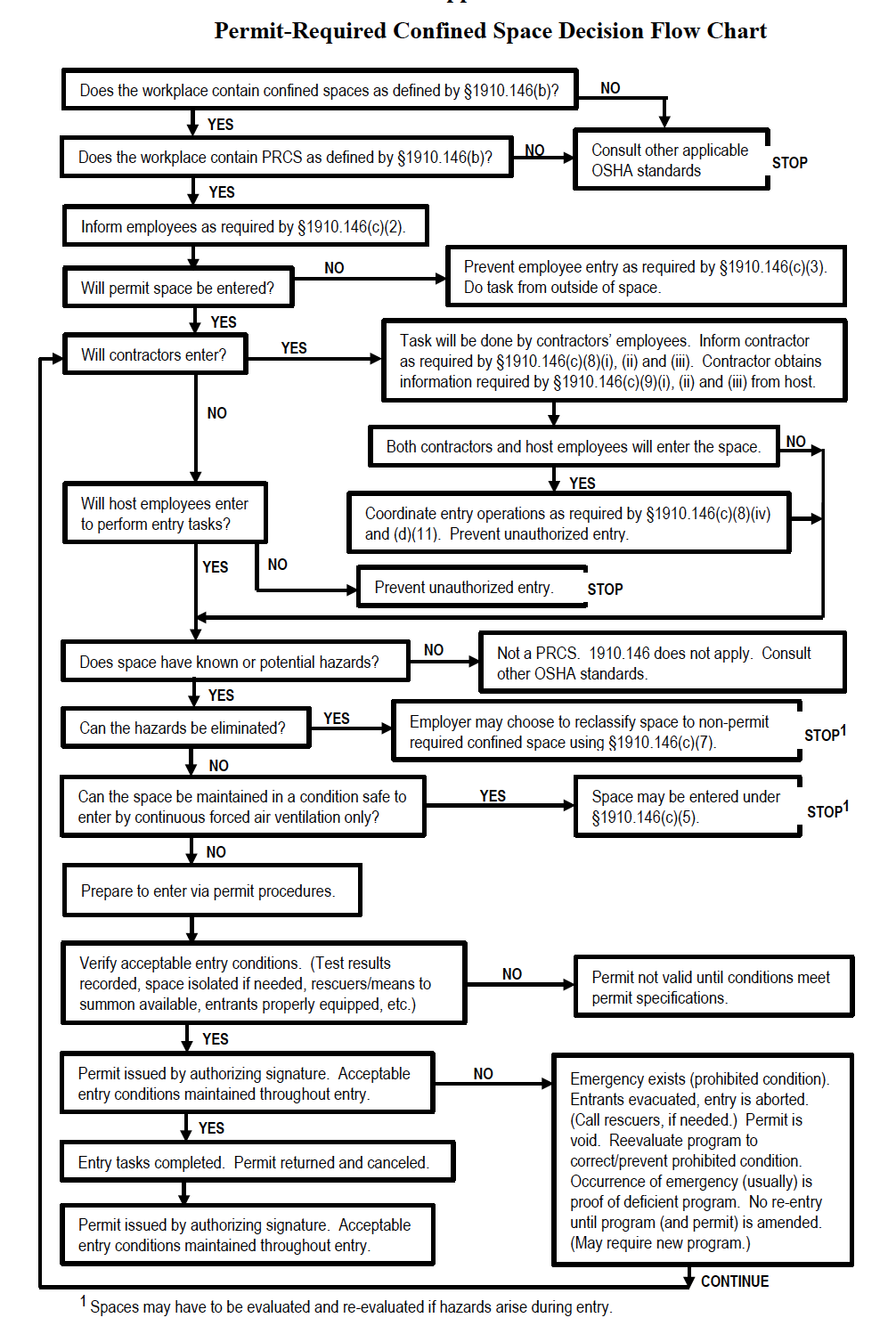
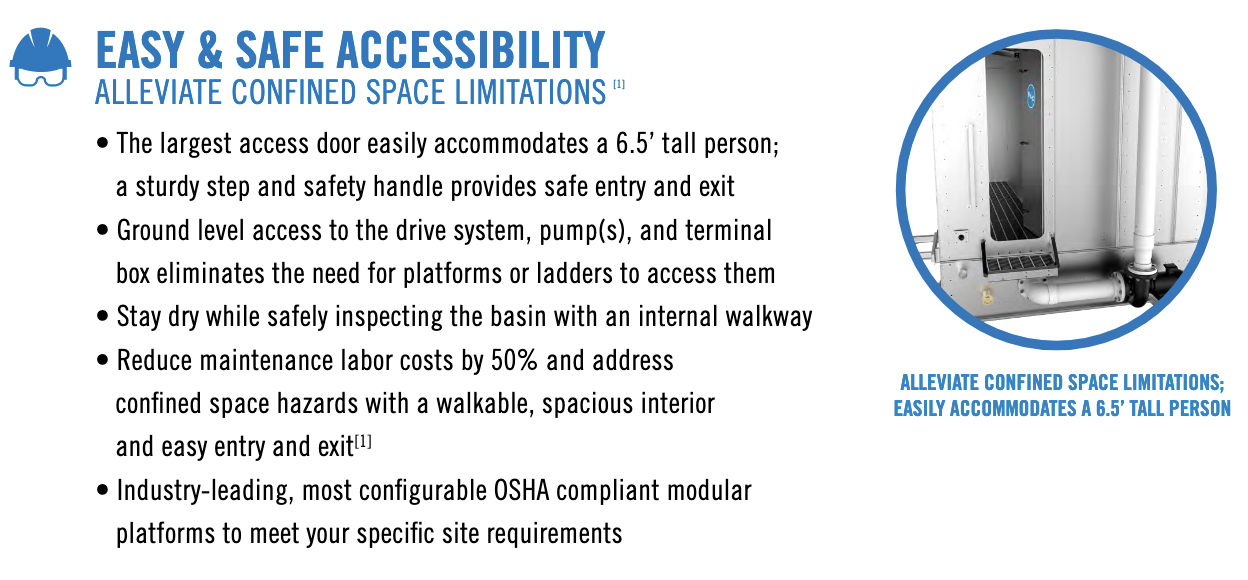
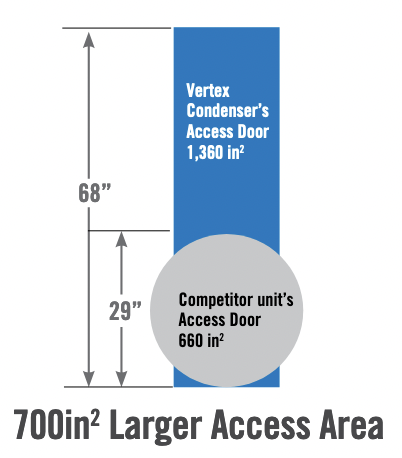
This is some slick marketing as the condenser is being marketed to AU and NZ, but it is a USA-based company. The manufacturer claims its doorway “alleviates confined space limitations” based on its size. The door is stated to be 68″ tall and 20″ wide (e.g., 1,360 in2). So does this door alleviate confined space requirements? To be fair, I will let my AU and NZ SAFTENG members make those decisions at their facilities in those countries, but inside the USA, that condenser is a confined space. And here’s why:
 |
 |
2. Does the fact that a space has a door mean that the space does not have limited or restricted means of entry or exit and, therefore, is not a “confined space”?
A space has limited or restricted means of entry or exit if an entrant’s ability to escape in an emergency would be hindered. The dimensions of a door and its location are factors in determining whether an entrant can easily escape; however, the presence of a door does not in and of itself mean that the space is not a confined space. For example, a space such as a bag house or crawl space that has a door leading into it, but also has pipes, conduits, ducts, or equipment or materials that an employee would be required to crawl over or under or squeeze around in order to escape, has limited or restricted means of exit. A piece of equipment with an access door, such as a conveyor feed, a drying oven, or a paint spray enclosure, will also be considered to have restricted means of entry or exit if an employee has to crawl to gain access to his or her intended work location. Similarly, an access door or portal which is too small to allow an employee to walk upright and unimpeded through it will be considered to restrict an employee’s ability to escape. OSHA published a technical amendment to the preamble in Federal Register / Vol. 59, No. 213 / Friday, November 4, 1994, page 55208.