
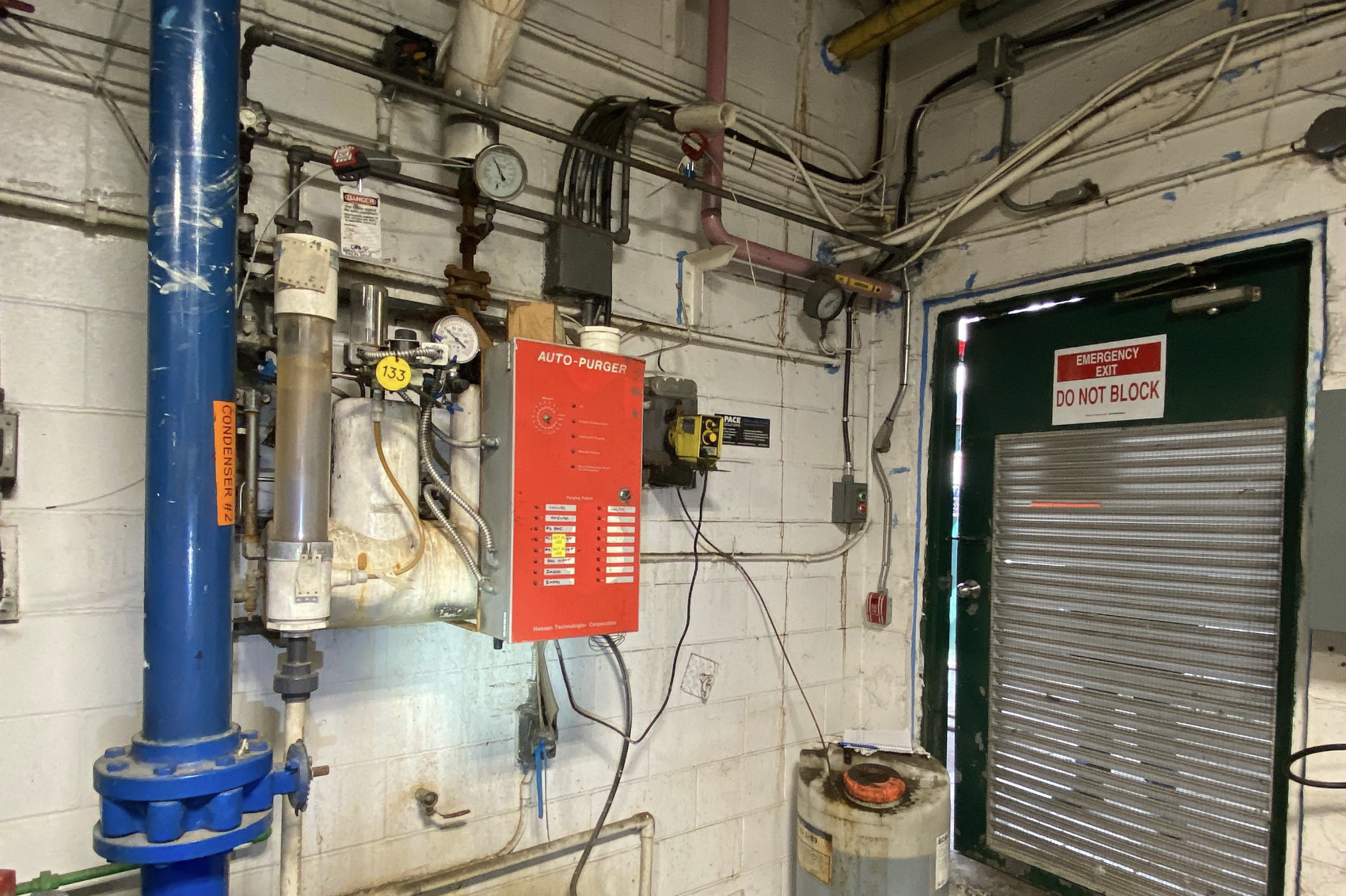
 Two workers received 1st and 2nd-degree chemical burns after an ammonia leak at a food processing facility. An employee of the facility attempted to isolate the auto-purger and turn it off but was exposed to ammonia. A refrigeration technician then entered the mechanical room wearing a short-sleeve t-shirt and received chemical burns.
One individual received first and second-degree chemical burns on their head, ear, neck, and upper chest from contact with ammonia.
A second individual received first and second-degree chemical burns on the forearm and bicep of their left arm from contact with ammonia.
Approximately 6.7 lbs of ammonia leaked from the refrigeration system into the facility’s mechanical room.
Key Points:
- The auto-purger had been operating in the facility for over 30 years. It was not included in a preventative maintenance schedule, and no documented maintenance had been recently performed on the auto-purger by the facility employees or the facilities refrigeration contractor.
- The unit had been experiencing failures that allowed ammonia to escape into the mechanical room three times previously in the four months leading up to the incident.
- Recommendations for a major overhaul or replacement of the auto-purger had been made twice prior to the incident, on April 1st and June 19th, 2021.
- The facility had not developed plans or taken any actions to address the overhaul or replacements needed.
- The unit had recently been tested, adjusted, and put back into operation three times by the refrigeration contractor prior to the incident.
- 2 days before the incident, while following up on a previous ammonia release, the contractor found, and drained oil from the auto-purgers condenser. The contractor again recommended a preventative maintenance and oil drain service, and also recommended planning and budgeting for a major overhaul or replacement.
- On the day of the incident, the auto-purger began venting ammonia into the mechanical room again, and an employee supervising the system evacuated the facility and called the refrigeration contractor. The contractor was unable to attend the scene for over an hour, and the employee attempted to isolate the auto purger and turn it off to stop the leak.
- The valve for the water supply line to the auto-purger was closed, and freshwater did not enter the bubbler to purge the ammonia-saturated water into the drain. The top cap for the bubbler had been removed, and the bubbler tube was open on the top.
- The knob for the control switch was missing from the auto-purger, and the control switch was the only switch in the vicinity of the auto-purger that would disconnect power to the unit to turn it off.
- The employee entered the room alone, as they were the only authorized person on shift at the time. They isolated two valves but did not turn the unit off because they did not know how.
- While observing the pressure gauge on the top of the unit after the valves were closed, ammonia saturated water spayed out of the top of the bubbler tube, burning the employee on their head, neck, and upper chest.
- The refrigeration technician arrived later and entered the mechanical room wearing a short-sleeved t-shirt and having exposed skin on their arms. The technician opened the water valve to flush the ammonia saturated water out of the bubbler, and when water flowed into the bubbler it reacted with the ammonia and splashed up, burning the technician on the exposed skin of their arm.
CLICK HERE for the Technical BC Report with photos