
 |
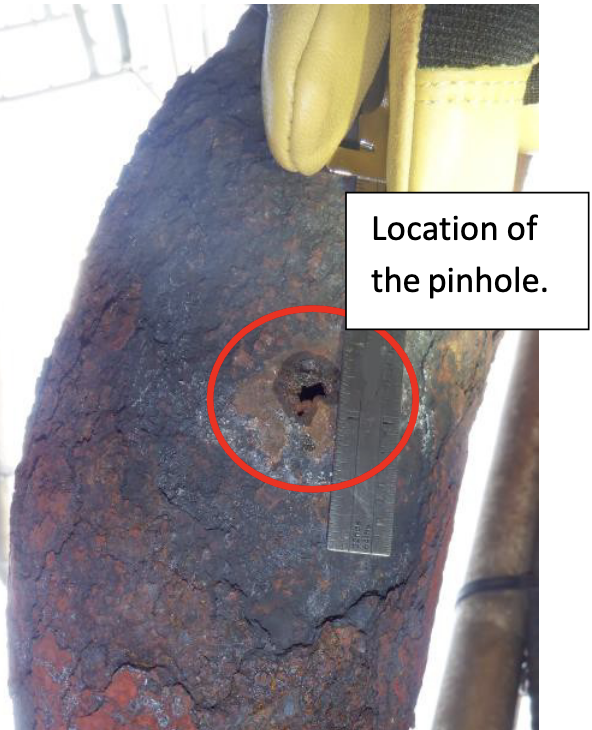 |
Light hydrocarbon was released through a pinhole breach of an insulated process pipe. A plant operator detected an abnormal hydrocarbon odor and immediately responded as per site emergency protocol. A localized possible breach was identified, and the processing unit was safely shut down for further investigation. A 3-inch insulated pipe connecting process piping to a pressure safety relief valve. The pressure relief valve is designed to open to relieve excess pressure into a Flare system if an emergency overpressure occurs. |
Failure scenario(s):
Corrosion under insulation (CUI) on carbon steel piping resulted in a leak of light hydrocarbon. The process pipe operated within the CUI temperature range (Approximately 115°C) and in a marine environment.
Facts and evidence:
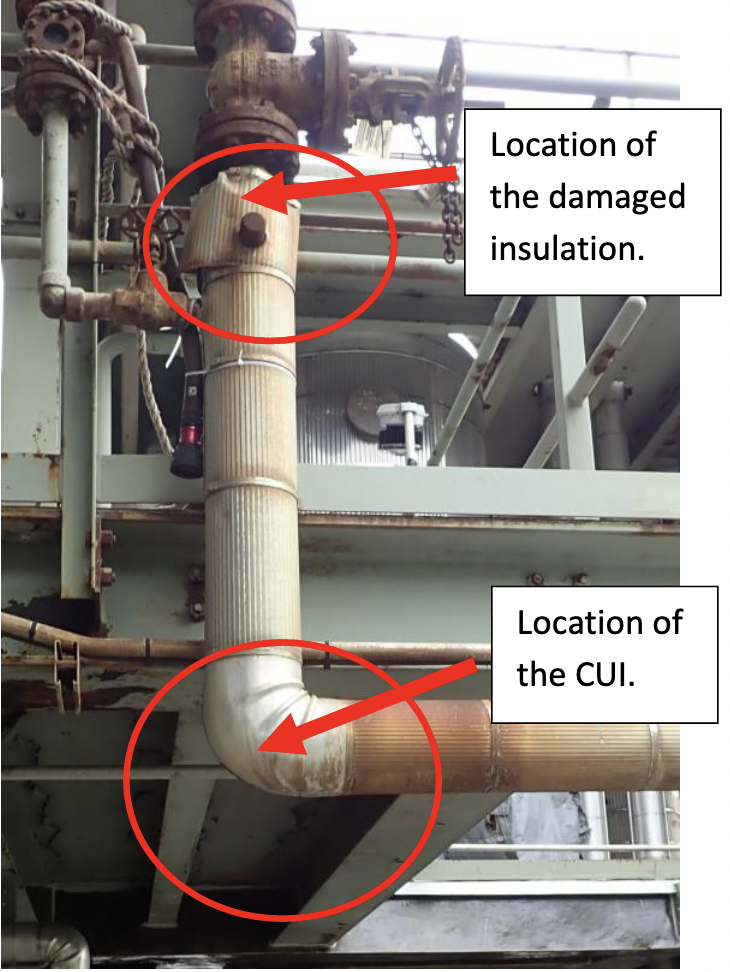
Upon removing the insulation, an inspection of the pipe wall verified external thinning of the metal had occurred at the sweep of the elbow, resulting in a pinhole breach. The damage was consistent with corrosion under insulation (CUI), which is external damage to insulated metallic components and equipment. Damage is caused by moisture ingress through the insulation material. Carbon steel and low-alloy steels corrode in the temperature range between -5°C and 175°C (25°F and 350°F). The facility operates in a marine environment which increases susceptibility to CUI damage, the location of external damage was aligned with a low point where moisture would collect if the insulation were damaged. Insulation damage was identified on the piping above the leak location. It was confirmed that the safety relief valve did not lift and operate as designed. It was confirmed that the facility’s inspection strategy meets or exceeds industry standards and that a dedicated maintenance team was in place for repairs.
CLICK HERE for the full report