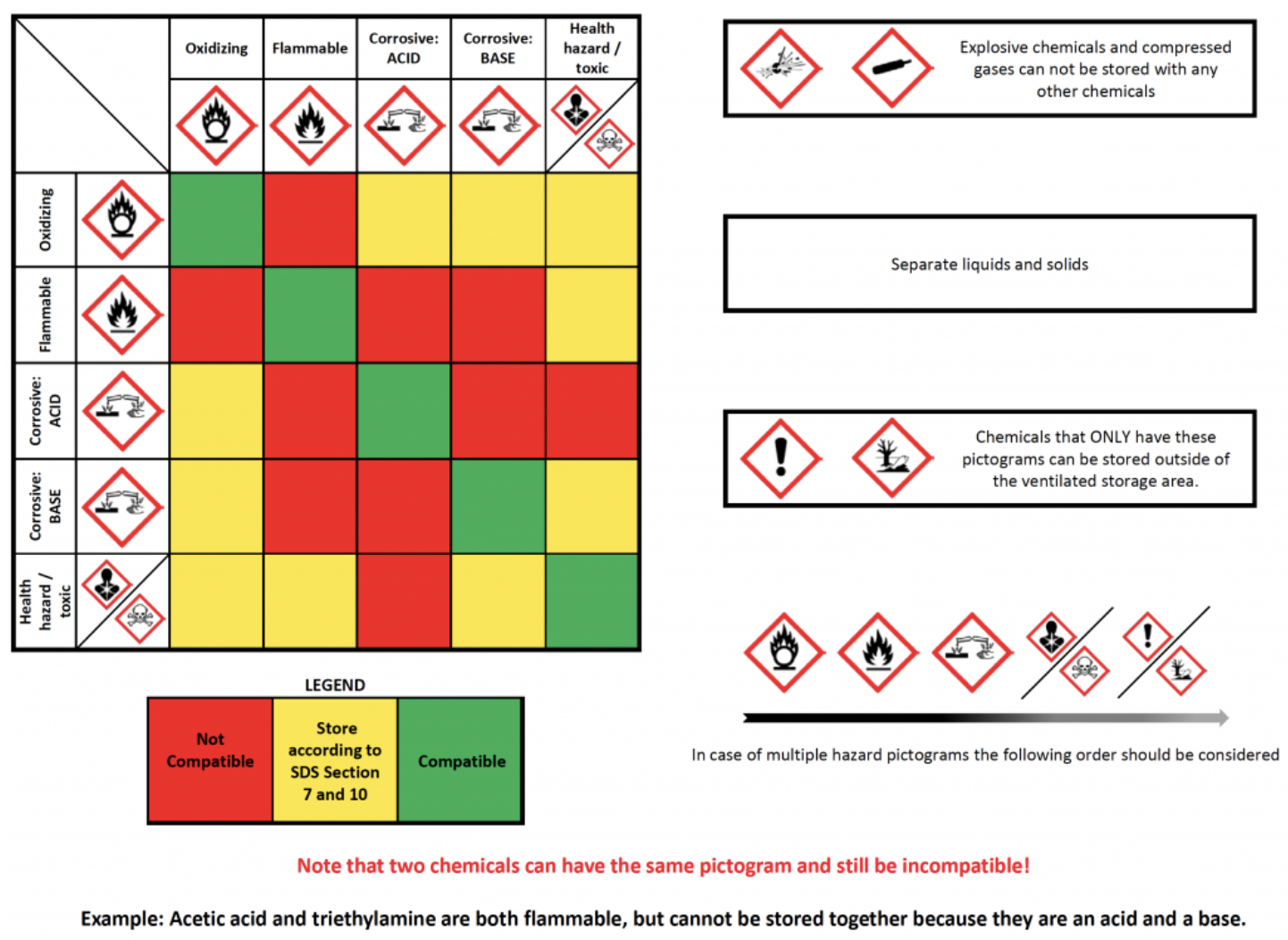
Safe storage, handling, and transfer of hazardous materials is key to reducing chemical accidents and dangerous mixtures of incompatible materials. Close storage of incompatible chemicals could create a risk of fire, explosion, or release of toxic gases and fumes. Storage locations should be according to the fire code, have proper fire protection, and are structurally appropriate.
The Emergency Planning and Community Right to Know Act (EPCRA) and Risk Management Program (RMP) General Duty Clause requires owners and operators of facilities with extremely hazardous substances (EHS) to manage their chemicals safely and develop safety precautions such as instituting maintenance, monitoring, and employee training.
When visiting hazardous material facilities, indicators of a well-maintained storage area are:
- Visible and clearly legible labels
- Storing like chemicals with like chemicals
- Safety alarms/interlocks and secondary containments are in proper working order
- Facilities have policies on hazardous material storage, handling, disposal, maintenance, and monitoring in place
- Warnings and cautions for process chemicals and consequences for process deviations are clearly visible
- Employees are aware of chemical and reactive hazards, access to safety data sheets and emergency plans
- Tanks, pipes, and valves are clearly labeled with chemical content; valves are locked and only accessible by authorized employees.