
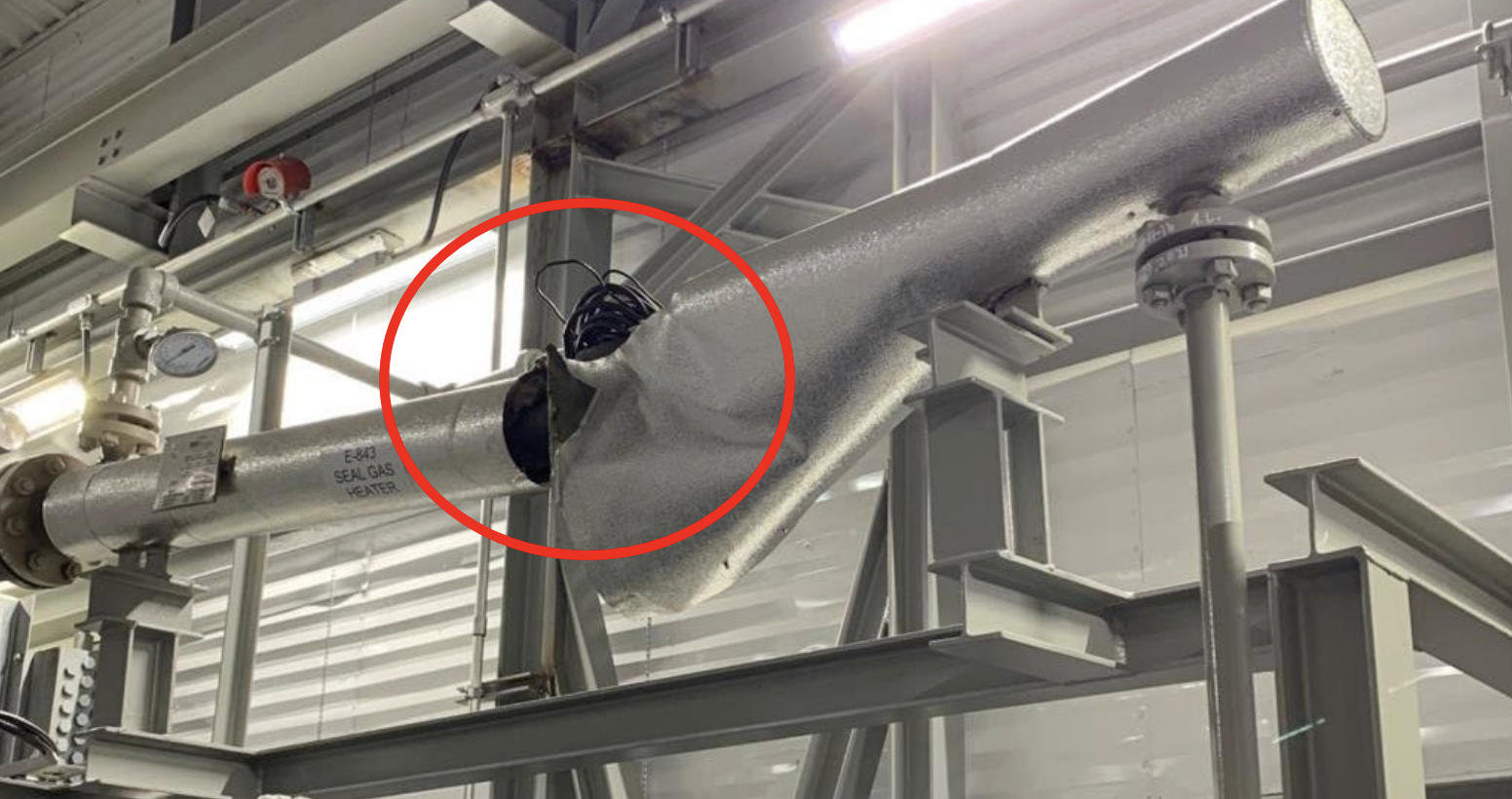
 This incident was process related and involved a process safety system; however, the process was NOT PSM/RMP covered. The incident is process-related and many of the PSM/RMP management elements could have prevented this incident.
An electric sweet gas heater ruptured from overheating releasing sweet gas into the building. The cause of the incident was likely the lack of temperature controls.
This electric seal gas heater is used to heat sweet gas, which then is piped downstream to provide positive pressure on seals for a turbo expander as a part of a compressor. Therefore, the heater is called a “seal gas heater”. In regular operation, sales gas (gas where the hydrogen sulfide is removed, also called “sweet gas”) flows typically continuously through the heater, which uses an electric heating element within the heater’s 4-inch shell to heat the sweet sales-gas for further use downstream. This unit is designed to have a high-temperature shut-down limit switch to prevent overheating of the electric heater in the event of loss of gas flow through the heater.
The Owner’s representative indicated by email that the electric heater was installed and contained sales gas ready for use but there was no flow of sales gas through the electric heater at the time of the incident as the downstream process was not ready to receive the heated gas. The seal gas heater’s high temperature shut down either failed to function or was not connected prior to the electric heater installation.
| |
The owner’s third-party mechanical analysis report indicates that the seal gas heater was in standby mode and filled with sweet gas at normal operating pressure and that no sweet gas was flowing through the electric heater when the shell of the heater ruptured. THE THIRD-PARTY REPORT INDICATES THAT THE FIELD INVESTIGATION INDICATED THAT THE HIGH-TEMPERATURE SHUTDOWN WAS NOT CONNECTED. The owner representative communicated via email that the electric heater contained sweet fuel gas and was sitting at normal operating pressure, ready to perform its intended function but was not experiencing flow as the turbo expander was not in service. The owner representative identified via email that the seal gas heater unit was not included on the original electrical drawings issued for construction and was not hooked up by construction crews resulting in no high-temperature condition alarm or shutdown. Upon failure of the electric heater, the plant emergency gas detection system shut down and isolated the plant. |
CLICK HERE for the full report