
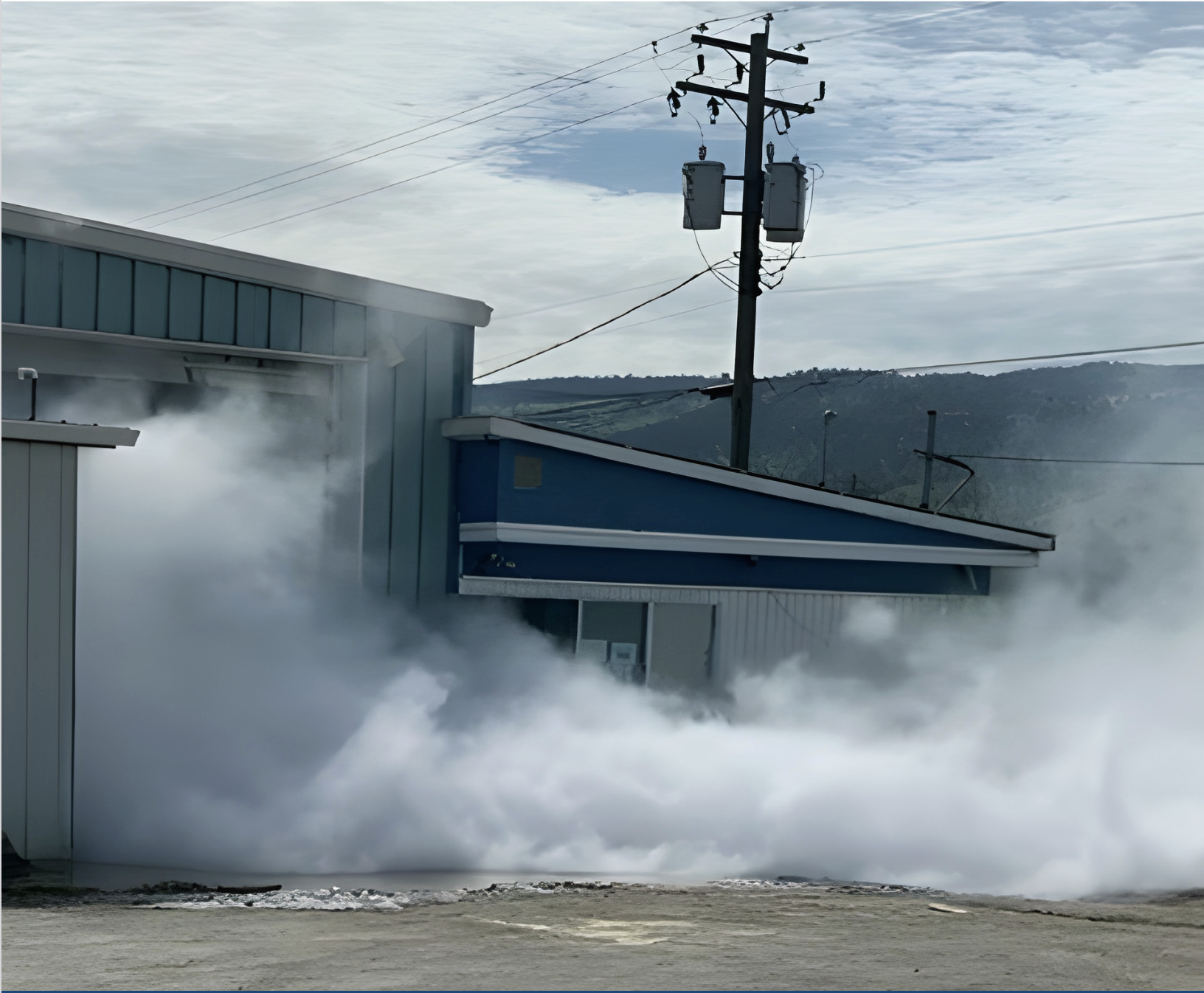
 On May 26, 2022, a crew was in the process of cutting up and disassembling two ammonia refrigeration systems (referred to as P24 and P34 in this report) at an ice distribution facility located in the Mount Paul Industrial Park located in Kamloops, British Columbia. Those present understood that ammonia had been previously removed from both systems. During the removal of a section of the P34 system containing the receiver and compressor, it was identified that a valve handle protruded past the frame and could cause issues with the rigging process.
Options to deal with the protruding part, such as turning it, were being discussed, and one of the individuals turned the valve handle, resulting in a large release of ammonia, between 1,345 lbs and 1,600 lbs. The individual who turned the handle was sprayed by the ammonia and moved further into the building. The remaining members of the crew evacuated through a nearby open bay door. The individual who opened the valve was extracted from the building and pronounced dead following the incident. In addition to the fatality, there were multiple ammonia exposures, a local evacuation, an extended business shutdown, and an environmental response to the release.
The refrigeration unit had been shut down in 2015 but the ammonia wasn’t removed and, over the years, miscommunication, staffing changes, and then the failure to use a licensed refrigeration contractor to check for ammonia all contributed to the unexpected release.
Root Cause:
The safe dismantling of an ammonia system requires that the system be assessed and ammonia and oil be removed before any disassembly work.
Removal of ammonia and oil from a refrigeration system is regulated work that requires the knowledge and skills that a licensed contractor brings with qualified refrigeration mechanics.
The investigation found that the failure to remove ammonia from the refrigeration system before, or during disassembly was the primary cause of the incident.
The contributing factors to the ammonia not being removed were:
1) An incorrect understanding that ammonia had been removed during the shutdown of the system. This understanding was influenced by the following:
a. Changes in personnel and their assigned responsibilities.
b. Misunderstood communications regarding the work completed.
2) Ineffective assessments to identify hazardous quantities of ammonia in the receivers. These assessments were affected by:
a. The exclusion of a qualified refrigeration mechanic from a dedicated role during the disassembly.
b. An irregular configuration of the equipment, which created the appearance the P34 system was empty.
CLICK HERE for the full report from Technical BC