
If there is one device that causes more electrical issues in workplaces, it has to be electrical extension cords. There are few audits in our 20+ years of business where we did not find multiple concerns around the use of electrical extension cords. These issues generally center around either their IMPROPER use or the cords being damaged in some way.
One of our sources to write our findings comes from the International Fire Code (IFC), Chapter 6 : Building Services and Systems, specifically section 604.5 Extension cords, which states:
(emphasis by me)
Extension cords and flexible cords shall not be a substitute for permanent wiring and shall be listed and labeled in accordance with UL 817. Extension cords and flexible cords shall not be affixed to structures, extended through walls, ceilings, or floors, or under doors or floor coverings, nor shall such cords be subject to environmental damage or physical impact. Extension cords shall be used only with portable appliances. Extension cords marked for indoor use shall not be used outdoors.
As we all know, extension cords are a TEMPORARY means to provide power to locations where power is not normally needed. Hence the specific requirement in the IFC that Extension cords shall be used only with portable appliances. This rules out the use of extension cords for equipment that is NOT portable, even for a 90-day temporary use.
The reference to “portable” primarily denotes smaller, often-relocated appliances, such as a fan or a power tool. Extension cords must not be used with major appliances or equipment, such as refrigerators, which are obviously not portable.
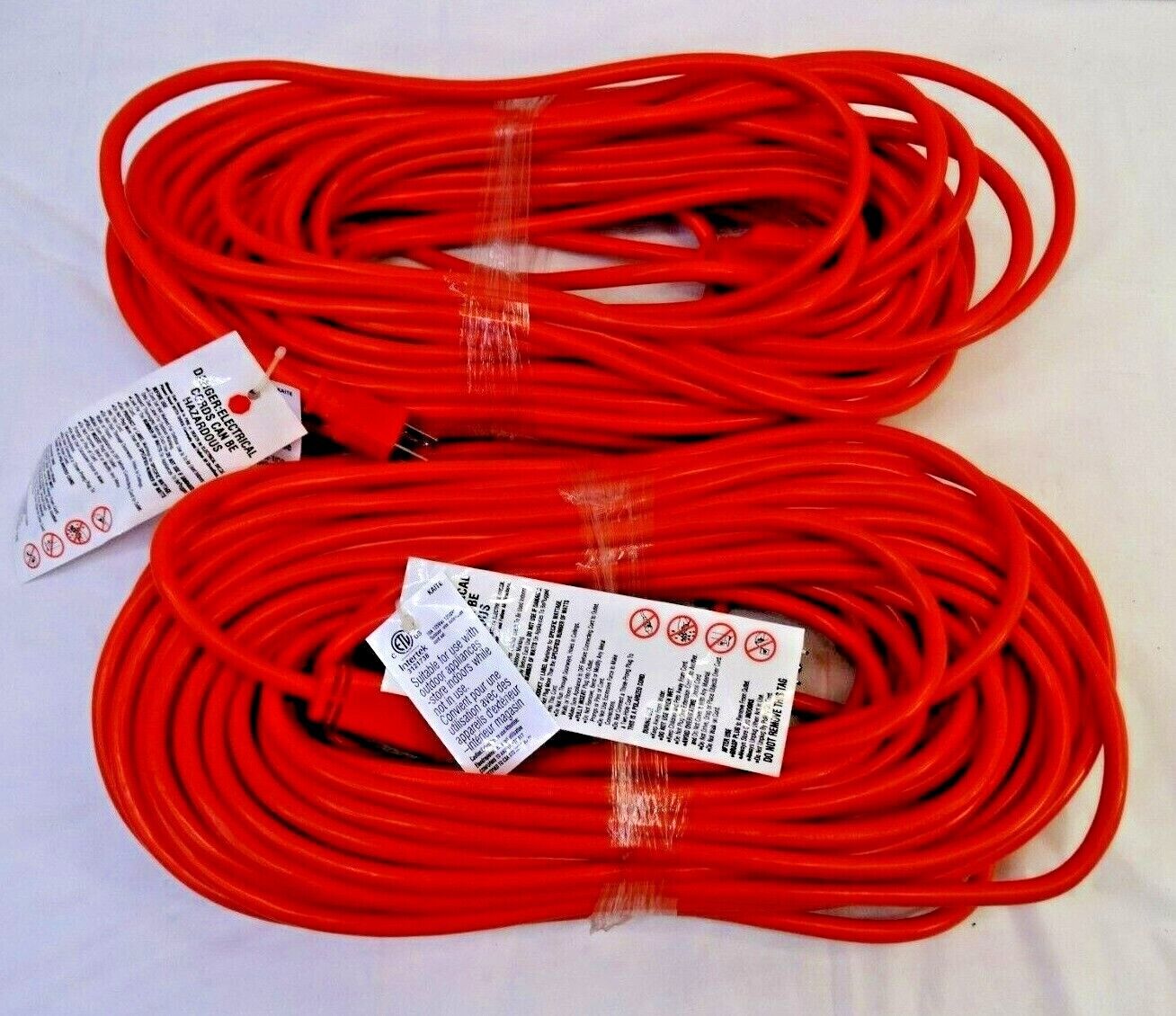
Extension cords must also meet the listing and labeling requirements of UL 817. This means the cord MUST have its UL tag in place so as to be able to identify inappropriate or nonlisted extension cords. There is just one huge problem, most users simply cut these tags off.
I am sure we have all seen these tags:
 |
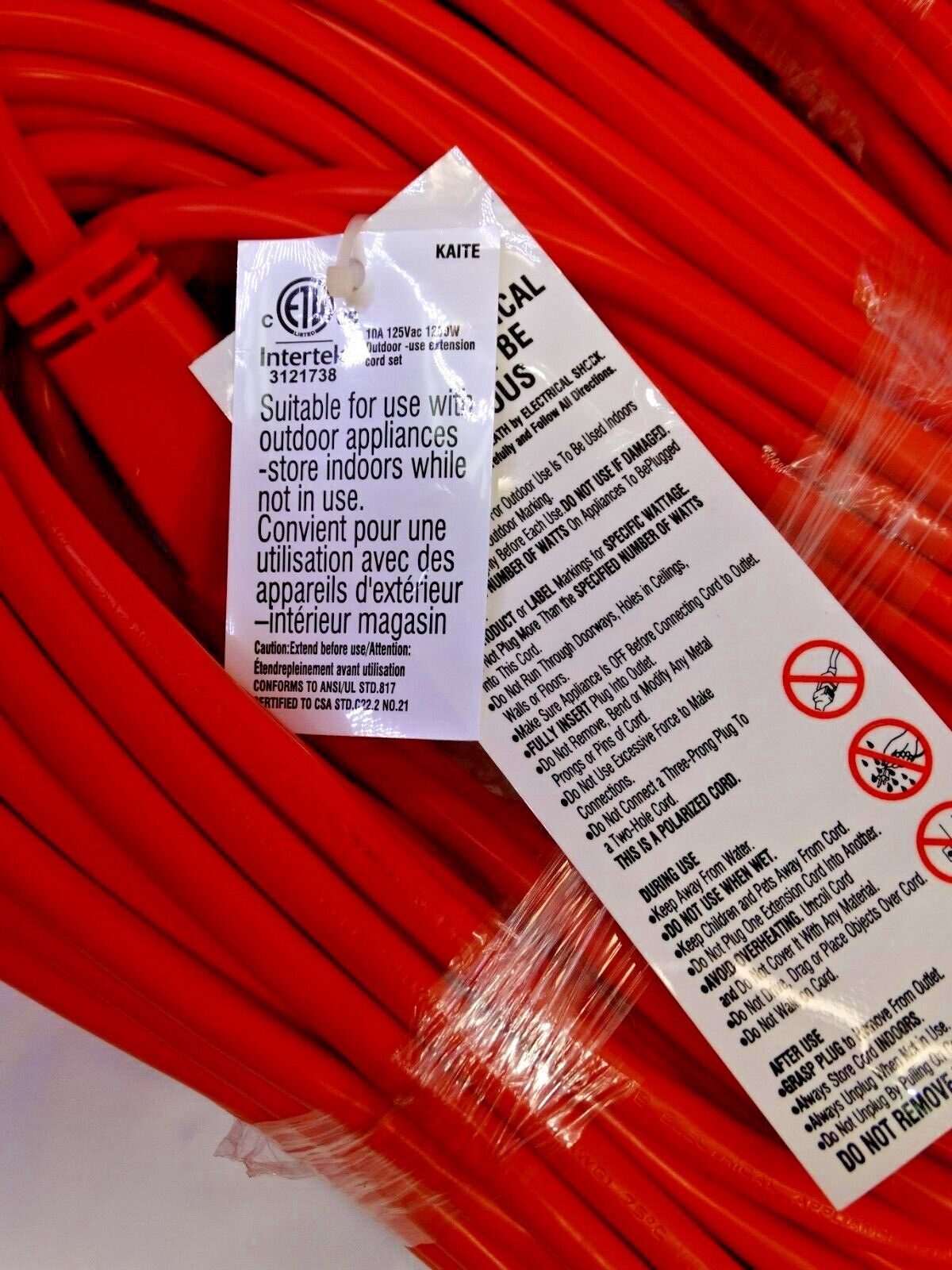 |
So we take the position unless the business can demonstrate the cord meets the UL listing and it is being used properly (e.g. indoor cords used indoors ONLY) the cord is being improperly used. Often times, when the cord has its tag, we can demonstrate to the user the specific violation using the information/images on the tag. But as I stated earlier, most cords do not have their tags attached.