
We visit 25-30 facilities each year, with about 15% of those being first-time and last-time visits! And man-o-man, we see some crazy things. I may have unreasonable expectations of safety, but complying with OSHA standards that have been on the books for 50+ years should not be a battle we are still fighting today. Take basic safety signage for example. The OSHA standard on accident prevention signs and tags (1910.145) has been around since 1974, and although a lot of facilities rely on these signs as reminders to work safely or to point out specific hazards, they are often made “in-house” and fall well short of complying with the OSHA standard and a far cry from the ANSI standards ANSI Z535 series.
The number of facilities and their safety personnel who are not even aware of these fundamental requirements is shocking. Then, listen to their complaints regarding the Audit/Assessment findings about how “nit-picky” we are. Sayings like “that faded sign never hurt anyone” are astounding.
It is a short and easy standard to read and understand. You don’t need to attend an OSHA outreach course, hire a consultant, or spend a lot of time or money to get these basics under control.
Let’s start with the two (2) classes of signs OSHA prescribes:
(emphasis by me)
- DANGER
- CAUTION
|
1910.145(c) Classification of signs according to use – 1910.145(c)(1) Danger signs. 1910.145(c)(1)(i) There shall be NO VARIATION IN THE TYPE OF DESIGN of signs posted to warn of specific dangers and radiation hazards. 1910.145(c)(1)(ii) All employees shall be instructed that danger signs indicate immediate danger and that special precautions are necessary. 1910.145(c)(2) Caution signs. 1910.145(c)(2)(i) Caution signs shall be used ONLY to warn against POTENTIAL HAZARDS or to caution against UNSAFE PRACTICES. 1910.145(c)(2)(ii) All employees shall be instructed that caution signs indicate a possible hazard against which proper precaution should be taken. 1910.145(c)(3) Safety instruction signs. Safety instruction signs shall be used where there is a need for general instructions and suggestions relative to safety measures. |
Find ten random employees who are working around a DANGER or CAUTION sign and ask them to explain the difference between the DANGER signs and the CAUTION signs. Heck, if you a manager reading this, ask your safety team members to explain the difference. This may be very telling!
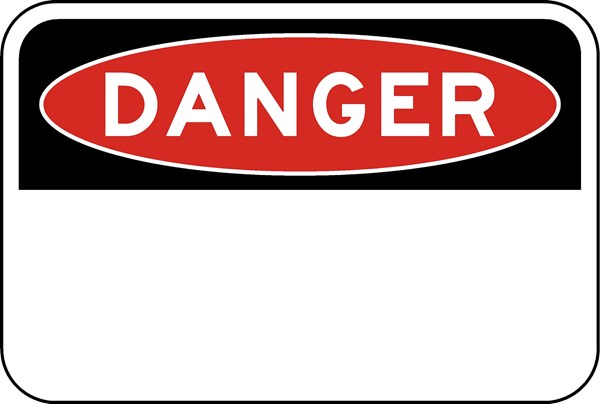
DANGER signs MUST be red, black, and white shall be those of opaque glossy samples as specified in Table 1, “Fundamental Specification of Safety Colors for CIE Standard Source ‘C,’ ” of ANSI Z53.1-1967 or in Table 1, “Specification of the Safety Colors for CIE Illuminate C and the CIE 1931, 2 Standard Observer,” of ANSI Z535.1-2006(R2011), incorporated by reference in § 1910.6
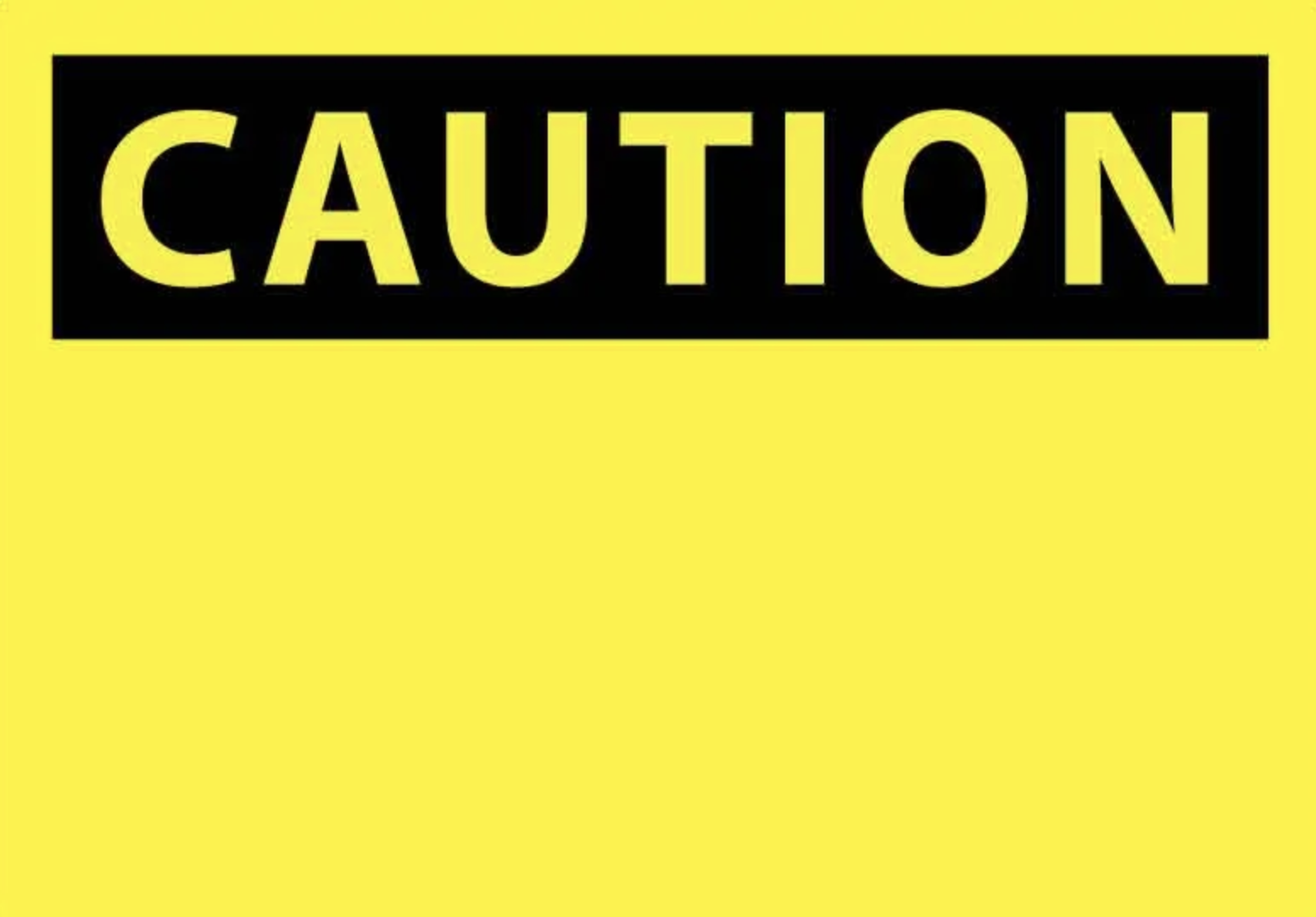
CAUTION signs MUST have a standard background color of yellow and a panel color of black with yellow letters. Any letters used against the yellow background shall be black. The colors shall be those of opaque glossy samples as specified in Table 1 of ANSI Z53.1-1967 or Table 1 of ANSI Z535.1-2006(R2011), incorporated by reference in § 1910.6.
 |
 |
SAFTENG members can read my post “OSHA General Industry Requirements for Labels, Signs, Postings, etc.” to learn all the different locations where OSHA requires safety signage.