
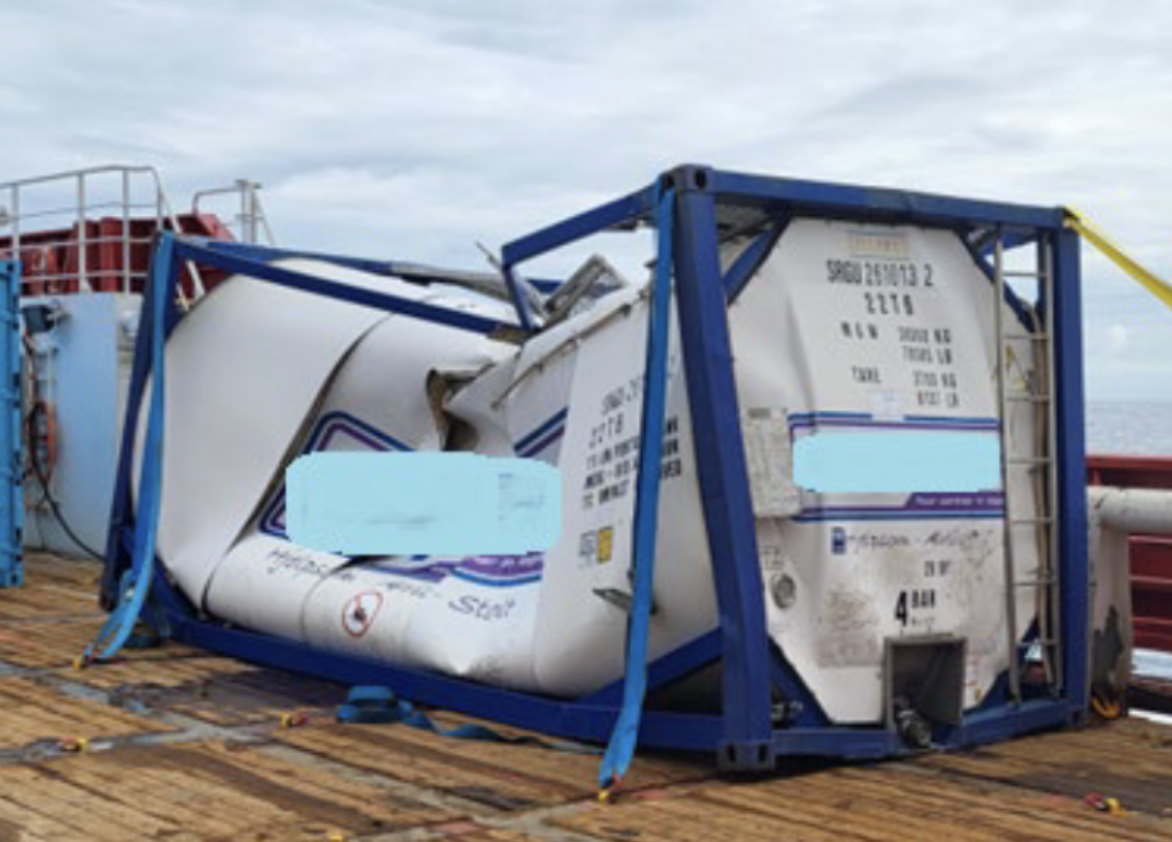
 An ISO container, partly filled with Monoethylene Glycol (MEG), imploded on the back deck of a ship, spilling around two cubic meters (528 gallons) of MEG onto the deck and to sea and causing unrepairable damage to the tank itself. There were no injuries. The tank was a 26-cubic-meter tank containing ten cubic meters (6600 gallons) of MEG.
The implosion happened due to a vacuum created inside the tank when the MEG was pumped out into a storage reservoir on the vessel during mobilization.
A 20 cubic meter tank had been planned for and agreed upon, but a different and larger type of tank, of 26 cubic meter capacity, was delivered.
The new tank was unfamiliar to the operators, and no documentation was available before pumping operations started.
This type of tank REQUIRES A MANUAL AIR INTAKE VALVE TO BE OPENED on top of the tank to allow for air inlet and avoid the creation of a vacuum within the container.
Due to a lack of knowledge and documentation, this valve was NOT opened as it should have been, creating a sufficient vacuum in the tank to cause it to implode five (5) days later.
Source: International Marine Contractors Association