
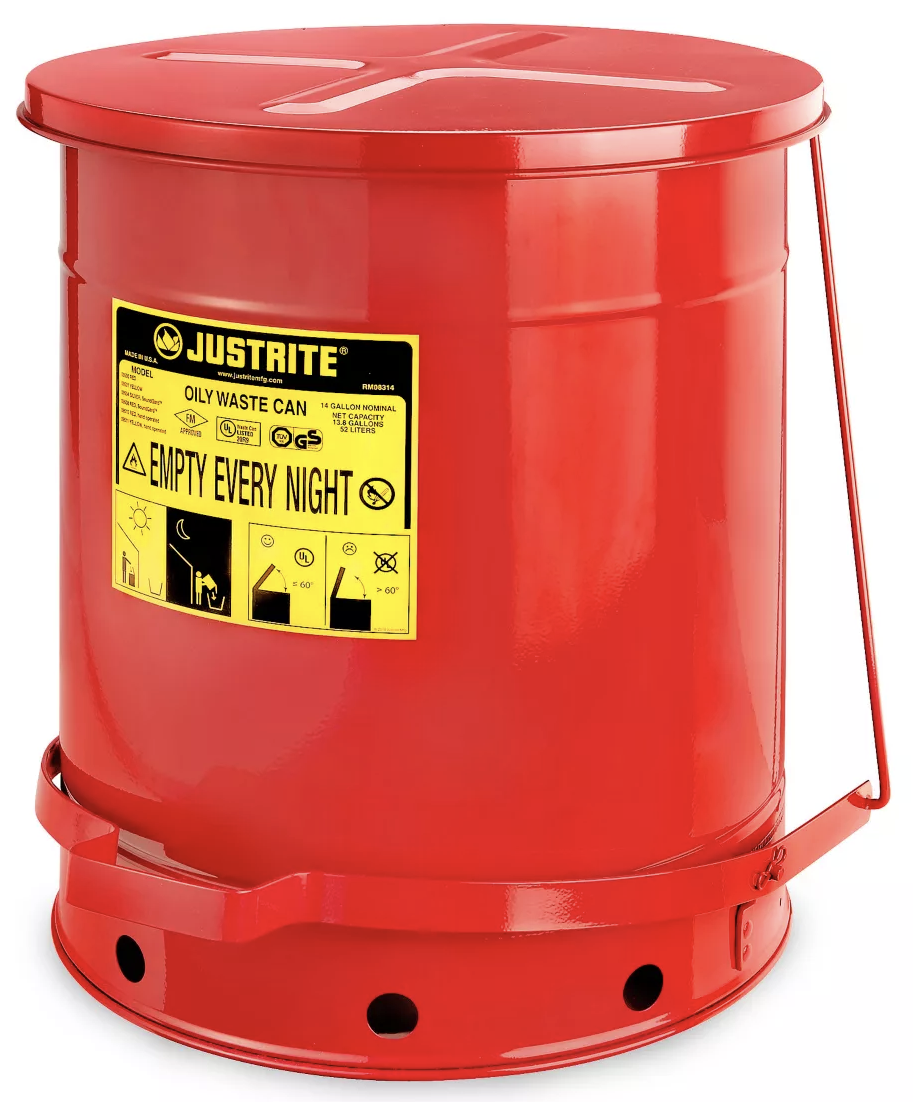
 This week, I shared some pictures of a setup I encountered last year in an audit I conducted at a manufacturing facility. This sole department was using metal trash cans as ” safety cans,” while the rest of the facility was using FM/UL “approved safety cans” for their “dirty rags” storage. The sight of this setup immediately caught my attention and the attention of the site safety leader as it was pretty ingenious, albeit not very safe. I did end up writing a finding against the setup and this is my explanation of what we found and what issues we took with the practice.
It was corrected by the end of the week and was a great LEARNING opportunity for the facility, as there was zero written guidance or training on the acceptable means of storing “dirty rags.” This was after a fire several years earlier involving “solvent-soaked” rags not being stored safely. Out of that incident, the facility failed to DEFINE and QUANTIFY “safe storage” of “dirty rags.”
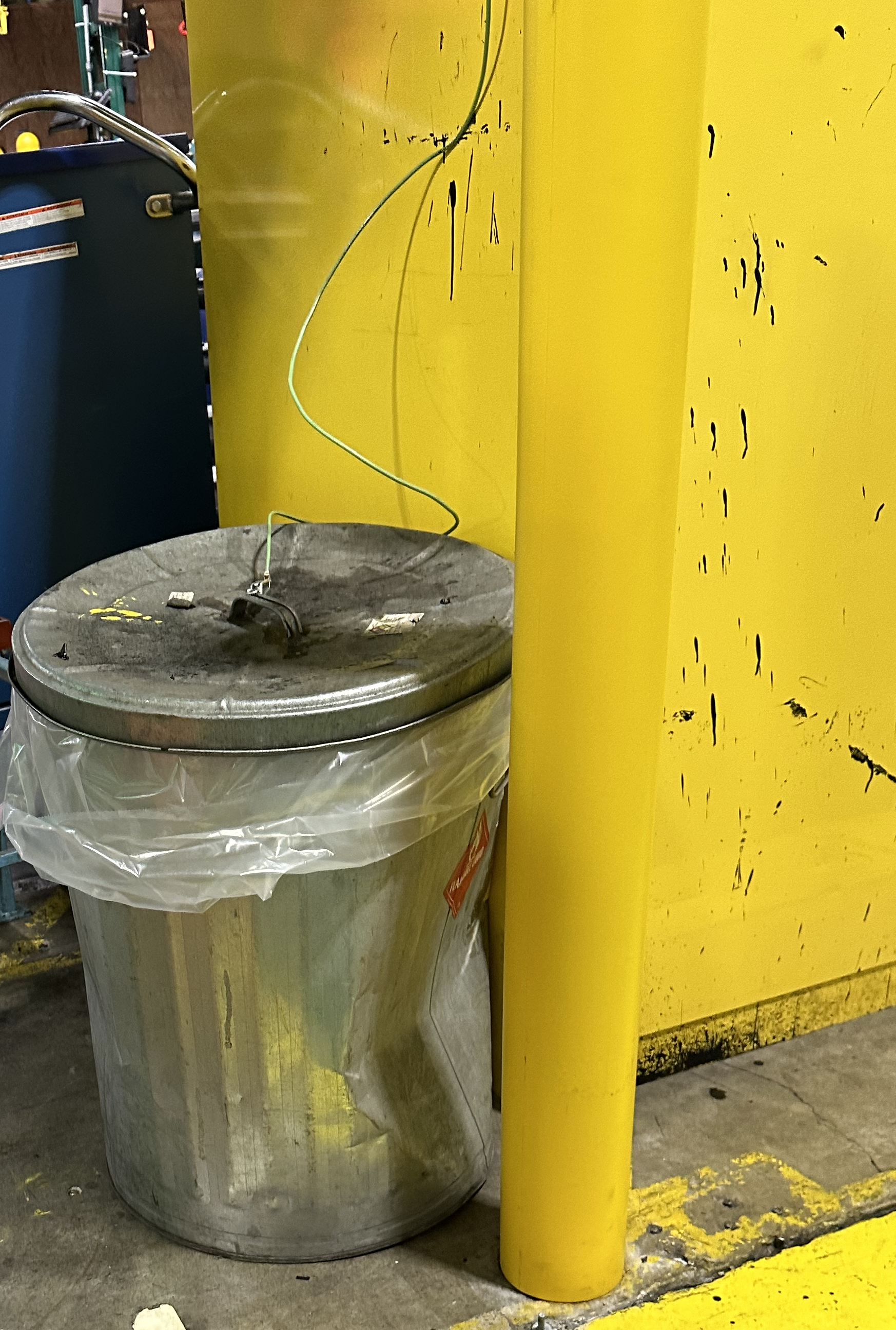
Here are the pics of the setup…
 |
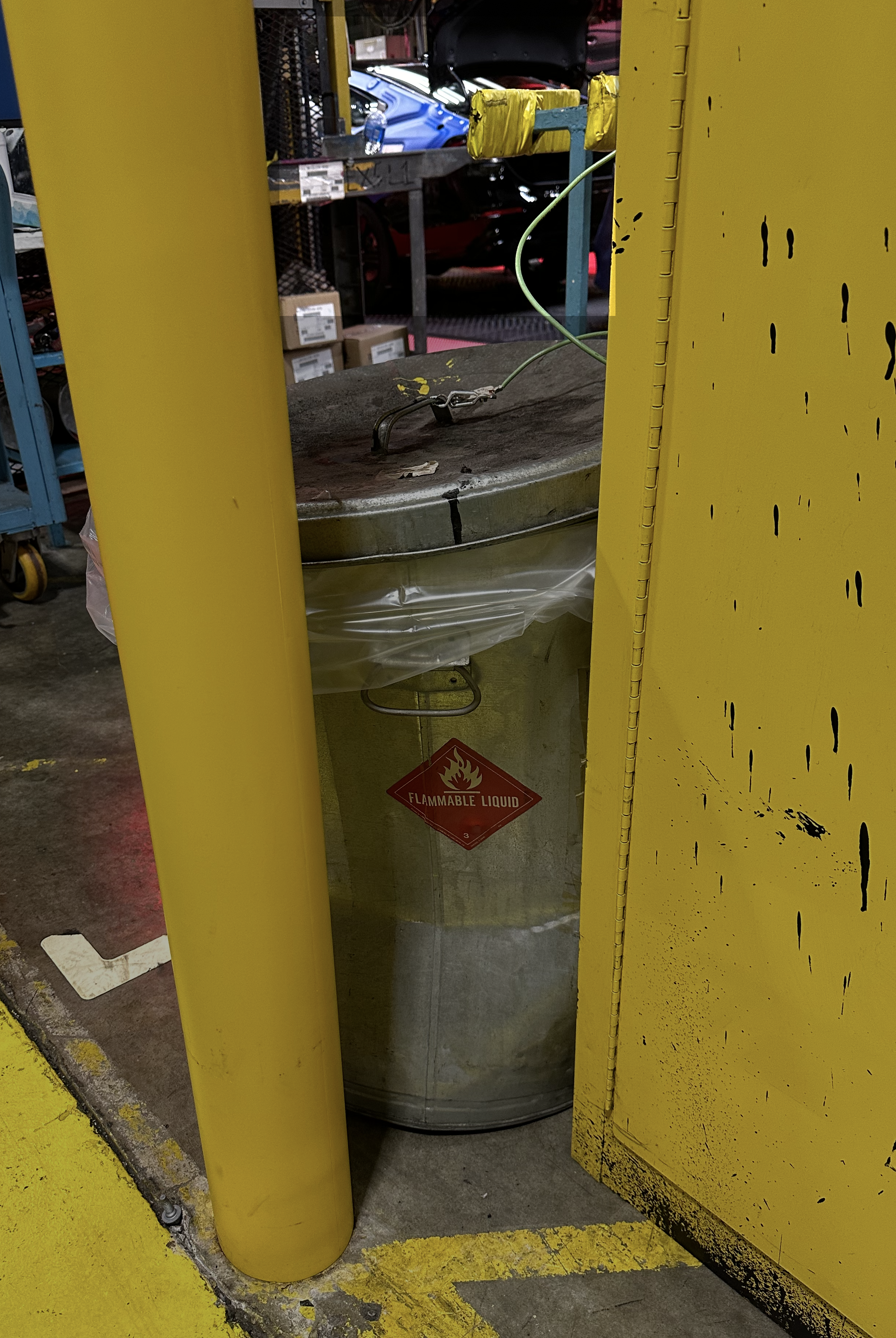 |
There are three (3) fundamental issues with this setup:
- The “trash can” is not an approved “safety can”
- They have used a plastic liner inside the can. This would allow the fire to burn up and outside of the can.
- The bonding (or grounding) cable is attached to the lid. Technically, these cans do NOT have to be grounded or bonded as we are NOT transferring fluids into or out of the container. But if the user meant this to be a ground/bonding cable, putting it on the lid creates two (2) additional conflicts:
- The lid would be removed when adding or removing rags so it would serve NO purpose for grounding or bonding
- The plastic liner creates an “insulator” between the lid and container, essentially eliminating the continuity of a path to the ground
So what did I cite, and what was the facility’s defense?
Since this was a manufacturing facility, I used 1910.106
|
1910.106(e)(9)(iii) Waste and residue. Combustible waste material and residues in a building or unit operating area shall be kept to a minimum, stored in covered metal receptacles and disposed of daily. |
If this setup was found on a construction site, we could use 1926.252
| 1926.252(e) All solvent waste, oily rags, and flammable liquids shall be kept in fire resistant covered containers until removed from worksite. |
The facility’s defense was great if we only cared about making OSHA happy. Remember, this was the only department that had drifted away from using the FM/UL-approved safety Cans (as shown above). They were correct in their defense that BOTH of the standards above only state the container be “metal” or “fire resistant.” Neither standard states the container be UL/FM approved for the storage of “dirty rags.”
For me, OSHA is way behind my curve in how I define “world-class” safety and thus, like all the other departments within this facility, they should be using UL/FM-approved storage containers. But this business used this finding as a LEARNING opportunity to look back three years to their “dirty rag” fire which took them to buy hundreds of these UL/FM-approved storage containers. But as we know, these containers are NOT cheap, especially when compared to small metal trash can. So when the business clamped down on spending and the department needed new “metal” or “fire resistant” containers, they decided the trash cans met the standard. The facility looked back at its “recommendations” from that fire and discovered that there was no corrective action to DEFINE and QUANTIFY what a “safety can” is. There was no training on what a “safety can” is. So, in truth, the department did not BREAK site rules or OSHA compliance. Please note that this was a great discussion, but the use of trash cans as “safety cans” was corrected that weekend!
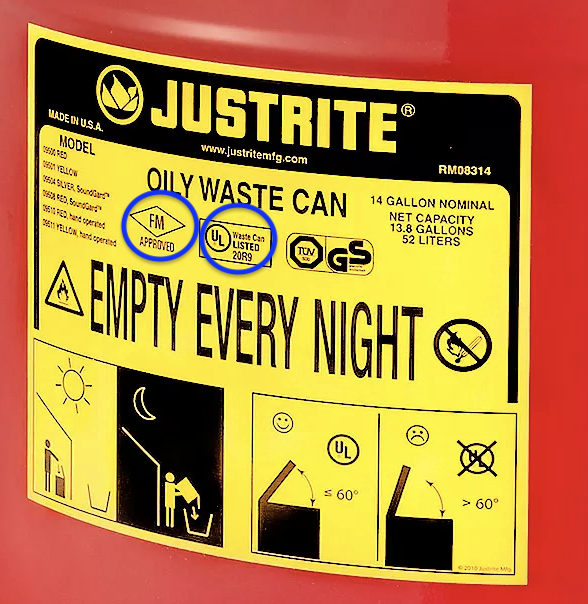
For me and this facility, using safety devices that have been approved by a Nationally Recognized Testing Laboratory (NRTL) matters! These little “stamps of approval” matter, and I accept nothing less; OSHA, however, does.
Imagine the signal we send if we allow an actual “trash can” (designed, built, and sold to hold trash!) to be used as a safety-critical device. So yes, I had to credit those who came up with this idea; oddly, not one person stepped forward to claim it, almost as if they knew they were maybe meeting OSHA requirements but were deviating from site safety expectations.
So, as I usually do, I go to my favorite safety standard… the International Fire Code (IFC), which is UPDATED every three (3) years. In the IFC, which nearly all states have adopted some version of it; we find the following: (emphasis by me)
|
304.3.1 Spontaneous ignition Materials susceptible to spontaneous ignition, such as oily rags, shall be stored in a listed disposal container. Contents of such containers shall be removed and disposed of daily. |
Special Note: the facility where I found the trash cans, was in the state of OH (my home state) and management did not want to go down the rabbit hole of OH Fire Codes, which they are required to comply with. The EHS manager viewed this as just another OPPORTUNITY for CONTINOUS IMPROVEMENT that moves them from OSHA minimums to a new level of safety expectations.
The OH Fire Code states: (emphsis by me)
|
(2) 305.2 Hot ashes and spontaneous ignition sources. Hot ashes, cinders, smoldering coals or greasy or oily materials subject to spontaneous ignition shall NOT be deposited in a combustible receptacle, within 10 feet (3048 mm) of other combustible material including combustible walls and partitions or within 2 feet (610 mm) of openings to buildings. Exception: The minimum required separation distance to other combustible materials shall be 2 feet (610 mm) where the material is deposited in a covered, noncombustible receptacle placed on a noncombustible floor, ground surface or stand.
(a) 304.3.1 Spontaneous ignition. Materials susceptible to spontaneous ignition, such as oily rags, shall be stored in a listed disposal container. Contents of such containers shall be removed and disposed of daily. |
On another note, do these containers have to be emptied nightly/daily?
As we can see on the label, in the biggest font, YES, the approval authority (UL and FM) call for them to be emptied daily. However, once again, OSHA takes the path of minimum resistance and has stated that we could use a metal 55-gallon drum with a metal lid and this drum would NOT have to be emptied daily.