|
For the leading Authority on fires while fueling, visit Refueling Fires Developed by Fowler Associates, Inc.
From: Bryan Haywood
Sent: Tuesday, June 04, 2002 10:05 AM Subject: Refueling Fires and Static Electricity
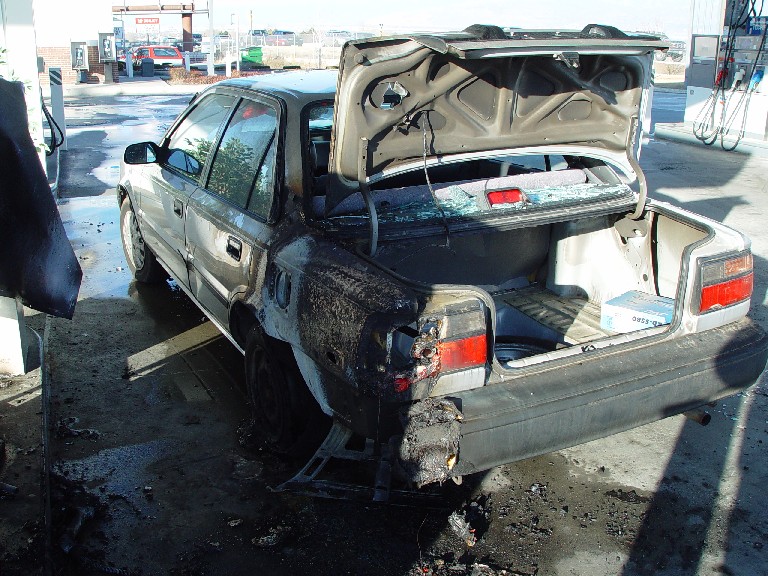
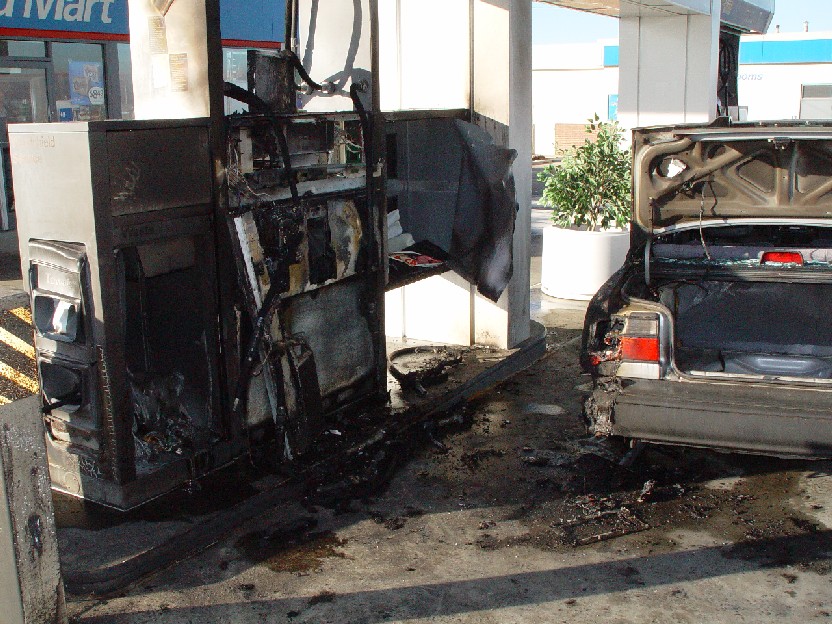
In an effort to help the Petroleum Equipment Institute get their safety message out about the dangers of fueling cars and trucks unsafely, I am sending this to ALL MY SUBSCRIBERS. Many of you saw the SPECIAL ALERT I sent out a few weeks ago from the Canadian Petroleum Safety Council regarding the worker who was burned when he answered his cell phone while working in the presence of flammable vapor. This SPECIAL ALERT is NOT about using cell phones while pumping gas. In fact, you will notice that in many of these documented incidents, cell phones were NOT in use. This SPECIAL ALERT is meant to aid us and our families in understanding some everyday hazards (static electricity) and ways we can protect ourselves and our families while refueling our vehicles! PLEASE visit PEI’s website at www.PEI.org .to learn more about this. Just click on the “STOP Static” icon on their home page to learn more about these fueling accidents and to see the overwhelming data that these incidents are NOT “Urban Legends” or “folklore” as some of us have been lead to believe. The data comes from very reliable sources that include the National Highway Transportation Administration (NHTSA), State Fire Marshall Offices, Alaska Army National Guard, and several of the world’s largest petrochemical companies. I will also be adding many of these reports to www.SAFTENG.net in hopes that more and more people will have this information available to them. DO like I did…just think for a moment about where your child is when you are pumping gas!!!! STRAPPED in their car seat INSIDE the vehicle! Like I’ve always said…when we do stupid things we are adults and we can manage our risks to the level we desire, most of the time knowing full well the outcome of these risks! Our children have no CHOICE in the matter and rely upon us to manage their risks! So please take a second and consider the small, but potentially catastrophic risk, we may be taking by shortcutting our fueling practices. Here are the facts: BACKGROUND/STATEMENT OF THE PROBLEM: Until September, 1999, the only motor vehicle refueling fires that the Petroleum Equipment Institute (PEI) was aware of were caused either by an open flame (smoking), lack of electrical continuity between the nozzle and the gasoline dispenser, or a spark from the engine compartment of a vehicle with its motor running. From September 1999 through January 22, 2000, 36 ignitions of gasoline vapors during the refueling process were verbally reported to me at PEI. All occurred during dry weather. There were no open flames and the engines were off. Continuity was verified between the nozzle and dispenser. People that investigated the cause of these accidents concluded that static electricity was the source of ignition in all cases. HOW PEI GOT INVOLVED: Although Americans pump gasoline into their cars between 16 and 18 billion times a year without incident, the fact that these fires were occurring in the first place—and with what appeared to be greater frequency—caused PEI to gather additional information about the circumstances surrounding the fires. We carried an article in the January 25, 2000, issue of PEI’s newsletter (TulsaLetter), asking readers to report to us all refueling fires presumably caused by static electricity. The same article and request appeared on PEI’s Web site (www.pei.org) on January 23, 2000. An online report form accompanied the newsletter on the Web site.
WHAT PEI ASKED: The newsletter asked readers to identify the make, model and year of the vehicle, the type of fuel used, type of tires and driveway finish, customer action while refueling, and any other information they believed would be useful. We promised that no oil company or PEI member names would be divulged. All responses were strictly confidential. We offered to make the report available, upon request, to TulsaLetter readers.
INFORMATION PEI RECEIVED: PEI received 47 first-hand reports of refueling fires attributed to static electricity. We also obtained 34 Vehicle Owner’s Questionnaires (VOQs) from the National Highway Traffic Safety Administration’s (NHTSA) database which strongly suggested that static electricity was the source of ignition. The reported fires occurred between 1993 and April 1, 2000, with more than half occurring from 1999 through April 1, 2000. Seventy-six percent of the fires occurred during the five months from November through March. The following information is contained in a detailed report:
Reports (first-hand and NHTSA’s VOQs) were received from 26 states and Washington, D.C. First-hand reports were received by PEI from 16 states. In all the reports we were able to verify, no open flames, running motors, or electrical continuity problems were involved. All but one of the accidents occurred with conventional (not Stage II vapor recovery) nozzles. Driveway surfaces included concrete, asphalt, stone, crushed rock and dirt. Fires occurred with many different types of nozzles, hoses, breakaways and dispensers. No cell phones were involved. A wide variety of clothes were worn by the refuelers. Rubber-soled shoes were worn by the refuelers in 94% of the accidents where footwear was identified. A summary of all the fire reports is also included in Document D.
WHY DOES THIS HAPPEN? The author of this report is not an expert on static electricity. It does appear to many people in the industry, however, that electrostatic charging was the probable cause of the fires. In many of the reports we received, the refueler became charged prior to or during the refueling process through friction between clothing and the car seat to such an extent that electrostatic discharges to the vehicle body, fuel cap or dispensing nozzle occurred. Twenty (20) reports described fires before the refueling process began, when the fueler touched the gas cap or the area close to it after leaving the vehicle. Twenty-nine (29) fires occurred when the fueler returned to the vehicle during the refueling process and then touched the nozzle after leaving the vehicle. Fifteen (15) fires do not involve either of these two fact situations. In all but one of these cases the fueler was not the source of the electrical discharge and the source of ignition cannot easily be determined. We received insufficient information on seventeen (17) fires reported by NHTSA to confidently categorize them. PEI has recently (in the last three months) received five excellent articles (Documents E, 1-5) written over the last four years which attempt to explain these types of fires. Most were written in response to similar refueling fires in Germany, the United Kingdom and France from 1992 through 1997. Some offer very detailed explanations about why these refueling fires occur.
INFORMATION PEI DOESN’T HAVE: Twenty (20) fires have been verbally communicated to us, but no written reports have been submitted. As a consequence, these 20 fires were not included in our report. The American Petroleum Institute (API) is in the process of conducting a survey similar to this one. API has received “less than 15 reports of fires due to static electricity.” API’s information was also not included in this report. We did confirm, however, that API’s reports are from fires separate and distinct from those reported here. API’s February 2, 2000, report form (Document C) and its February 3, 2000, Consumer Advisory (Document F-5) are available from PEI. The Consumer Advisory is available from the API Web site: api.org.
RESPONSES: Warnings have been issued by various companies and organizations since November 1999 (Documents F, 1-6).
WHERE DO WE GO FROM HERE? PEI will continue to collect reports of fires, as well as theories and studies about why these fires happen. To contact the author of this report, refer to the numbers listed on the first page.
OTHER INFORMATION: Information referenced throughout this summary is identified below. It is not included with this report because of the number of pages involved. We will mail a full set upon request. Contact PEI at the numbers listed on the first page for a copy of the referenced documents. REFERENCED DOCUMENTS: A. PEI TulsaLetter – January 25, 2000 B. PEI Report Form – January 23, 2000 C. API Report Form – February 2, 2000 E. Articles
E. Warnings
|
|||||||
September 2002
“Stop Static” and Refuel Safely with Every Fill-upWASHINGTON, September 23 –- The American Petroleum Institute and the Petroleum Equipment Institute announced today they are joining together beginning with National Fire Prevention Week, October 6-12, to remind motorists how to avoid potential problems with static electricity at the gas pump. The groups also are encouraging motorists to follow all safe refueling practices with every fill-up. Fall brings cool, dry air to many parts of the country –- the typical climatic conditions when static electricity build-up is most likely to occur. Static electricity may build up when a motorist re-enters the vehicle during fueling. When the motorist then returns to the vehicle fill pipe during or at the end of refueling, the static may discharge at the fill point, potentially causing a flash fire or a small sustained fire with gasoline refueling vapors. Static electricity-related fires at retail gasoline outlets are extremely unusual, according to API and PEI, but in rare circumstances, these incidents have caused a few injuries and property damage. The primary way consumers can avoid static electricity problems at the gas pump is to stay outside the vehicle while refueling. It may be a temptation to get back in the car when it’s cold, or for any number of reasons. But the average fill-up takes only two minutes, and staying outside the vehicle will greatly minimize the likelihood of any build-up of static electricity that could be discharged at the nozzle. In the rare event a motorist experiences a fire when refueling, leave the nozzle in the fill pipe of your vehicle and back away from the vehicle. Notify the station attendant immediately to shut off all dispensing devices and pumps with emergency controls. If the facility is unattended, use the emergency shutdown button to shut off the pump and use the emergency intercom to summon help. Leaving the pump nozzle in the vehicle will prevent any fire from becoming much more dangerous. Motorists who cannot avoid getting back into the vehicle during refueling should discharge any static away from the fill point upon exiting the car before going back to the pump nozzle. Static may safely be discharged by touching a metal part of the vehicle, such as the vehicle door, or some other metal surface, with a bare hand. Consumers can minimize these and other potential fueling hazards by following safe refueling procedures all year long. For more information on avoiding potential problems with static electricity build-up at the pump, and other safe motor fuel refueling, storage and handling guidelines see API’s web site at www.api.org/consumer, and PEI’s web site at www.pei.org/static. The joint public awareness campaign by API and PEI will include distribution of audio and video news releases on avoiding potential static problems. These broadcast releases are planned for distribution to television and radio news outlets nationwide for use in October. Similar news advisories including additional safe refueling and fuel handling guidelines will be distributed to a variety of magazines and newspapers for use during the last quarter of the year. Public awareness information also will be introduced in a special education program for attendees at the Petroleum Equipment Institute’s annual convention and trade show October 5-8 at the Orange County Convention Center in Orlando, Florida. PEI’s Convention is being held concurrently with the National Association of Convenience Stores (NACS) annual trade show, The NACS Show, also at the Orange County Convention Center. Approximately 25,000 attendees are expected for that combined three-day event which is the convenience store and petroleum marketing industry’s largest trade show. PEI’s special education sessions, including the Focus on Static session, will be open to this targeted audience which includes wholesale and retail gasoline station owners and operators nationwide. About 80 percent of the motor fuels sold in the U.S. are purchased at convenience stores. Safe Refueling and Fuel Handling Guidelines for ConsumersHere are consumer refueling and fuel safety guidelines that will help keep you and your family safe when refueling your vehicle or filling up gasoline storage containers:
|
|||||||
|
National Safety Alert No. 6 Contact: David Nedorostek November 5, 2002 (703) 787-1029 Cellular Phones and Other Risks in Classified Areas This National Safety Alert provides an update to National Safety Alert No. 5, Cell Phone Results in Fire, dated March 6, 2002, which addressed a flash fire on a platform in the Gulf of Mexico OCS. As detailed in National Safety Alert No. 5, a contract panel specialist was working on an open platform master control panel that used supply gas for the instrumentation. The contractor stated he was carrying a cellular phone that was turned on and rang while he was working on the panel. The employee claimed that when he flipped the bottom piece of the cellular phone to answer the call, a flash fire occurred causing second degree burns on his forearms and “sunburn” on his nose and cheeks. At the time National Safety Alert No. 5 was issued, it was believed that the cellular phone may have ignited the flammable gases or vapors in the area of the open platform master control panel when the phone had been flipped open to receive the incoming call. Both the MMS and the lessee conducted independent investigations of this incident. MMS determined that the platform master control panel was plumbed with poly flow tubing. After the flash fire occurred, the tubing was found to be split. Thus the panel instrument gas leaking from the split tubing provided a source of fuel for the flash fire. As part of the lessee’s investigation of this fire, they sent the hand held cellular phone involved in the flash fire to an independent third party testing laboratory. At the laboratory, the cellular phone and an identical model phone were tested in an explosive environment under worst case conditions. These tests consisted of placing the phone in a test chamber containing an explosive mixture of oxygen-enriched propane and methane. Inside the test chamber the following phone functions were implemented: · The phone was turned on and off · The phone was open and closed with the power on · Incoming and outgoing calls were made · The two-way paging function was activated · The battery was removed abruptly with the power on · The battery was removed and installed with the power off Although the cellular phones’ battery provided sufficient energy to ignite the test gases during the testing it did not. As a result, it was the opinion of the independent third party testing laboratory that it is unlikely that the cellular phone would have ignited a flammable mixture of methane or propane under actual field conditions and that the cause of the flash fire was something other than the cell phone. Based on this information and MMS’s investigation, we were unable to conclusively identify the ignition source of the fire. However, we have not ruled out the possibility that the fire could have been ignited by static electricity, a spark from the metal master control panel door coming into contact with a metal handrail, or a wrench striking metal inside the control panel. To prevent similar incidents in the future, MMS recommends the following:
For further information, please contact David Nedorostek, (703) 787-1029. |
|||||||
Gas Pump Safety