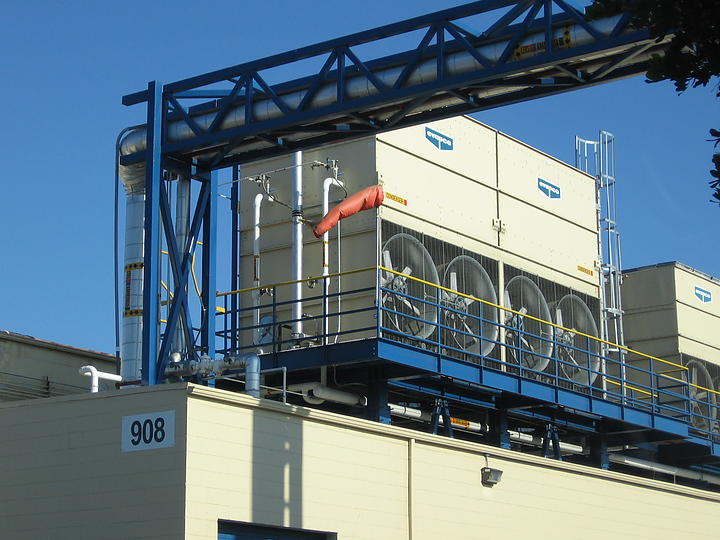
It is pretty common for PSM/RMP facilities to have a windsock or two on-site. However, the condition of these devices ranges from brand new to a piece of wire sticking up in the wind. In this posting, I want to offer some tips on how we should manage our windsocks as a “piece of critical equipment”.
As I said, it is common to see wind socks blowing in the wind at most PSM/RMP facilities, but when asked about these devices we usually get the blank stare of “are you kidding me”. I believe most PSM/RMP managers would agree that our emergency response plan and emergency action plan are two plans that are specifically required for PSM/RMP facilities (note: if the facility does not have a response team then an ERP is not required). And most ERPs and EAPs will make mention of these windsocks early in the plans, indicating they may be “critical to emergency actions”. I have yet to find a PSM/RMP facility that does not train its own personnel as well as its contractors to “determine wind direction and travel upwind to the nearest assembly point”. As soon as we say this in our emergency plan(s) and train our personnel to use these windsocks as soon as the alarm is sounded, I would argue that we have in fact established these little orange devices as a piece of “critical emergency equipment”. Just ask the question… “what would you do if the windsock was not there/not functioning” and we would have a confused workforce in the time of an emergency.
Some facilities make the argument that they would use their steam plumes. These work well when the plant is running, but during a shutdown or start-up there very well may be limited steam. I know from my experience that in some shutdowns where major boiler work was done we have started transferring chemicals into units before the boiler was started up. What would have happened if we would have had a release during these high-risk modes of operation?
For the amount of money these devices cost, there is no reason why we should not have them strategically placed around the facility. My goal was that everyone on-site could see a windsock from anywhere on site. Now I am not talking about someone in the center of a major process unit, but I am saying that if that person was to walk to the edge of that unit (in any direction) that he/she would be able to see a windsock in less than 30 seconds. I also liked to use the small windsocks (I used yellow and black striped) at my assembly points so that workers could easily identify them and locate them. In some cases, I actually installed a 30’ flag pole to mount the sock to when there was no other structure available. This allowed personnel to easily identify the assembly areas and we had a saying to help those not familiar with chemical plant life by telling them “you want to be at an assembly point where the sock is pointing to the incident”. This meant they were UPWIND of the incident!
Since I hope I have convinced you that our windsocks are critical to the most basic emergency response actions, I would also make the argument that these devices need to be in our Mechanical Integrity Program with some type of inspection frequency to ensure they are intact and operational. We have all seen the devices that look like they came out of the civil war; shredded to pieces and rusted stuck in one position. I know of no actual OSHA or EPA citations for “non-functioning” windsocks, but I have had a VPP 90-day item to get mine corrected and have heard of other “suggestions” from inspectors during PSM/RMP inspections. You have to admit that when you make visitors and contractors watch a video that tells them to use the windsocks and none of them are operational it is a bit crazy! It is our opinion at SAFTENG that if a facility utilizes these devices in their emergency plans and training and they are indeed not functioning then we cite:
1910.37(a)(4) Safeguards designed to protect employees during an emergency (e.g., sprinkler systems, alarm systems, fire doors, exit lighting) must be in proper working order at all times.
Simply adding these devices to a Work Order system so that someone is reminded to look up and verify the device is intact and operating is the best way to go!
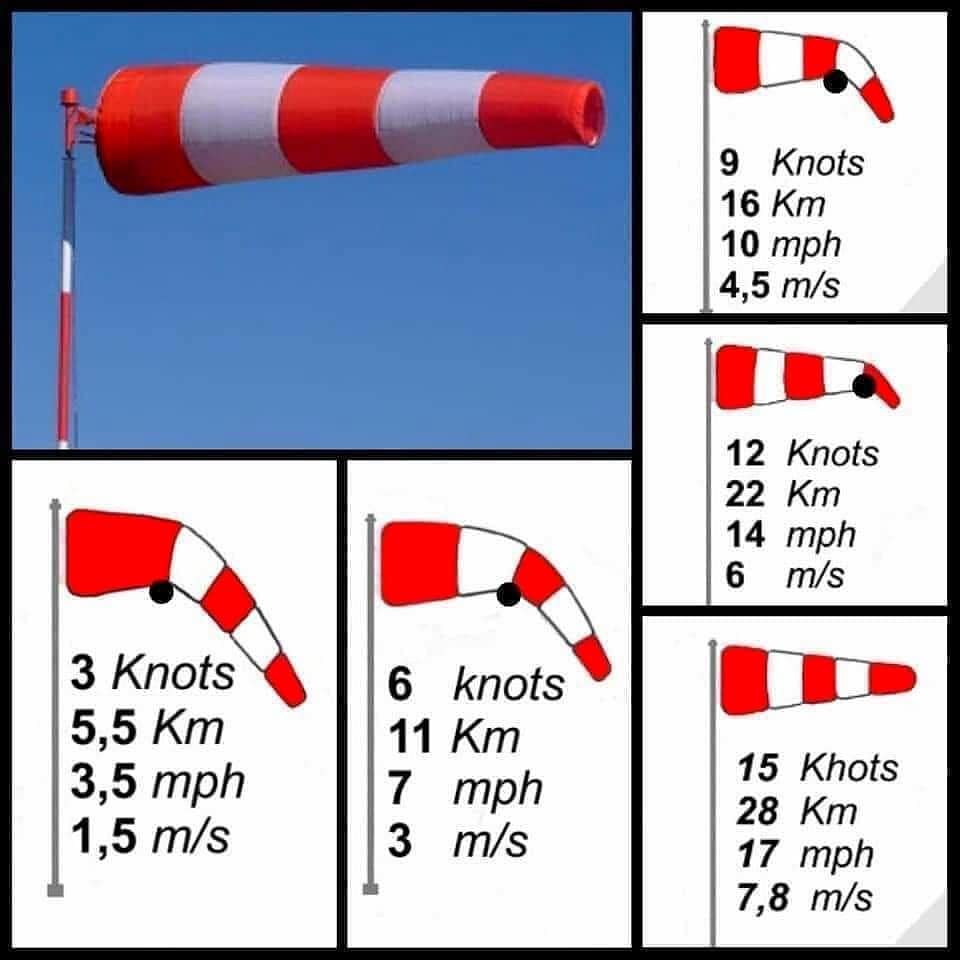
Lastly, does anyone know how to read a windsock?
We all know how to read “direction”, but will these devices tell us wind speed as well? Most certainly they will and believe it or not, wind speed is one of their primary functions at an airport. Pilots use these devices to gauge wind speed and direction and the Federal Aviation Authority (FAA) actually has a “user guide” on how airports are to install them, sizes to use, fabrics to use, and how to use them to determine wind speed. A windsock that meets FAA standards will extend fully when the wind reaches 17 miles per hour and will be limp at three miles per hour, but at 3 miles per hour wind the windsock will rotate to indicate wind direction; which by the way, 3 mph is the wind speed we all had to use in our EPA RMP Worst Case Release Scenario!!!
So these little orange devices come in quite handy in the time of an emergency. A little bit of effort upfront may just save us a major headache when that incident occurs and we have several hundred people looking to the sky for help in which direction to travel and all they see is a metal stick that looks more like a lightning rod than a windsock!