
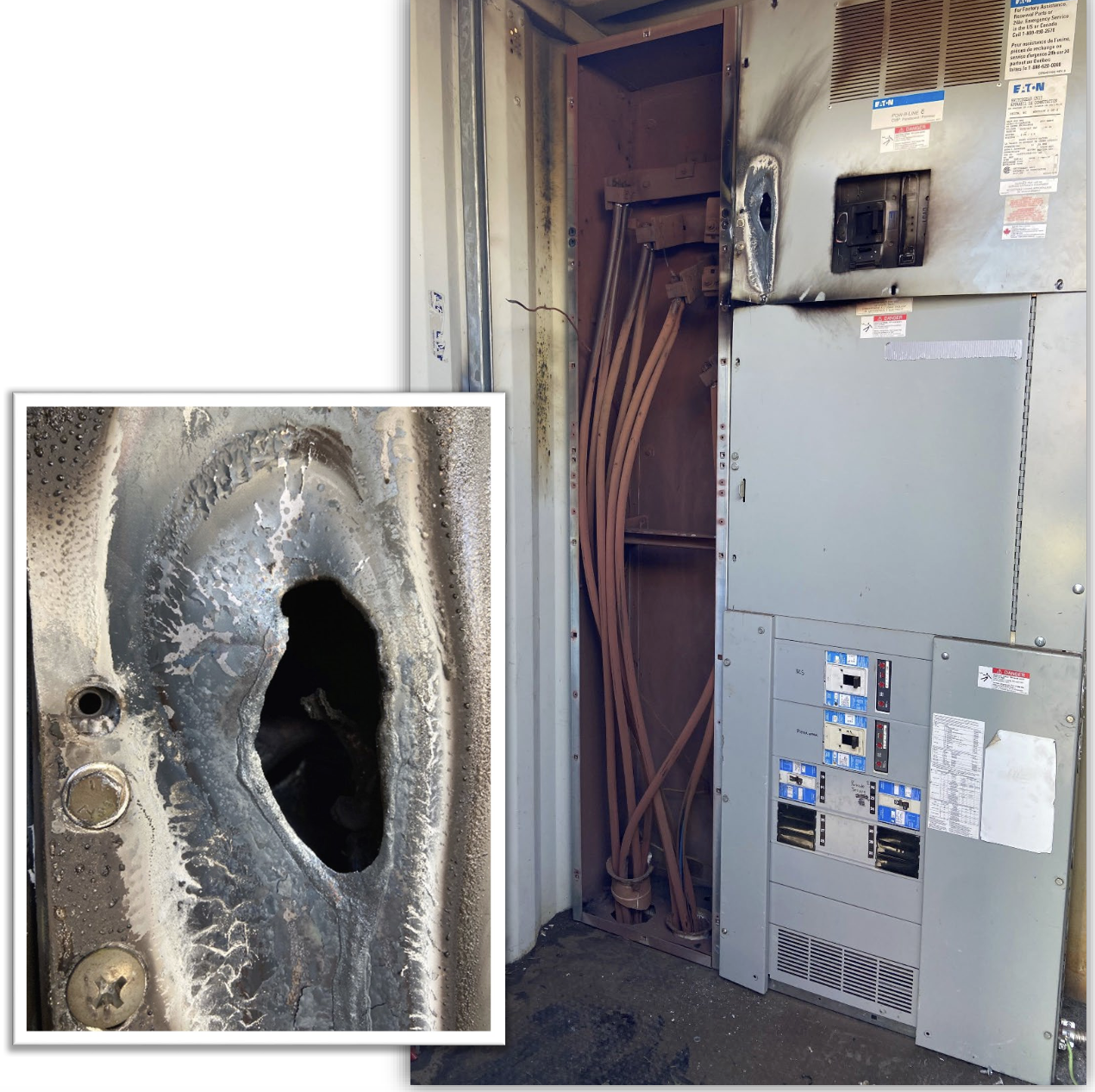
 An arc flash occurred in an energized 600-volt, 3-phase main distribution center installed in a shipping container to provide temporary power to a building under construction. A mobile crane attempted to remove the container before the underground utility lines had been disconnected, and the internal bus bars twisted until contact between phases resulted in a line-to-line short.
Facts and Evidence:
- Statement from the electrician on site the day of the incident that they had verified that the utility’s metering equipment was removed, but not verified that power was off using testing equipment or visually verified that the utility
- supply conductors were removed.
- Statement from the electrician on site that they did not perform visual verification of full disconnection from the utility or test for the presence of voltage due to the metering equipment and seals being removed. Assumed that utility would have locked the main breaker off to ensure that no one was able to use power without paying if the service was still energized.
- Statement from permit holder on site that he had not been able to have the utility disconnect power yet due to confusion and miscommunication working with utility representatives. Text messages showed that this had been communicated to the equipment owners.
- Witness statements that at least five different persons were communicating with each other in the days prior to the incident about whether the equipment was safe and ready to be removed, leading to confusion about who had physically verified the state of the system on site.
- Crane truck operator observed sparks and flashes coming from front and bottom of shipping container while lifting, and noticed conductors issuing from bottom of container, before setting container back down.
- Statement from utility technician on site that work orders for meter technicians (responsible for removal of metering equipment) and line crews (responsible for removing supply conductors and disconnecting power) are separate, and line crew had never been tasked with attending site prior to incident.
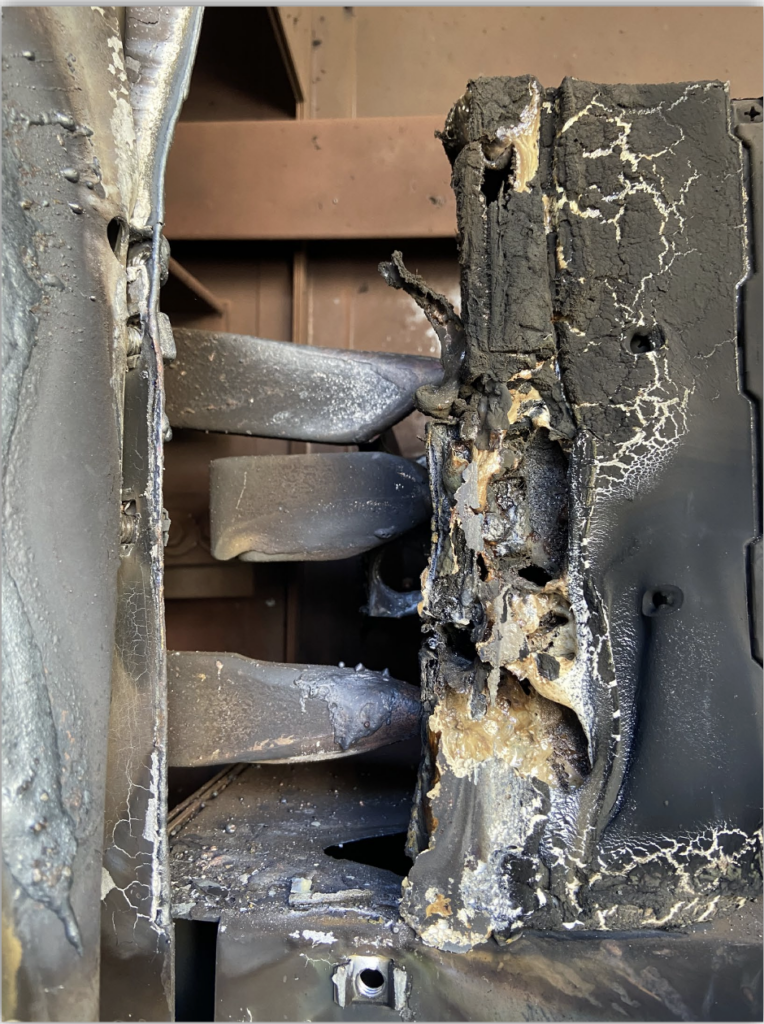
- Observed melting of all three phase bus bars at the connection to the main breaker.
- Observed twisting of bus bars where they are connected to the utility conductors in MDC.
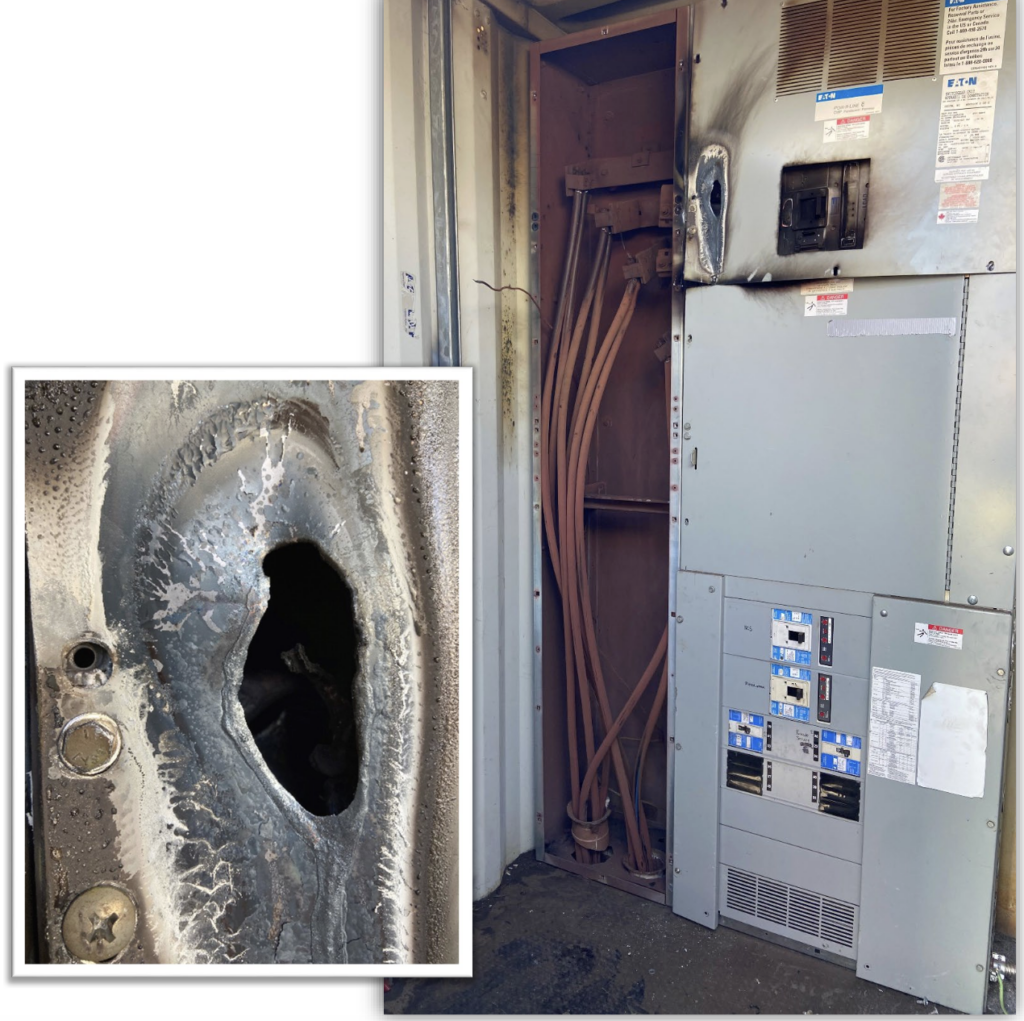
- Observed hole melted through the front of MDC from arc flash.
During the construction of a new building, a portable service was rented to provide power to the building due to delays in the arrival of the permanent service equipment. The portable service consisted of a 600-volt, 800-amp, 3-phase main distribution center (MDC) in a shipping container located in the parking lot of the property. Two underground service conduits from a utility-owned pad-mounted transformer (PMT) that fed power to distribution equipment inside the building supplied this service.
The MDC has an 800-amp main breaker, and the equipment has a 14kA interrupt rating and is intended to open in the event of a fault. The utility-mounted transformer (PMT) is also equipped with fuses designed to open in case of a fault.
The MDC includes a cabinet fed from the main breaker where the utility installs current transformers for metering purposes, and this cabinet is usually sealed by the utility once the current transformers are installed and the service is energized. A consumption meter is also connected to this cabinet to enable the utility to monitor customer usage for billing.
There are four horizontal bus bars for the system neutral and three phases that run from the left section of the MDC, where the utility connects its incoming conductors into the main breaker section of the equipment. These bus bars are spaced far enough apart to ensure there is no current flow or arcing between any of the phases under normal operating circumstances.
When a temporary service such as the one installed at this site is no longer needed, it would normally have the power supply disconnected by the utility and then the incoming and outgoing conductors would be removed before the container is
removed from the property.
The permanent service equipment had arrived at the new building and been energized by the utility. The licensed electrical contractor working under a permit on site removed the feeder conductors from the temporary service to the building. The utility also removed their seals, current transformers, and meter from the temporary service in the shipping container but did not remove their underground supply conductors or shut off the power from their transformer to the temporary service.
The owner of the temporary service equipment (also a licensed electrical contractor) wanted to remove it from site since it was no longer in use. The permit holder informed a representative of the equipment owner that it had not been confirmed that the utility had disconnected power to the service yet. In the days leading up to the incident, several different representatives from the company that owned the equipment became involved, and while none of them directly spoke to the utility, they did observe that the meter, utility seals, and current transformers were removed, and scheduled a crane truck to lift the shipping container off its foundation and remove it.
On the morning of the incident, a representative of the company that owns the temporary service equipment again observed that the utility metering equipment was gone and told the crane truck operator to remove the shipping container. As the container was lifted free of the ground, the utility service conductors that were still connected in the left section of the MDC began to pull on and twist the horizontal bus bars connected to the main breaker. The energized phase bus bars contacted each other and or the metal enclosure of the equipment which resulted in a 600-volt line to line arcing fault, and a resulting arc flash which melted a hole through the front of the distribution cabinet and sprayed molten metal inside the equipment. This continued until the fuses in the utility transformer opened.
Source: https://www.technicalsafetybc.ca/regulatory-resources/incident-investigations