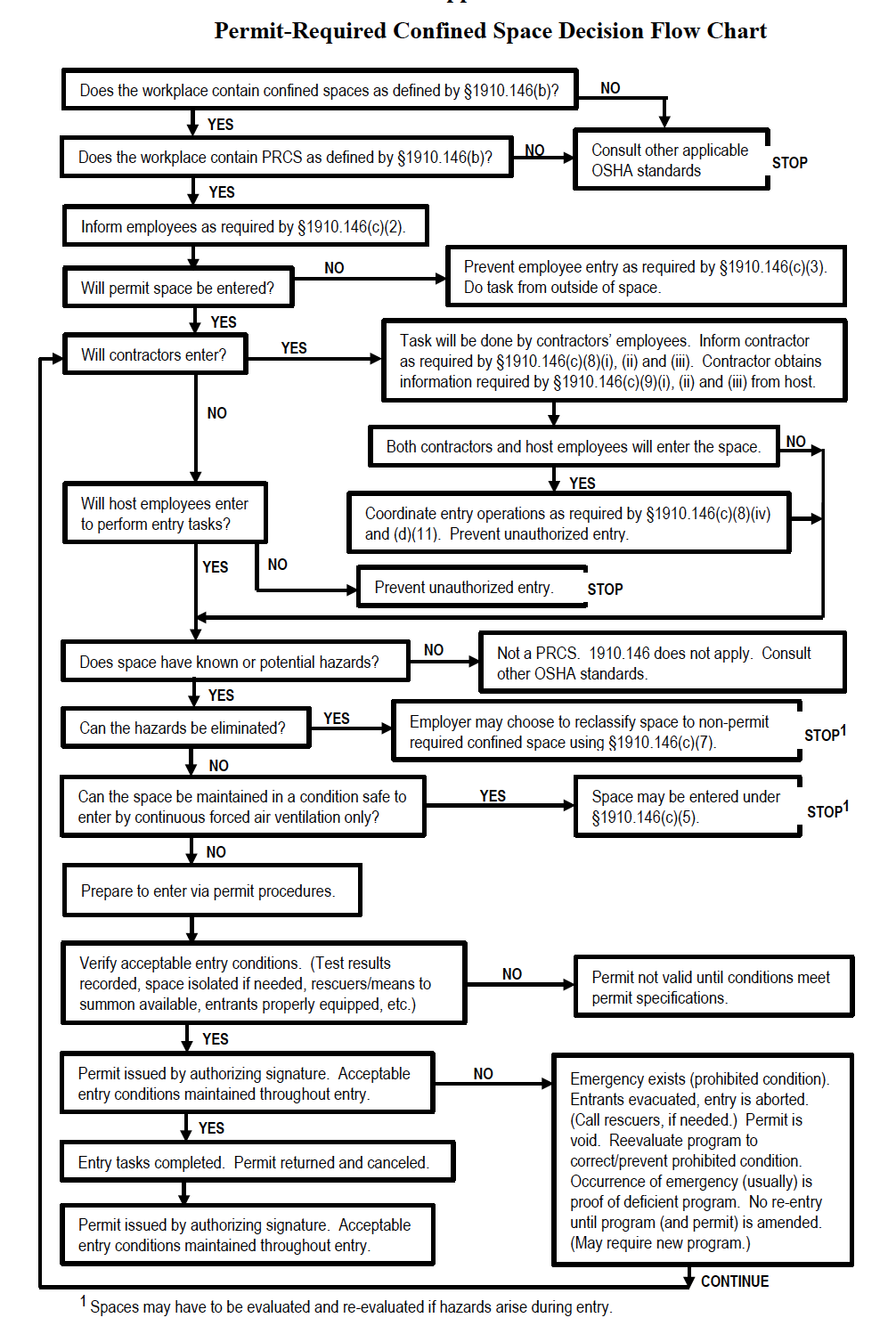
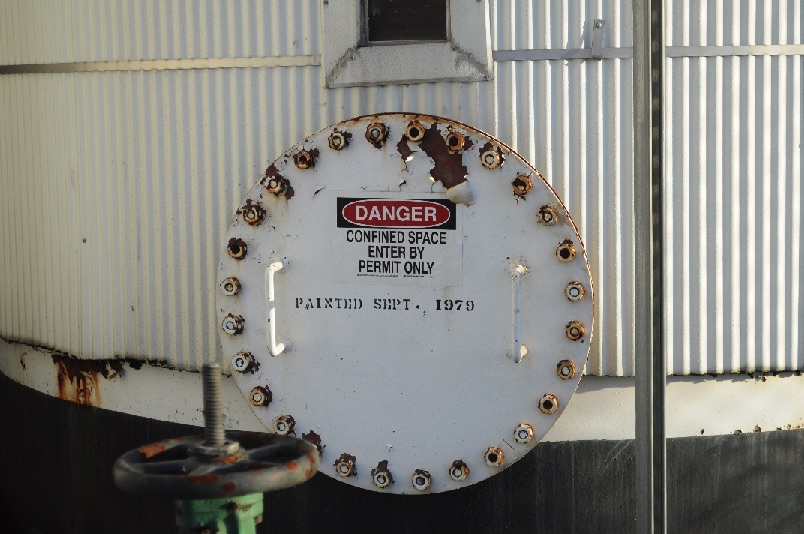
 Does the Standard impose additional requirements on “permit-required confined spaces” beyond those imposed for “confined spaces”?
Yes.
In fact, the vast majority of the Standard’s requirements only apply to permit required confined spaces, and attics, basements, and crawl spaces in a residential home will not typically trigger these requirements.
Once the employer’s competent person performs an initial evaluation and determines that a confined space does not require a permit (1926.1203(a)), the employer’s only further obligations under the Standard are to have a competent person reevaluate the space and, if necessary, reclassify it as a permit-required confined space if changes in the use or configuration of the space occur that could increase the hazards or potential hazards to entrants or if the employer has any indication that the initial evaluation may have been inadequate (1926.1203(£)).
If the employer’s competent person determines that the space is a permit-required confined space, the following provisions also apply: entry communication and coordination (1926.1203(h)), permit-required confined space program (1926.1204), permitting process (1926.1205), entry permit (1926.1206), training (1926.1207), duties of authorized entrants, attendants, and entry supervisors (1926.1208-1210), and rescue and emergency services (1926.1211).
Does the characteristic “contains or has the potential to contain a hazardous atmosphere” in the definition of “permit-required confined space” refer only to those atmospheres which pose an acute hazard?
Yes.
Where employees are exposed to hazardous atmospheres that do not present an immediate danger of death or impairment that could impede the employee’s ability to exit the confined space without assistance, OSHA’s health standards for those hazards apply, rather than the Confined Spaces in Construction Standard (see 1926.1202 definition of “hazardous atmosphere”).
In determining whether a space has limited means of egress such that it would be considered a confined space, does the size of the entry employee matter?
No
Whether a space has limited means of egress is a fact-dependent determination based on the size of the entrance and the configuration of the inside of the space. It is not dependent on the size of an entry employee.
If a rescue service fails to notify an entry employer that the rescue service is unavailable, will the entry employer be cited under the Standard?
No
So long as the entry employer informed the rescue service that rescue services may be needed and of the requirement that the rescue service notify the employer if it is unavailable for rescue, and the rescue service agreed to provide the notification, no citation will issue to the entry employer if the rescue service fails to fulfill its agreement to notify the entry employer that it is unavailable to perform rescue services.