
Last week I posted the investigation findings from a triple fatality event near my hometown that was caused by a 70+-year-old LPG cylinder that was 33 years PAST its recertification/requalification date AND was overfilled. Now the BSEE has shared a SAFETY ALERT regarding a Nitrogen Compressed Gas cylinder that catastrophically failed injuring three (3) workers and causing property damage.
The failure of the nitrogen cylinder, which is attributed to corrosive wall loss exacerbated by environmental factors and structural conditions, highlights critical vulnerabilities in the storage and maintenance of nitrogen cylinders, particularly in marine environments. The presence of crevices at the base of the cylinders, combined with moisture accumulation, significantly accelerated the corrosion process, leading to the hazardous failure. Heavy deterioration of the galvanic coating on the storage rack further compounded the failure, indicating systemic neglect of maintenance protocols that could prevent such incidents.
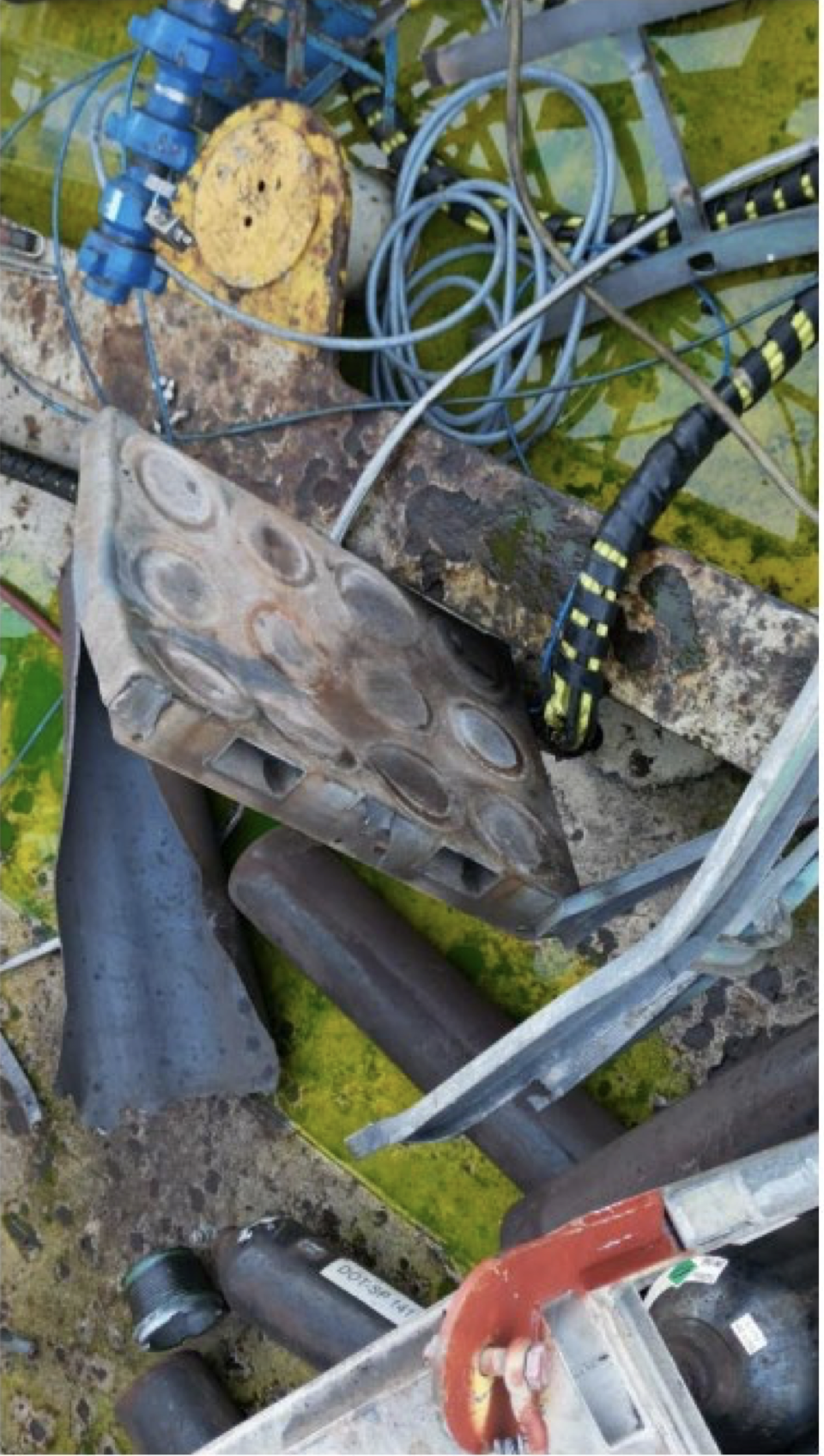
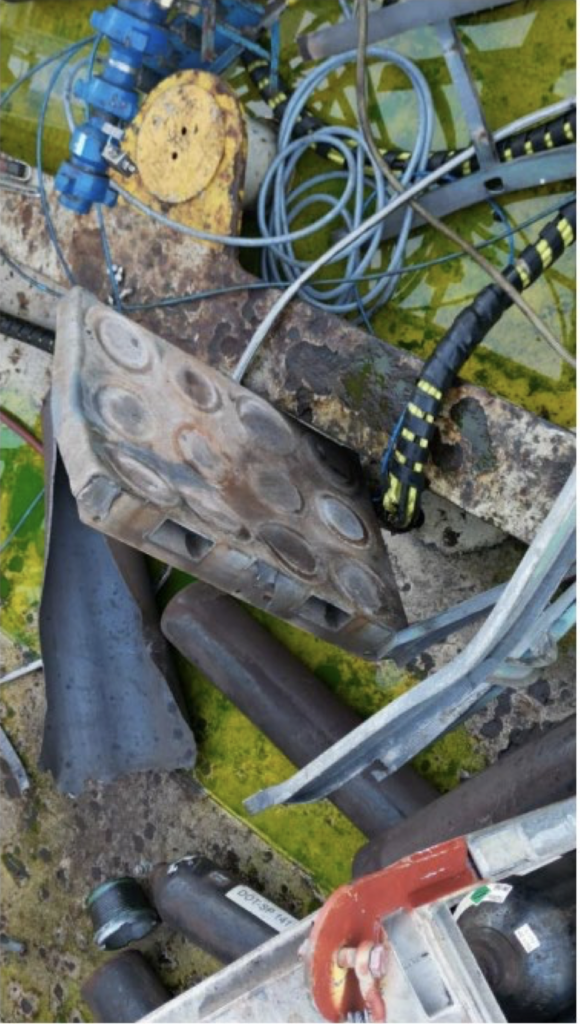
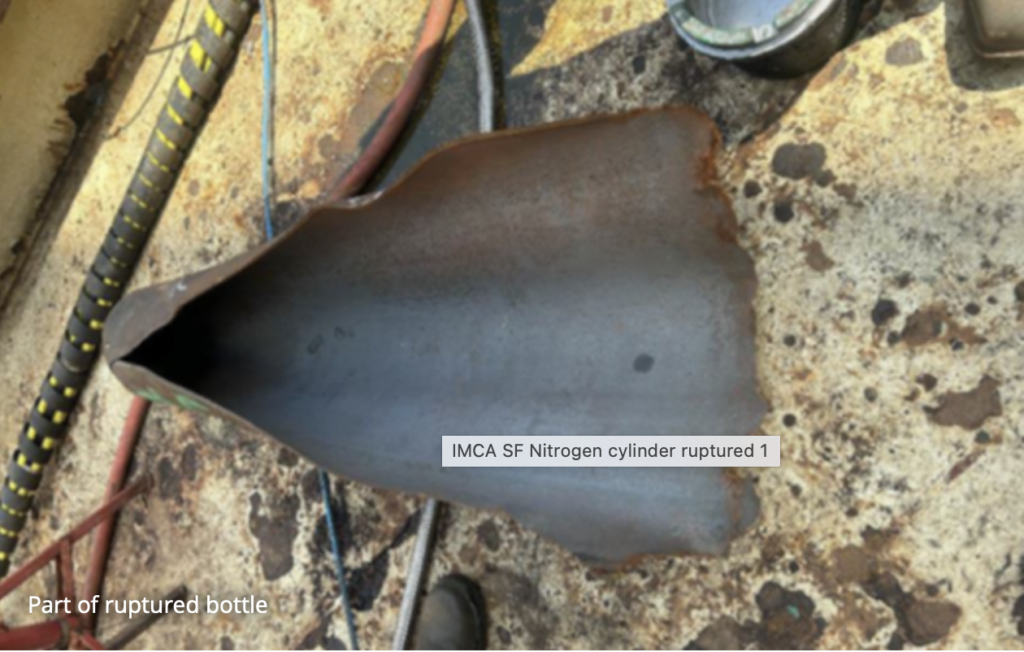
The Bureau of Safety and Environmental Enforcement (BSEE) recently investigated the rupture of an improperly inspected nitrogen cylinder that led to multiple injuries and equipment damage. At the time of the incident, rig personnel had positioned a rack with 12 nitrogen cylinders to begin pre-charging the accumulator system cylinders with nitrogen. One of the nitrogen cylinders within the rack subsequently ruptured at its base, resulting in the dispersion of both the nitrogen cylinders and debris that was within the rack, as well as of the remaining cylinders situated in the immediate and port aft areas of the rig. Three rig personnel sustained minor injuries from shrapnel.
The base of the cylinder that ruptured was heavily corroded. Other cylinders in the quad had evidence of similar but less severe corrosion.
The cylinders were 9 years into their 10-year hydro test cycle, and had been visually inspected by the supplier in accordance with applicable industry guidance, when they were refilled some three months before the incident, before being loaded out to the rig. However, the severe corrosion that caused the rupture was not spotted during this inspection;
The cylinder that ruptured was located in the middle of the quad and therefore not easy to properly inspect without disassembly of the quad.
Calculations showed that the fatal blast zone for a single cylinder of this size pressurized to 2,400psi would be around 5′. The severity of the blast caused the rack to be destroyed and the other cylinders to be propelled across the deck.
The failure of the nitrogen cylinder, which is attributed to corrosive wall loss exacerbated by environmental factors and structural conditions, highlights critical vulnerabilities in the storage and maintenance of nitrogen cylinders, particularly in marine environments. The presence of crevices at the base of the cylinders, combined with moisture accumulation, significantly accelerated the corrosion process, leading to the hazardous failure. Heavy deterioration of the galvanic coating on the storage rack further compounded the failure, indicating systemic neglect of maintenance protocols that could prevent such incidents.
BSEE recommends that operators and their contractors, where appropriate, do the following:
- Ensure that all cylinders are properly labeled and marked with the appropriate United States Department of Transportation (DOT) identification number.
- Verify that all cylinders are within their recertification period and have been properly recertified.
- Ensure that all cylinders are filled to the appropriate pressure and the filling process is properly documented.
- Train all personnel handling and transporting high-pressure cylinders on the proper procedures and safety precautions.
- Train all personnel on the importance of monitoring environmental conditions and identifying the early signs of corrosion.
- Foster a culture of safety and diligence regarding the handling and maintenance of gas cylinders.
- Regularly review and update high-pressure cylinder safety procedures to ensure compliance with current DOT regulations.
- Implement a robust inspection program and monitoring system to track the condition of high-pressure cylinders and storage racks regularly. Establish a reporting mechanism for any observed deterioration or safety concerns.
- Establish a routine maintenance schedule that includes cleaning, inspection, and protective coating application to prevent corrosion. This should also involve checking for and addressing any crevices or pooling of water around the bases of
the cylinders.
By addressing these recommendations, the risk of future failures can be significantly reduced, ensuring the safety of personnel and the integrity of the storage system.
Sources:
International Marine Contractors Association (IMCA)