
This unfortunate event is the result of the same failure seen in nearly every industrial facility on the planet… a guarding interlock gets bypassed, and a worker pays an unimaginable price for the failure. Sometimes it’s the worker(s) who bypass the interlock, and other times they are the unknowing victim of the bypass. Here is an event from “down under” that we can ALL LEARN FROM!
Before proceeding with the event, please ensure that all safeguards intended to protect workers are audited or inspected on a regular schedule by competent personnel. I always used my Centralized Maintenance Management System (CMMS) to list every interlock on machinery and my processes, and have at least an annual functional test. Some machines, where workers were exposed to hazards daily, received quarterly tests and inspections. Just last month, I did some work for a friend who is at a new facility and in just a simple walk-thru with maintenance and engineering we came across several significant issues regaring interlocks.
Here are a couple of these:
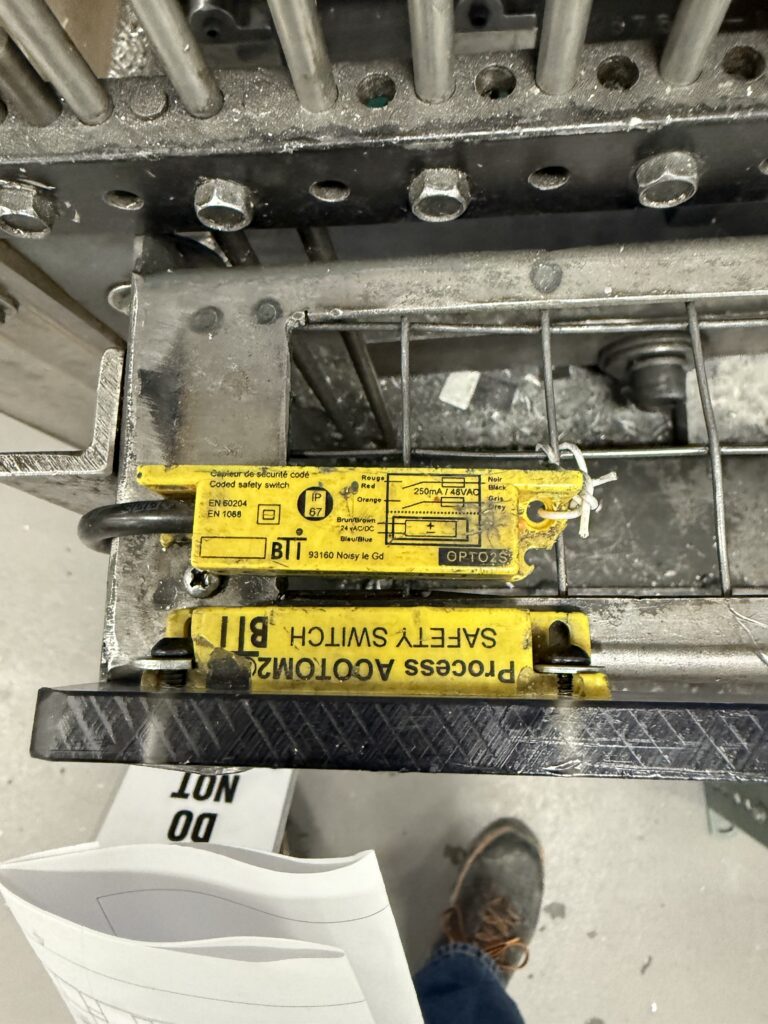
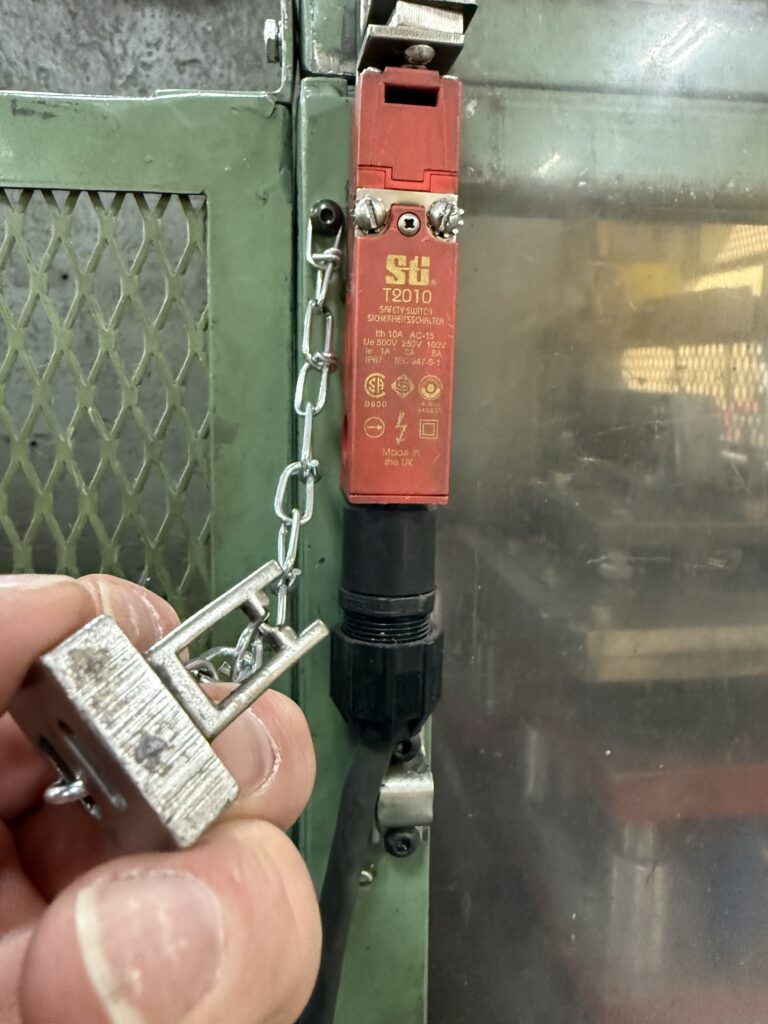
A baker lost half his arm after he became stuck in a blocked “crumbing” machine without an operational interlock. He was working night shift at the family bakery and went to assist colleagues with the blocked “crumbing” machine.
He was in another room, weighing up ingredients while his colleagues were mixing and packing the machine. As the machine became blocked and required clearing, one of them tried to free the blockage by kicking it numerous times. When that failed, the victim and another person separated the screw conveyor and crumbing machine, and the victim then removed a guard and began clearing the blocked infeed with his hand.
The ingredients blocking the crumbing machine obscured the screw, which was still rotating. As he was clearing the blockage, his right hand was caught by the rotating screw.
An ambulance was called, and he was admitted to the hospital, where he underwent surgery.
Unfortunately, his hand could not be reattached, and half of his forearm had to be amputated.
The bakery and its electrical contractor were found responsible following a WorkSafe investigation and have been sentenced in the District Court.
A summary of facts revealed that the electrical contractor had carried out weekly electrical maintenance at the bakery and had completed 2,800 jobs for them since 2007. At the time of the incident, the sensor showed signs of wear and damage and was not operational. The safety relay had been bypassed, allowing the machine to run. The guard was found to be non-compliant as it would not prevent someone reaching through into the screw conveyor.
The sensor on the machine had been bypassed for more than two years before the August 2023 incident.
An Electrical director carried out the work in March 2021, assuming the bakery was made aware of the sensor bypass after communicating with one of their engineers. A two-page invoice issued by the electrical contractor to the bakery a few days later stated that the work had been completed and that the invoice had been paid.
The bakery contacted WorkSafe on the day of the incident, and inspectors attended the scene and issued a non-disturbance notice. WorkSafe issued a shutdown notice after a scene examination the next day, and a month later, it attended the scene with an engineering expert.
The expert concluded it was likely the bridging of the relay contributed to the incident, stating the lack of well-tried safety principles such as having no electrical protection for the circuit, as well as the number of parts by which failure could lead to a dangerous state, resulted in a performance level that did not meet minimum requirements.
The expert found other issues with the machine, including a non-compliant guard, its emergency stop design, and its location.
The bakery also engaged an expert who concluded that the design of the safety architecture of the control system did not follow basic safety principles, and as such, the machine did not achieve even the most basic level of safety architecture.
The electrical contractor stated that it had taken several remedial steps and made improvements since the incident, acknowledging that the work carried out in March 2021 did not meet its standards.
The summary of facts said the risk was an inadequately guarded machine, including a sensor that had been bypassed, which exposed the victim to the moving parts of the machine when clearing a blockage.
The electrical contractor had failed to ensure that the bypass on the machine was only temporary and to communicate the bypass effectively to the bakery.
The bakery failed to conduct an adequate risk assessment to identify risks associated with the machine and to monitor the machine controls effectively.
It also failed to ensure the machine was adequately guarded, monitor its compliance, and review the effectiveness of the system of work for clearing blockages.
As a result, the bakery was found to have failed to comply with its duty to ensure reasonable health and safety and exposed workers to a risk of death or serious injury. It was fined $35,000 and told to pay $9290 in reparations at the sentencing.
The electrical contractor was fined $30,000 and ordered to pay $26,937 in reparations for putting bakery employees at risk through work carried out as part of its business operations.
Source: https://www.worksafe.govt.nz