
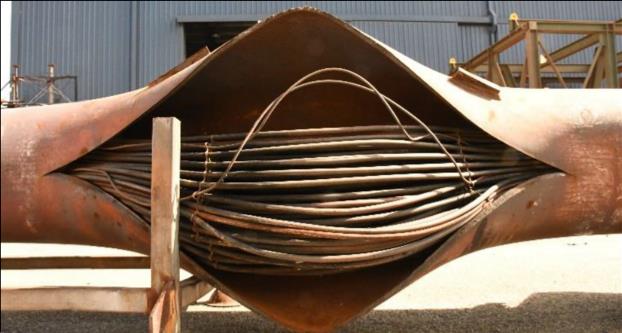
In April 2024, a regeneration gas heater ruptured at a gas processing plant due to an overheated electrically heated regeneration vessel. Regeneration gas heaters are commonly used in the regeneration of molecular sieve dehydrators with the recirculation of dried natural gas heated to 250 degrees Celsius throughout a
dehydrating purge cycle. The initiation of manual operating mode, together with an operator misaligning a valve configuration, prevented the flow of natural gas, which developed a “no flow” gas scenario in the regeneration circuit.
Additionally, a faulty thermocouple downstream of the vessel rendered the over-temperature interlock ineffective. An electrical heating element bundle overheated the vessel to the point of ductile failure, resulting in catastrophic failure of the regeneration heater vessel and a localized flash fire.
Investigation findings
- Process control:
- no direct vessel temperature monitoring in control room since the temperature indicator was a digital meter adjacent to vessel
- absent electrical heating interlock
- inadequate risk assessment including gas regeneration hazard and operability (HAZOP) analysis and ‘no flow’ scenario.
- Equipment integrity:
- faulty vessel thermocouple
- failure of gas compressor triggered operational change.
- Management of change:
- no checklist for operating change
- inadequate work control in manual mode.
- Metallurgical examination:
− failure of vessel in top section of pipe resulted from excessive heat
− mechanism of failure had high temperature creep within a relatively short period of time.
Key corrective actions
- Conduct further HAZOP analysis on regeneration and dehydration circuits.
- Apply ‘change control’ procedure to process plant changes.
- Ensure control system has two independent temperature controls for regeneration heating circuit.
- Upgrade maintenance system to better capture equipment defects and trigger inspections or repairs.
- Organisational structure change to increase process safety leadership and operational overview.
Industry learnings
This incident had a high potential for fatality considering the operating conditions of 6,000 kPa and 250 degrees Celsius during regeneration heating phase in manual operating mode. There was an absence of reasonably practicable, adequate and effective controls to prevent such a ‘no flow’ gas scenario developing.
The following was also noted:
- Interlocks as critical control to preventing vessel overheating:
− separate the two essential parameters of vessel heating control and downstream gas temperature, and ensure the interlocks provide independent layers of protection. - Management of change for operating mode variation:
− ensure that rigorous review of management of change is applied to operating mode changes. Technical authority to proceed with an alternative mode must ensure equivalent levels of safety via alternative interim controls. - Human factors:
− operating in manual mode has an inherently higher processing risk. Consider critical control point protocols and independent checking of valve alignments and plant settings
− operators need to be aware of operational limitations with bridging, for example, the use of maintenance override switch and process override switch functions.