
 I have referenced this newsletter many time and have linked to it many times, but never officially posted it as a resource for process safety folks. It is FREE and published by EPA Region 10 every other month. Like this posting on relief system design basis, there is literally tons of material that can be used as awareness materials and training materials. Most of their stuff is original, but they also use other publications, such as the CCPS’s Process Safety Beacon. This posting is using one of my favorites they published way back in 2008; this would be perfect for training or if you like safety contest, this could be used in a “Spot the Process Hazard” contest.
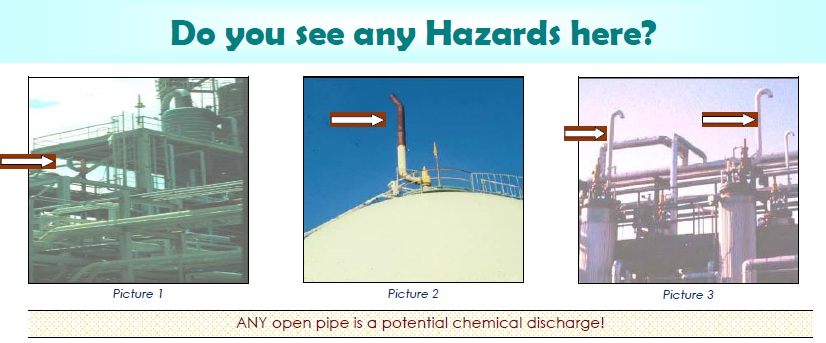
The discharge from the relief valve in Picture #1 is directed toward a personnel access platform above. If the relief valve opens while someone is working on the platform, that person would be exposed to the discharged material and possibly injured.
The relief valve discharge in Picture #2 is through a long, unsupported pipe. The force generated by the material flow could bend, break or restrict the discharge pipe, any of which could lead to personnel exposure or a failure of the system to operate as intended.
The discharge from the relief valves in Picture #3 is directed downward, toward an area where people could be working. As in the first picture, anyone working in this area when a relief valve opens could be injured. The discharge pipes are also long and unsupported as in Picture #2.
These pictures illustrate hazards found in many plants which handle chemicals. Relief devices often discharge to a ‘convenient’ location -and that may not be the same as a ‘safe’ location!
Relief valves and rupture disks are part of an emergency pressure relief system. Its design must not only prevent equipment overpressure, it must also make certain that material discharged does not lead to personnel injury. The system needs to ensure that there is no fire, explosion, or toxic material exposure hazard from the material released through a relief valve or rupture disk.
- Plant modifications include new platforms, vessels, piping and a variety of other additions. Potential exposure to effluent from existing AND new pressure relief devices must be included in your management of change process.
- Drain, vent and sample valves from equipment or piping as well as vessel overflows can have similar hazards. Any material which could be released from process equipment, including pressure relief valves or rupture disks, must discharge to a safe location.
- ANY open pipe has the potential for an unexpected discharge. The release could occur for a variety of reasons and it will often be a surprise. Use extra caution when working around them -expect the unexpected!
(Reference: Safety Beacon)
CLICK HERE to download the entire newsletter and here is the INDEX of the newsletters.