On Thursday, 1/15/2025, a 150-pound compressed gas cylinder of Anhydrous Ammonia (NH3) catastrophically failed while it was being transported in by a cylinder delivery vehicle. Three (3) people were hospitalized from this event: the truck driver, a poll plaza worker, and a security guard. As of 1/17/26, they are in stable condition.
The video and image below provide us with valuable teaching tools on the dangers of compressed gas cylinders and NH3. Let me explain what we are seeing in the video and images below…
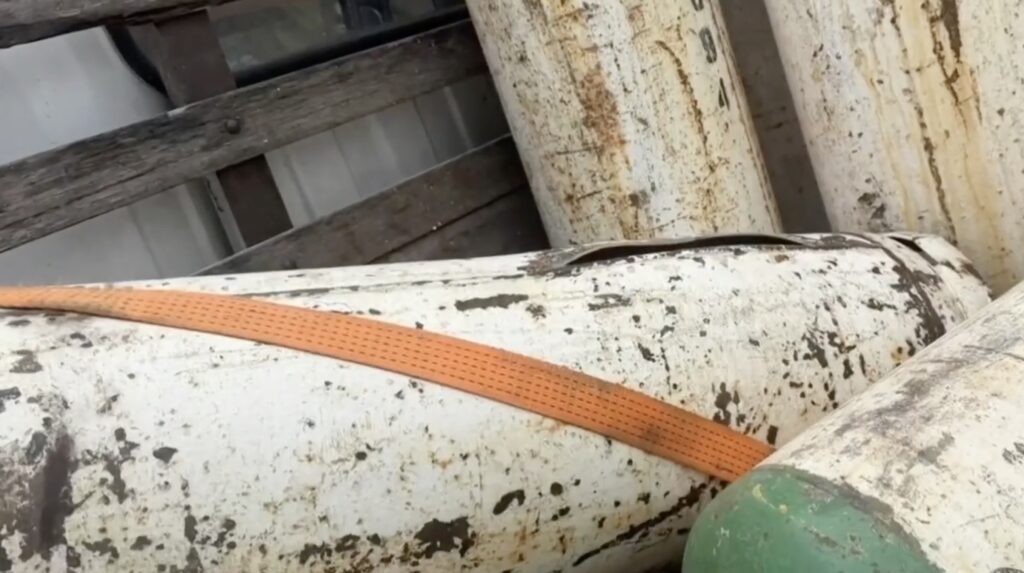
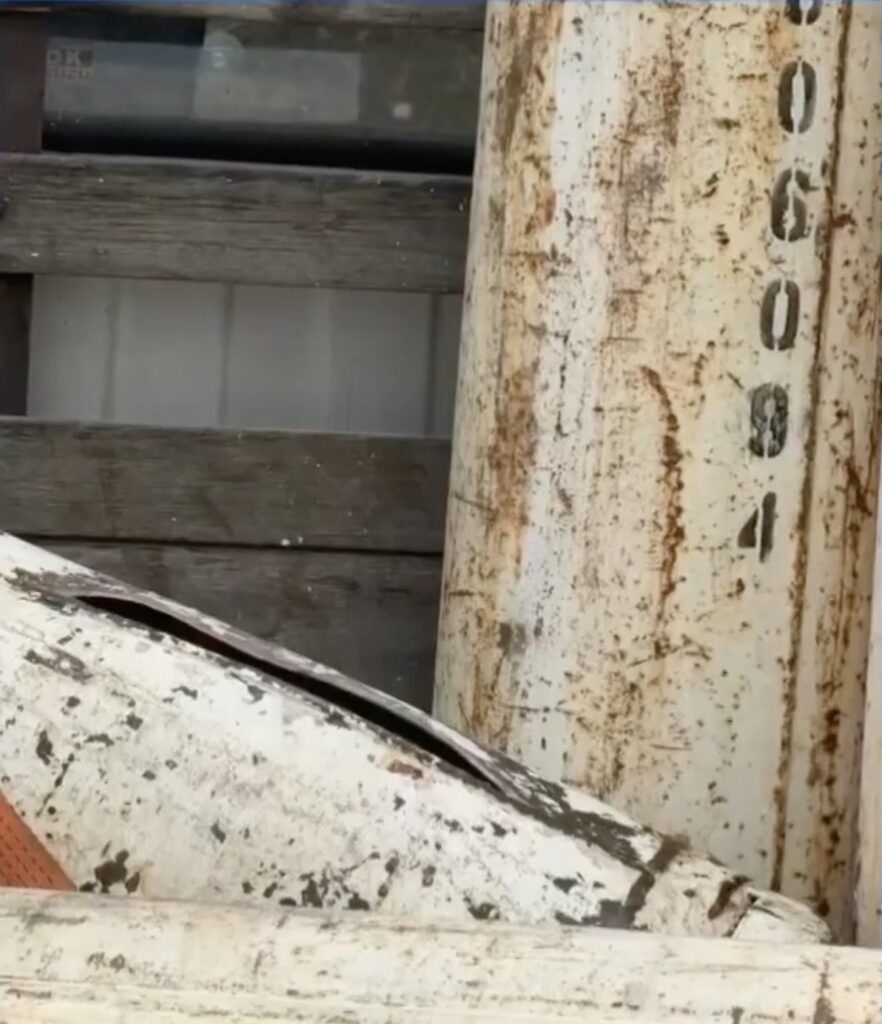
First, this event involved NH3 as a COMPRESSED GAS. Usually, NH3 is transported as a Pressurized Liquefied Gas in larger tank trucks. This shipment includes over a dozen 150-pound compressed NH3 gas cylinders. We do not know the failure mode of this cylinder, but as shown below, the rupture line was vertical and NOT along a seam/weld. I guess, in some weird way, this may have been helpful, as the failure location moved the cylinder into other nested cylinders rather than launching it upwards, as would have happened had the cylinder failed at its base (the #1 failure point on CG cylinders). In image 2 below, we can see what appears to be a second failure location at the base circumferential weld; however, I am not 100% certain that it is a failure of the container, and it is certainly much smaller than the vertical tear in the cylinder wall.
When watching the video, understand that the gas inside the cylinder is COMPRESSED and under about 115 psig, and that the concentration of NH3 is about 99%. So the release of the NH3 gas is immediate, as it is already in its gaseous state, and the 12″ tear allowed the cylinder to empty in less than 10 seconds.
I do hope we get some follow-up on the cylinder’s failure mode. Was it a manufacturing defect, external/internal corrosion, previous impact event, age of cylinder, inspection history of cylinder, etc? I would also like to know if this cylinder has been dedicated to the same customer over its lifetime. This could play a significant role in this event. Let me explain…
In image #1 below, we can see a vertical corrosion line on a cylinder in the shipment. This type of indicator indicates that the cylinder is stored/used in its horizontal position rather than its vertical position. These cylinders are designed and built to be kept vertical at ALL TIMES; however, some users will position them lying on their sides for a multitude of reasons (none of which are valid!) Seeing this perfectly straight corrosion line on the cylinder may indicate use/storage issues; however, the cylinder that failed does not have such a line along its failure. So it is something to consider in our analysis of how the cylinder came to fail. Of course, the first path we go down is age, and inspections are up-to-date. Failures in these inspections are a very common finding, even here inside the USA.