
The Bureau of Safety and Environmental Enforcement’s Gulf of America Region identified a potential risk involving compressed gas cylinders across the Outer Continental Shelf in 2024 and 2025. During this period, multiple explosions were reported to the bureau and were linked to cylinder failures. Several of the explosions were severe, causing injuries and damage to facilities.
In response, the bureau conducted a performance-based risk inspection of 20 assets, including production platforms and well operations across the Gulf region. These assets were operated by 13 unique operators.
BSEE identified several key findings:
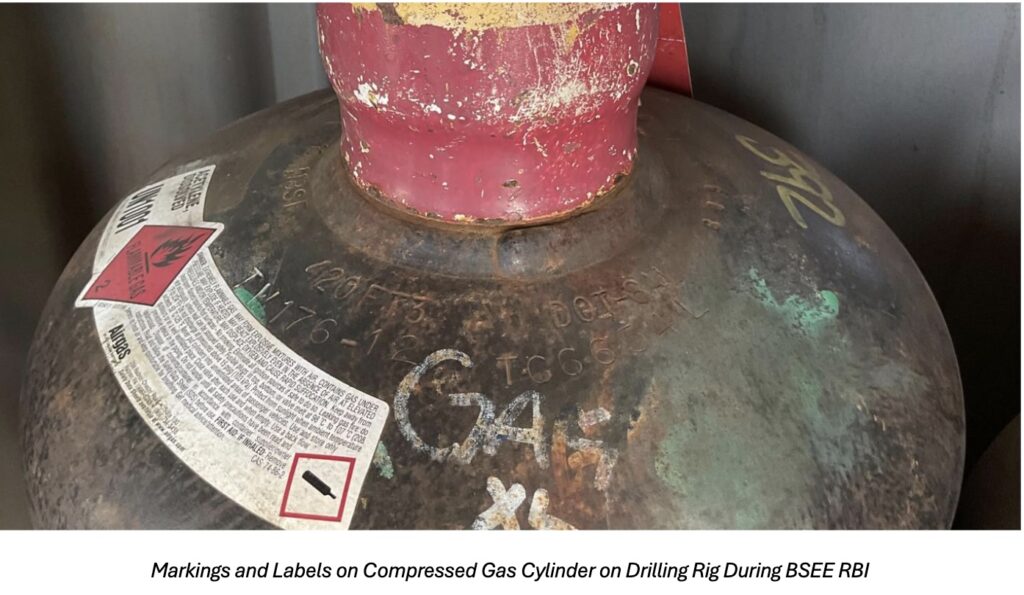
- Although the inspection covered a limited sample of facilities and operators on the Outer Continental Shelf, industry showed an overreliance on offsite, third-party contractors to ensure adequate integrity of compressed gas cylinders. The inspection also found a limited understanding of cylinder inspection programs and recharging processes. In many cases, offshore personnel were not familiar with cylinder markings.
- Many facilities and offshore personnel were unaware of recent safety alerts published by the bureau and the International Association of Drilling Contractors on the risks and the recommendations to lower the risks associated with compressed gas cylinders. Inspectors also noted that some operators followed good practices documenting the review of safety alerts by offshore personnel and developing preventative maintenance requirements to address the recommendations shared by the bureau and the association.
- Bureau inspection teams found facilities without compressed gas cylinder inspection programs. They also found cylinders containing the same gases stored together and secured, but cylinders with different pressure ratings stored in the same areas without adequate consideration. Some cylinders could not be inspected, and some had no markings or showed corrosion. Inspectors also identified good practices at some facilities, including inspection programs and post-inspection actions such as moving or rotating cylinders to allow inspection.
- It was uncommon for offshore personnel to understand cylinder markings, recertification dates, the requirements of 49 CFR Part 173 Subpart G, or the shelf life of compressed gas contents. Inspection teams also found multiple compressed gas cylinders with no markings or information about their contents. No platform inspected used gas detectors to ensure cylinder integrity over time.
- Most locations inspected had no compressed gas cylinder maintenance plans and relied solely on third-party inspections. Most operators said they had an initial acceptance visual inspection and a pre-use inspection; however, none of those inspections were documented or required. Bureau inspectors identified only a few facilities with established maintenance plans based on the last inspection date or a risk-based approach for fixed compresses gas cylinders.
- Most operators said they did not refill compressed gas cylinders on location. Recharging appeared to be more common at well operations than at production facilities. Where recharging took place offshore, operators used caution tape, rigid storage racks, or predetermined locations with a single person used as a barrier. Operators also used morning safety meetings and job safety analysis to communicate hazards to offshore personnel during recharging operations.
- The majority the operators inspected did not have a recharging system, requirements or responsibility on location. Operators said they relied on third-party vendors to recharge their cylinders onshore or offshore. At facilities where recharging operations took place, they implemented systems that could not charge at a higher pressure of their cylinders; pressure safety valves are inspected and tested every 30 months; and pressure safety valves are set below the maximum allowable working pressure of the compressed gas cylinders.
- Operators were generally unaware of Department of Transportation special permits, and largely assumed their third-party vendors were compliant with Department of Transportation standards.
- Inspection teams found multiple cylinder racks in unprotected areas that did not allow for proper drainage, increasing long-term exposure to corrosive elements.
- Operator and contract personnel were not trained on how to inspect compressed gas cylinders, the risk associated with them, or best practices to prevent rupture incidents
Therefore, to help prevent similar incidents in the future, the Bureau of Safety and Environmental Enforcement recommends that operators and their contractors, where appropriate, consider the following:
- Review internal procedures for sharing safety alerts with offshore personnel and take corrective action on recommendations from the bureau to prevent the recurrence of similar incidents on the Outer Continental Shelf.
- Ensure all compressed gas cylinders are stored by contents and pressure; be easily inspectable; have valve caps on when not in use and secured within a rack with chains, straps, or secured to a wall or support.
- Inspect all cylinders on their platform and validate that every compressed gas cylinder is properly labeled with clear, durable content identification via stenciling or labels. Every cylinder should have marking requirements that include legible content names, hazard warnings, and Department of Transportation info. Damaged labels should be marked as “Contents Unknown”. Operators should ensure their offshore personnel have a full understanding of cylinder labels, markings and recertification dates.
- Working with third party vendors and establish the best inspection criteria for compressed gas cylinders while they are located on shelf facilities. These inspections should be conducted by qualified personnel and documented. Documentation should include the date of the inspection or test; include the name and position, and the signature of the person who performed the inspection or test; include the serial number or other identifier of the equipment on which the inspection or test was performed; include a description of the inspection or test performed; and the results of the inspection test.
- If any recharging operations take place offshore, develop written procedures to ensure safe operations. Operators should not allow one person to perform recharging alone. Personnel should use the correct personal protective equipment, open valves slowly, secure cylinders, keep ignition sources away, conduct leak checks, and ensure all fittings are compatible with the gas being used to prevent explosions, leaks and injuries from high-pressure gas.
- Before any pre-charge operations on an offshore facility, operators should confirm overpressure
protection on a pump for gas cylinders, visually inspect the pressure relief valve for damage, test
its function by letting the pump build pressure until the relief value opens, and check that the
pressure switch setting is lower than the relief vale’s set point, ensuring a multi-layered safety
system with proper settings below the tank’s maximum limits. - Work with their third-party vendors to ensure all racks that are sent to the offshore facilities meet the requirements of the Department of Transportation and have all required special permits when applicable.
- Review all cylinder racks on their facilities and determine if all cylinders are on a free draining base to minimize corrosion. If a rack is identified to not be drainage free, operators and contractors should find ways to mitigate corrosion to the cylinder through frequent inspections or moving the racks to covered areas.
- Review Safety and Environmental Management System training element and ensure it addresses compressed gas cylinder training regulations, especially those tied to Occupational Safety and Health Administration’s 29 CFR 1910.101, which mandates that employers train all personnel on safe handling, storage, and use to mitigate hazards like explosions, fires, and toxic exposures, covering proper personal protective equipment, valve handling, leak testing, and cylinder securing, with specific training needed for different gas types.