
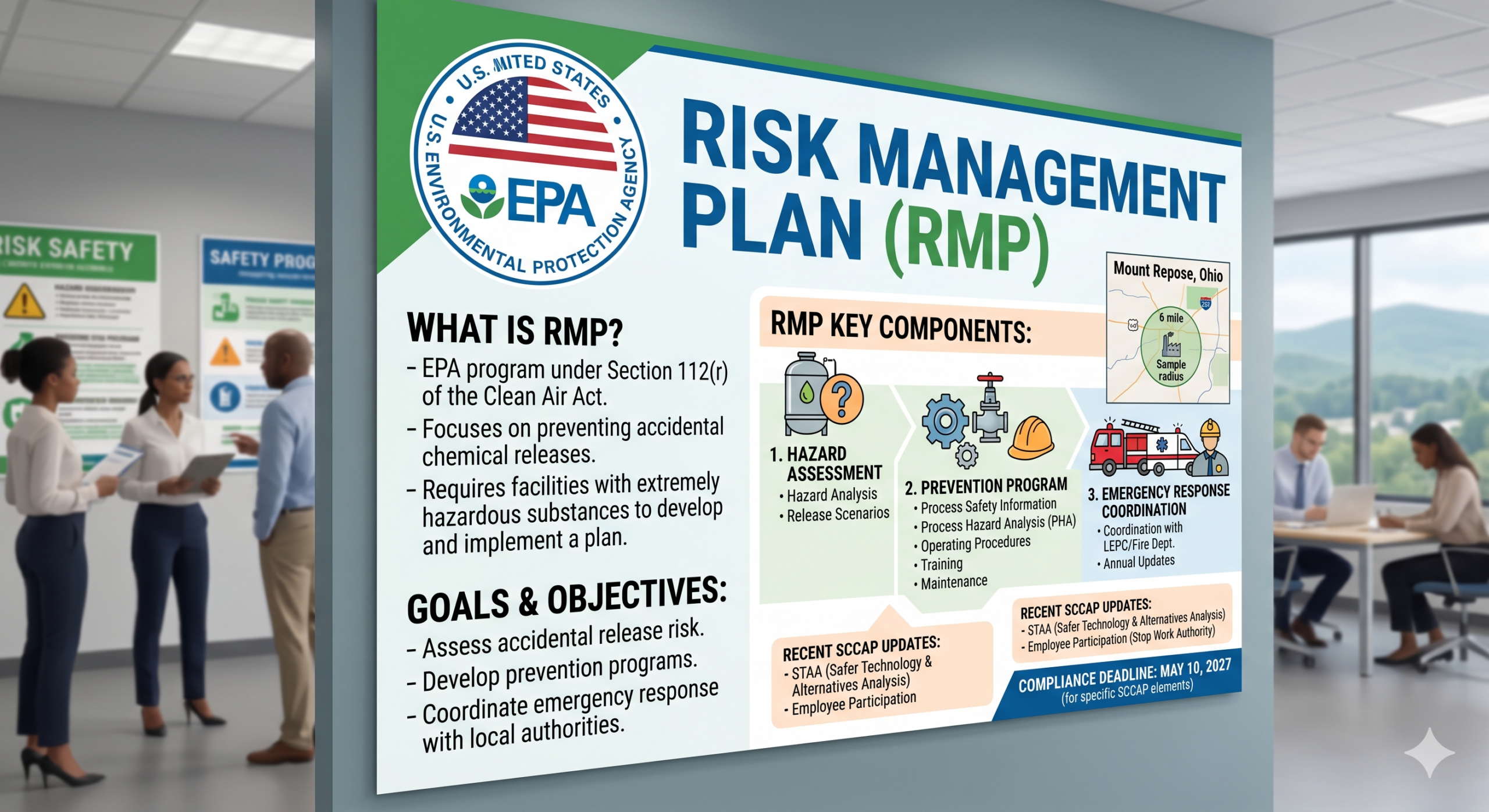
Pursuant to the risk management program regulations, facilities must perform an offsite consequence analysis for the worst-case release scenario.
Do the quantities of two (2) separate vessels that are interconnected with a closed valve need to be aggregated for the worst-case release scenario analysis?
No.
Worst-case release is defined as the release of the largest quantity of a regulated substance from a vessel or process line failure that results in the greatest distance to an endpoint (40 CFR §68.3). For substances in vessels, the worst-case release scenario should only include the greatest amount of a regulated substance held in a single vessel.
Additional information on offsite consequence analysis requirements can be found in Chapter 4 of the General Guidance on Risk Management Programs for Chemical Accident Prevention (40 CFR Part 68) (EPA550-B-04-001) and in the Risk Management Program Guidance for Offsite Consequence Analysis (EPA 550-B-99-009). Both documents can be found at the following URL:
https://www.epa.gov/rmp/guidance-facilities-risk-management-programs-rmp
Source: https://www.epa.gov/rmp/worst-case-release-scenario-separate-interconnected-vessels