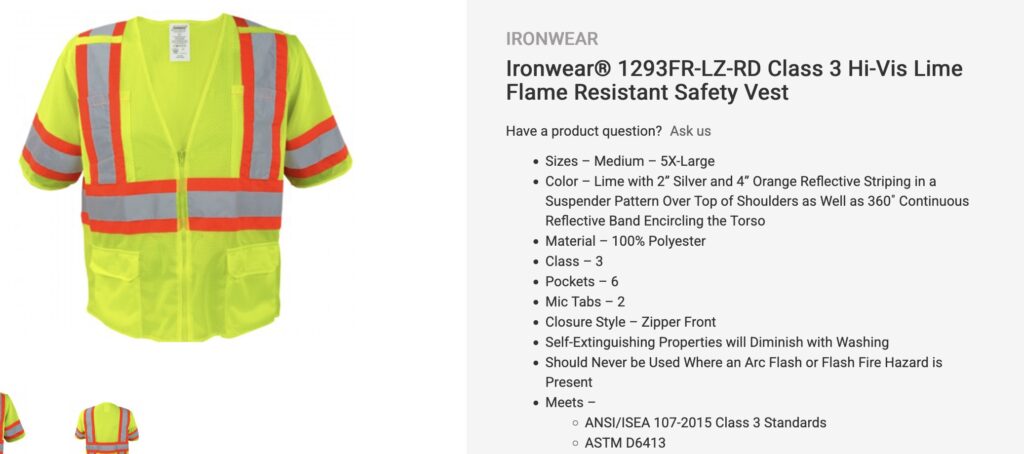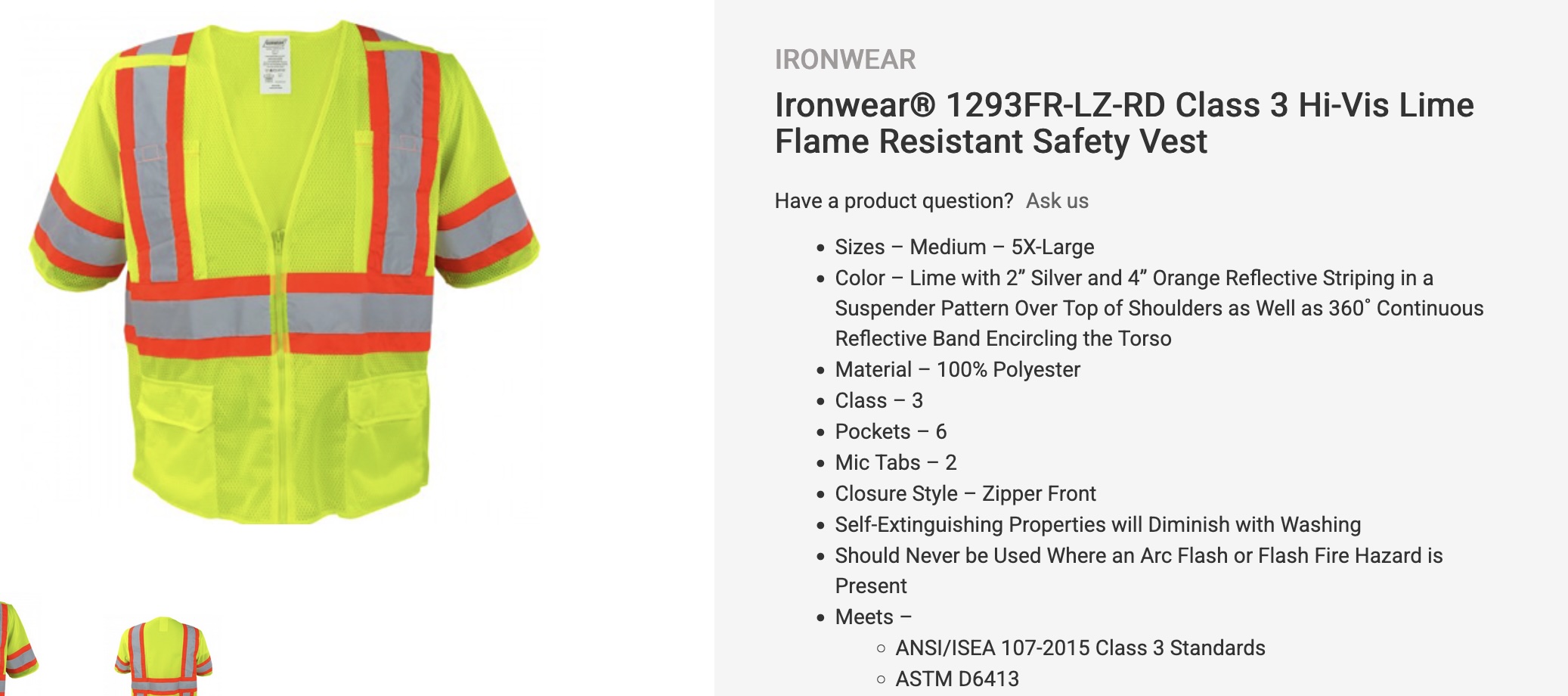
In today’s workplaces, it’s hard to find a large business that does not require Hi-Vis Vest/Workwear. What is not hard to find is a business with HAZLOCs where workers are required to wear FRC but are wearing nylon Hi-Vis vests OVER their FRC. I am all for making workers more visible to powered industrial trucks and other mobile equipment. But when those vests compromise other PPE, we are NOT forced to decide which is more important. We have options: Hi-Vis vests that meet NFPA 2113, the Standard on Selection, Care, Use, and Maintenance of Flame-Resistant Garments for Protection of Industrial Personnel Against Short-Duration Thermal Exposures from Fire.
As has always been the “rule”, when we are in areas where Flame Retardant Clothing (FRC) is necessary, the FRC MUST be the outermost garment. A nylon hi-vis vest will melt onto the FRC, seriously compromising its ability to protect the wearer. Here is what NFPA 2113 requires: (emphasis by me)
5.1.10 Organizations shall NOT permit workers to wear non–flame-resistant clothing over flame-resistant garments.

A.5.1.10 Organizations and end users are cautioned that wearing overgarments or other PPE that are not flame-resistant over flame-resistant garments can compromise the performance of the flame-resistant garments. Clothing or items worn over flame-resistant garments that are not flame-resistant, such as jackets, rainwear, and high-visibility vests, can ignite and transfer significant heat through the flame-resistant garment and to the exposed body areas such as the head and face, causing severe burn injuries. Undergarments should be melt-resistant.

Certain synthetics or synthetic blends worn as undergarments can be inappropriate for use under flame-resistant garments, since the transferred heat could cause them to melt. Undergarments with melt-resistant properties are recommended (e.g., cotton, aramid, wool).
This is NOT an endorsement for an FRC-rated vest, but just an example of what is available for workers who need FRC and Hi Vis vests.