
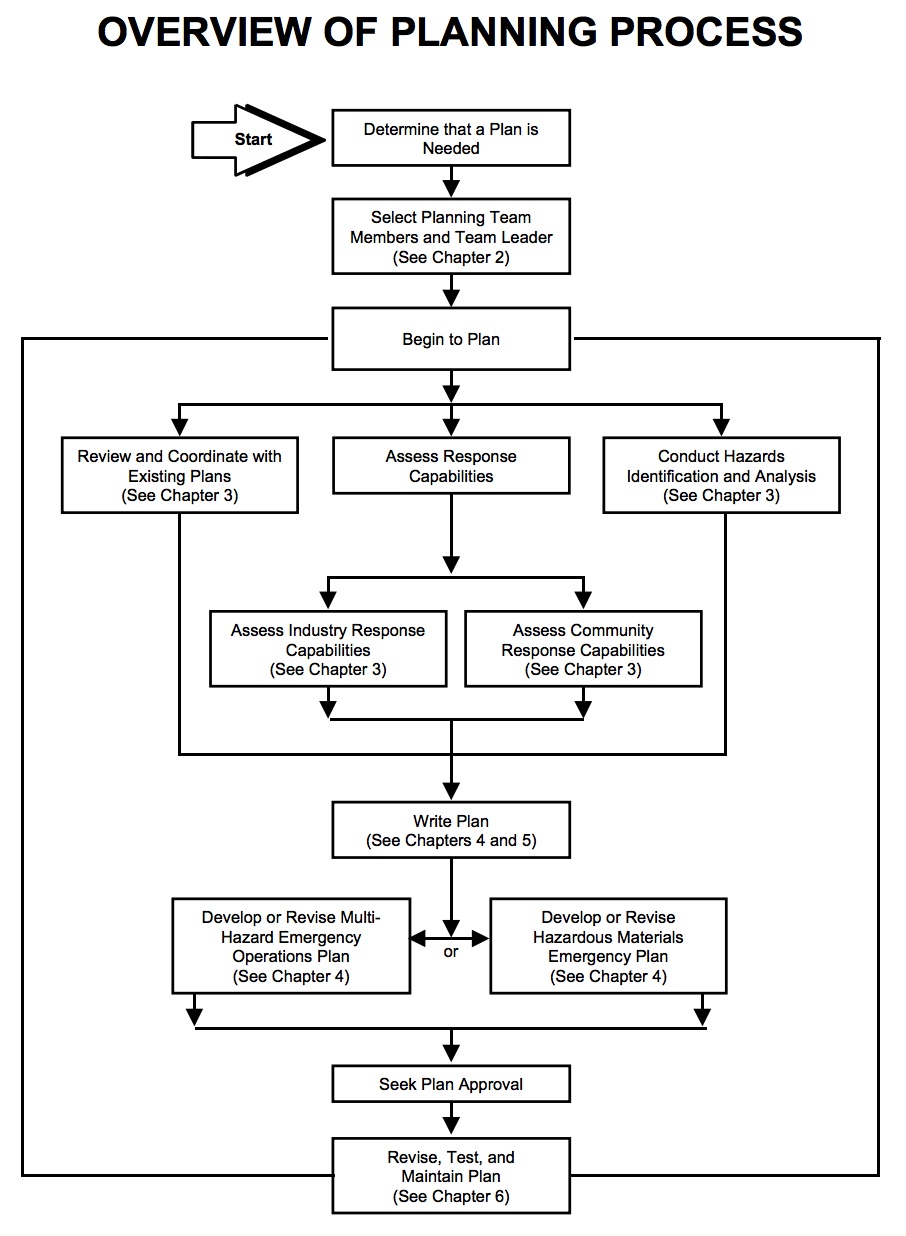
 The purpose of this guide is to help communities plan for hazardous materials incidents. Rural areas with limited resources may need to plan at the county or regional level. State officials seeking to develop a state emergency plan that is closely coordinated with local plans can adapt this guidance to their purposes. Likewise, officials of facilities handling chemicals, railroad yards, and shipping and trucking companies can use this guidance to coordinate their own hazardous materials emergency planning with that of the local community. Hazardous materials refers generally to hazardous substances, petroleum, natural gas, synthetic gas, acutely toxic chemicals, and other toxic chemicals. Extremely hazardous substances is used in EPCRA to refer to those chemicals that could cause serious health effects following short-term exposure from accidental releases. EPA has listed 356 extremely hazardous substances for which emergency planning is required. Because this list may be revised, planners should contact EPA regional offices to obtain information or contact CEPPO or visit the CEPPO website. This guidance deals specifically with response to hazardous materials incidents–both at fixed facilities (manufacturing, processing, storage, and disposal) and during transportation (highways, waterways, rail, pipelines, and air). Plans for responding to radiological incidents and natural emergencies such as hurricanes, floods, and earthquakes are not the focus of this guidance, although most aspects of plan development and appraisal are common to these emergencies. CLICK HERE to download this FREE Guide.
FREE Emergency HAZMAT Planning Guide