There are not many safety professionals who have been in the profession since the day OSHA came onto the scene that has not order and hung a safety sign or two. I personally believe keeping safety in the minds of the workers is a big part of keeping them safe. They have so many distractions and a well-placed sign that has concise instructions can be an effective reminder; however, a poorly designed sign with a poor message becomes wallpaper really fast. Take this sign…
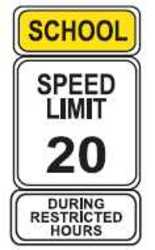
Ever seen this sign before? If you are a driver I am betting you have seen these signs on more than one occasion. What are your thoughts on this sign? Effective? Is the message clear? How are you and I supposed to respond when we see this sign? Sure we know we are in a school zone and the speed limit is 20 mph, but for this message to be effective we are missing one IMPORTANT piece of data. Do you see the problem now?
This is a very ineffective sign! I would think our most precious items would deserve better. Are we that broke as a society that we cannot install this in each school zone?
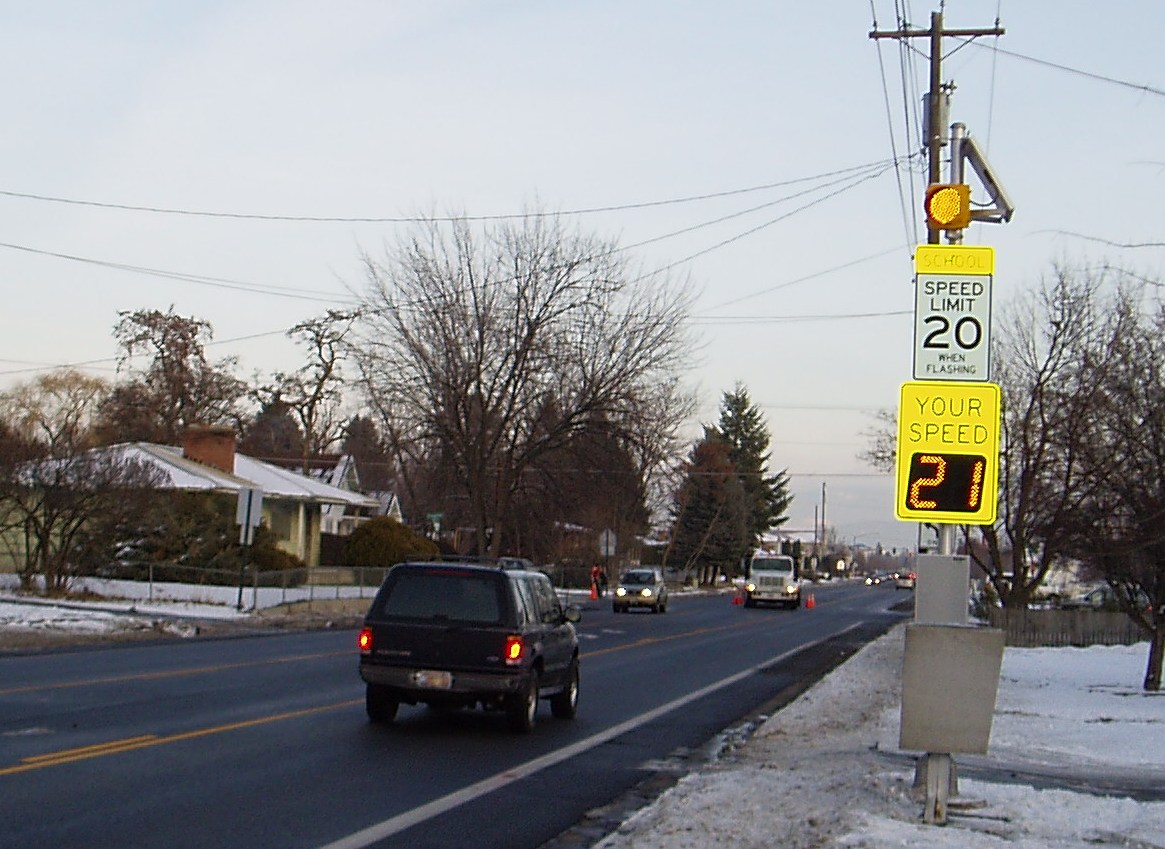
Which is more effective at getting the drivers to respond? Which sign provides the most concise and clear instruction? Which sign actually provides FEEDBACK to the driver? So we can agree there are good signs and there are bad signs!
Now lets examine our workplaces… How effective are our signs? One of my favorite sign “oops” is the machine guarding signs that say:
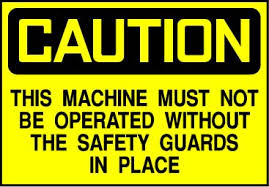
I am sure most have seen this sign or one very similar. The message is clear so it is not the message that is the problem; so what could possibly be wrong with this sign? It is where we affix the sign! The vast majority of these signs get affixed to the guard itself. This is a problem, because if the sign is off the machine how effective is the sign at being a reminder NOT to operate the machine without the guards? I have a client who was having a devil of time keeping guards in place. They tried everything, even firing workers for operating machines without guards. In hindsight it was the WRONG thing to do, as some of these employees had NEVER been trained on how the machine was actually suppose to be guarded. Some workers had never seen a guard on parts of the machine that were intended to be guarded. So the safety manager orders dozens of these very signs and had them installed on the guards. The firings only increased, again a very WRONG thing to do. I arrived one day and they were still all in a tizzy about their guarding issues and they wanted to learn about interlocks. They were willing to spend whatever amount of money was needed to fix this problem. I suggested that they remove the signs from the guards and actually install them on the base of the machine and INSIDE the guarded area. This meant the sign was in place whether or not the guard was. It also provided a very good visual for workers, managers, and supervisors to be able to identify unguarded parts of their machinery. Now a worker who is caught removing a sign will be disciplined, but you know not one worker removed a sign and the firings ended and the guards stayed in place.
So signs have a place in safety – that’s for sure; but we have to be wise in how we use them! What the sign says, where the sign is placed, and our use of signs to SUPPORT a safety effort all play a role in how effective they will be. I will leave you with a test that one of my Plant Managers did on me my first month on the job. He hated signs and thought of them as a “safety crutch” – a means by which management could say to the worker “I told you so… see the sign!”. In my three years of working for this plant manager I knew any sign that I hung better have a place and specific need or I would never hear the end of it! He was walking with me, the safety professional, on one of our safety audits in the plant. We went into this room and he stopped us all; there were a half dozen or so of us, both men and women present. He then asked each one of us to write down just one of the safety signs on the door we just walked through. There were a couple of us who knew what most doors had on them as we walked into this one processing area so we guessed and we guessed right. But to prove his point the plant manager had put a sign on the door that said “WARNING! Entry into this area requires you to be a Moron”. The sign was the right color and the font was the same font used on the other signs. But we walked right by it and paid zero attention to it. He made his point and when we came around to replacing our worn out fire doors he made his own safety rule regarding signs on doors: 1) only one sign, regardless of size is permitted, 2) sign can convey only one message/command, and 3) it must require an ACTION by the reader. If we had areas that were so hazardous that I/we felt we needed more than one sign on the door then we were required to have a controlled access procedure to address the hazards and ensure the personnel entering the area knew fully of the hazards and the procedures required for entry. So as you can imagine the STOP sign became our #1 sign in the plant and I mean a real STOP sign just like we see on our roadways. I then would put “Controlled Access Area” below the word STOP. Personnel then knew they were not allowed in the area without a work permit. You will never know the effectiveness of a STOP sign – something so simple yet so effective.