
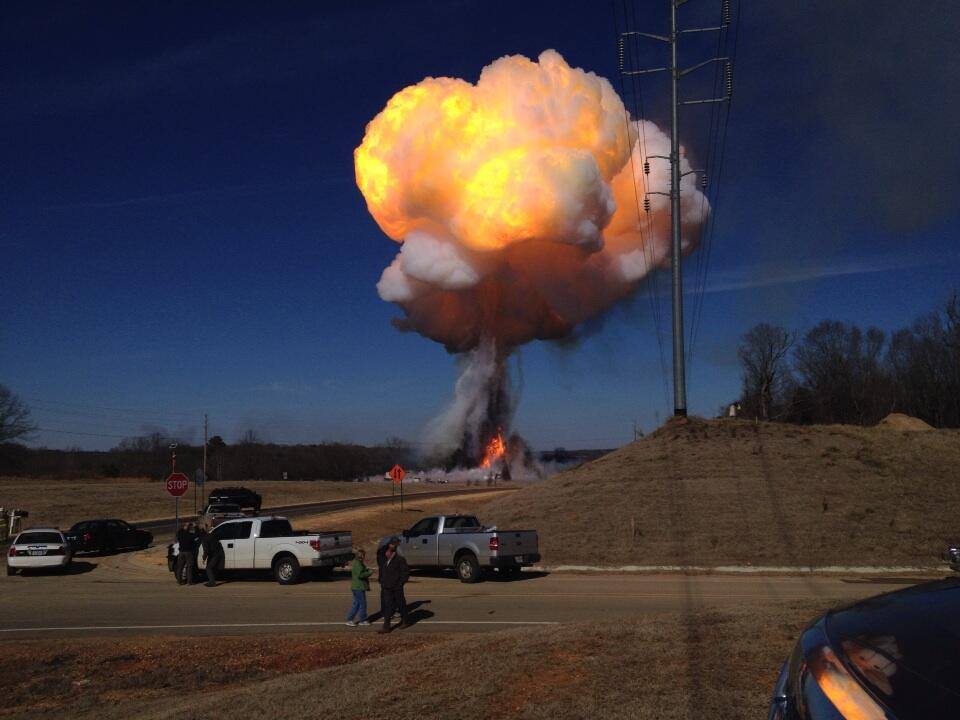
 Since January, I have been puzzled by the reporting from all agencies and media that the explosion shown in the video below involved a fuel oil tank. I have been intimately involved with fire/explosion investigations for many years. I have never seen a type of fuel oil stored in an atmospheric storage tank under any type of conditions behave like that. I am very confident that what we are witnessing in the video is a HIT (Heat-Induced Tear) of a process vessel used in the making of the fuel. Here is the video and my observations; I have inquired with the MS State Fire Marshal’s office regarding this event and will update this posting with any facts that I obtain. My observations regarding the video footage below:
1) At the very start of the video, just behind the four (4) 20,000-gallon diesel fuel tanks, we can see some white vapor being expelled from the flames – seconds later, this vapor ignites, and we have the explosion. Look just over the far left horizontal tank for the vapor.
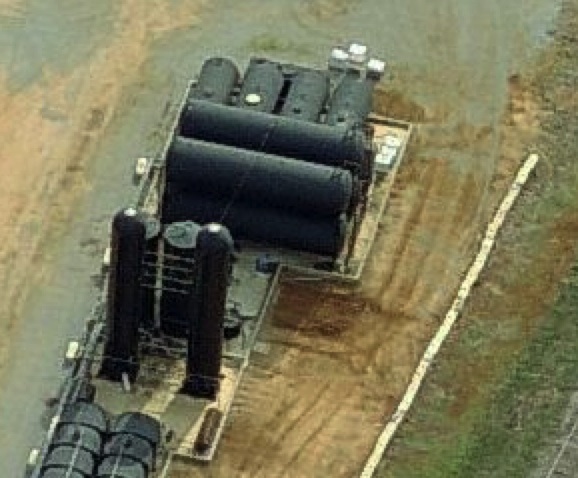
2) A search of the facility’s air permit tells us their inventory of pressure vessels, and a Google image view shows a “stacked design.” The top vessel is a vacuum vessel where the feedstock oils are placed under a vacuum to lower their boiling point(s). The vessel on the bottom is a “boiler type” vessel that burns fuel oil and boils the feedstock to “distill” feedstock.
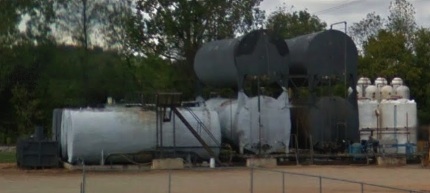
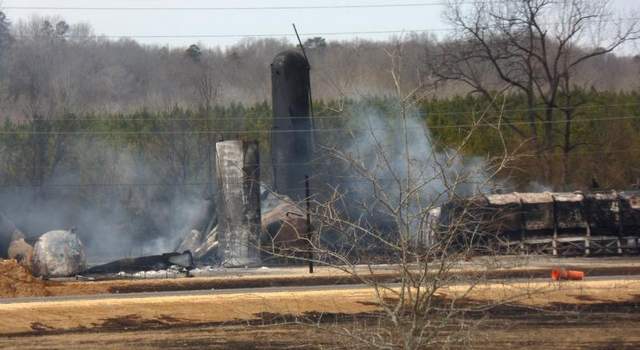
POST FIRE image: (notice anything missing?)
3) As we can see in the image below (courtsey of the MS DEQ air permit for the facility) we can see that it appears most of these vessels share a common secondary containment area, which translate into a “pool fire” scenario. We can also “sort of make out” the relief system for these four vessels are damn near exactly where we begin to see the white vapor first appearing from the flames. As a point of reference, the video is shot from a location off screen to the top of the image. We can see the four horizontal tanks and the four stacked vessels.
4) Yea, but Bryan, I thought BLEVE’s only involved materials with High Vapor Pressures and Low Boiling Points. Most BLEVEs that have occurred involve these types of materials in pressure vessels; however, we can NOT lose sight of the fact that we are ALREADY BOILING these fuels as part of our processing. So even though the feedstock material(s) have a high Boiling Point and are not typical of materials that can BLEVE, the process is actually meeting the first part of a BLEVE by “boiling the liquids.”
5) Throw in the shared containment and a large-scale pool fire in a vessel that is working much like a boiler, and we have metal fatigue occurring on BOTH sides of the wall of the vessel. I know NOTHING about their processing controls and safety systems for this process, but we do know from the workers on sight that one went to sample a tank, saw an “orange glow” – he knew what that meant, ran to the office to wake the sleeping employee, and they ran to safety. So in such a small-scale operation, I will “ASSUME,” and yes, I know this makes me an “ASS” that the processing continued until it failed. If this was the case and the lower distillation vessel was still “distilling” while the pool fire raged underneath it, I believe we have all the ingredients for a BLEVE.
6) We could be witnessing a HIT rather than a BLEVE. A HIT (Heat-Induced Tear) occurs in non-pressurized containers, and when the material is flammable (like in this event), we will get a large fireball as a result.
And here’s the video…. let me know your thoughts and what you think we are seeing.
Source for Pressure Vessel Inventory: http://opc.deq.state.ms.us/ai_info.aspx?ai=23187
Source for Pre-Accident Image: http://iaspub.epa.gov/enviro/fii_query_detail.disp_program_facility?p_registry_id=110024596150
Source for Google Image: https://www.google.com/maps/@34.5309315,-88.9909229,79m/data=!3m1!1e3?hl=en
OSHA Data: https://www.osha.gov/dep/greenjobs/biofuels.html
FYI… more explosions at Bio Fuel plants. I am NOT picking on the bio fuels industry. Here is a video of the Deputy Chief of the Winnipeg FD discussing a BLEVE at a bio fuel plant.
A Brief, Recent History of Safety-related Biodiesel Plant Issues
A few of the adverse events as reported in media sources will be listed as examples of problems that can occur, most of which could be avoided with proper preparation.
American Biofuels, Bakersfield, Calif., 02/17/2006
During a methanol transfer, a small spill occurred. The methanol was ignited and the fire spread into the process building. Apparently, the spill was not contained. Likewise, an ignition source was present around a flammable liquid in an upset condition. A PSM should have identified these two issues so that the spill would be contained and the area would be electrically classified so that no ignition sources should be present. This emphasizes the absolute need for the PSM Program for any size biodiesel plant.
Sun Break Biofuels, Canby, Ore., 06/23/2006
A major fire resulted when a small fire melted plastic biodiesel storage tanks. Even though the cause of the initial fire was not listed, a PSM Program could have prevented the resulting major damage. The same analysis is that the area should have been electrically classified so that no ignition sources should be present. The area should have containment. Storing biodiesel in plastic tanks is not good manufacturing practice.
Blue Sky Biodiesel, New Plymouth, Idaho, 07/07/2006
A small fire occurred when a worker was installing a vent tube in an existing tank.
Agri Biofuels Dayton, Texas, 07/14/2007
A fire resulted from a methanol spill.
Better Biodiesel Spanish Fork, Utah, 7/25/2007
A small fire occurred when there was a mechanical malfunction in a methanol transfer line to the reactor section.
Farmers & Truckers Biodiesel Augusta, Ga., 8/21/2007
A worker was welding a flow meter on the top of a tank and was killed when an explosion occurred.
Foothills Biodiesel Lenoir, N.C., 8/25/2007
Feedstock tanks in the tank farm were destroyed by fire two days after the plant was shut down. The tanks were destroyed. Since the plant was unoccupied, no one was hurt.
American Ag Fuels Defiance, Ohio, 1/3/2008
An explosion occurred when workers left a manhole cover off a glycerin storage tank. A spark ignited methanol vapors.
Green Light Biofuels Princess Ann, Md., 5/18/2008
A hot work explosion occurred when a methane line was being added to the plant. A gas line was hit and the resulting explosion killed one worker and injured a second worker.
Biofuels of Tennessee Decaturville, Tenn., 8/15/2008
A fire occurred in the plant after it had been idle for four months. No cause was determined. The company representative stated that nothing was left but smoldering metal.
All American Biodiesel York, N.D., 8/27/2008
One of four processing buildings and the processing equipment was destroyed by fire. No other details were listed.
Gadsten Fleet Management Facilities Gadsten, Ala., 9/18/2008
A faulty heating element on the City of Gadsten’s biodiesel equipment likely caused the top of the tank to blow off (over pressure due to inadequate relief).
Nova Biosource Fuels, Inc. Clinton, Iowa, 9/30/2008
A small fire in the primary biodiesel recovery column was quickly extinguished by the local fire department. The probable cause was a build-up of methanol vapors in the column during a ventilation process required as part of the maintenance activity. No injuries were reported for plant personnel. One fireman received minor steam burns.
GreenHunter Biofuels Houston, Texas, 2/9/2009
A mechanical seal on a circulation pump associated with a process heating unit failed. The resulting excessive heat created caused the fire.
Minnesota Soy Bean Processors Brewster, Minn., 5/24/2009
A fire and explosion on a Saturday night at10 PM resulted in several tanks being on fire.
Midwest Biorenewables Toledo, Ohio, 6/15/2009
A faulty safety valve was blamed for a fire which destroyed one of two production lines. The vacuum control valve imploded, igniting biodiesel.
Columbus Foods Company Chicago, Ill., 7/19/2009
Two workers were seriously injured in the biodiesel plant while mixing glycerin and sulfuric acid.
New Eden Energy St Cloud Fla., 9/24/2009
Multiple chemical vessels exploded. At least one building was destroyed and several tanks. The cause has not been determined but one employee said lighting might have started the blaze and multiple explosions.
Xenerga Biodiesel Savannah, Ga., 10/14/2009
One injury resulted from an explosion in a reactor used to store biodiesel.
Imperium Renewables Hoquiam, Wash., 12/2/2009
An explosion occurred in a 10,000 gallon glycerin tank as a result of over pressurization. The tank reportedly split open.
Kenneth “Pete” Moss is the managing partner and owner of renewable energy consulting firm Frazier, Barnes & Associates LLC. Reach him at [email protected]. http://www.biodieselmagazine.com/articles/4055/biodiesel-plant-safety/