When using Blinding/Blanking or Disconnect and Misalignment as an energy isolation method for your PRCS, do these isolation points have to be secured in their safe position with a lockout lock or tagout tag? In other words,
Can I install a blind/blank and not tag it out in the field indicating that it is an energy isolating device associated with the entry into a PRCS?
Can I roll a spool piece and just leave it rolled and not put a lock or tag through a bolt hole to identify the disconnect and misalignment as an energy isolation method for my PRCS entry?
I think most would agree that when using Double Block and Bleed that the two (2) closed block valves have to be locked in their CLOSED position and the bleed has to be locked out or tagged out in the OPEN position. This method is very clear as OSHA has included the LOTO requirement in their definition…
“Double block and bleed” means the closure of a line, duct, or pipe by closing and locking or tagging two in-line valves and by opening and locking or tagging a drain or vent valve in the line between the two closed valves.
So I am troubled to learn that many facilities who roll a spool piece in a pipe but do not identify that rolled spool piece as their energy isolation device in the field NOR are they securing this isolation method in its SAFE position. Now OSHA has defined the term “lockout” and to me this makes this debate very clear…
Lockout. The placement of a lockout device on an energy isolating device, in accordance with an established procedure, ensuring that the energy isolating device and the equipment being controlled cannot be operated until the lockout device is removed.
I do not understand how we can claim compliance with 1910.146(d)(3) if we are not locking or tagging the Blinds/Blanks or Disconnect and Misalignment in their safe positions…
1910.146(d)(3) Develop and implement the means, procedures, and practices necessary for safe permit space entry operations, including, but not limited to, the following:
1910.146(d)(3)(i) Specifying acceptable entry conditions;
1910.146(d)(3)(ii) Providing each authorized entrant or that employee’s authorized representative with the opportunity to observe any monitoring or testing of permit spaces;
1910.146(d)(3)(iii) Isolating the permit space;
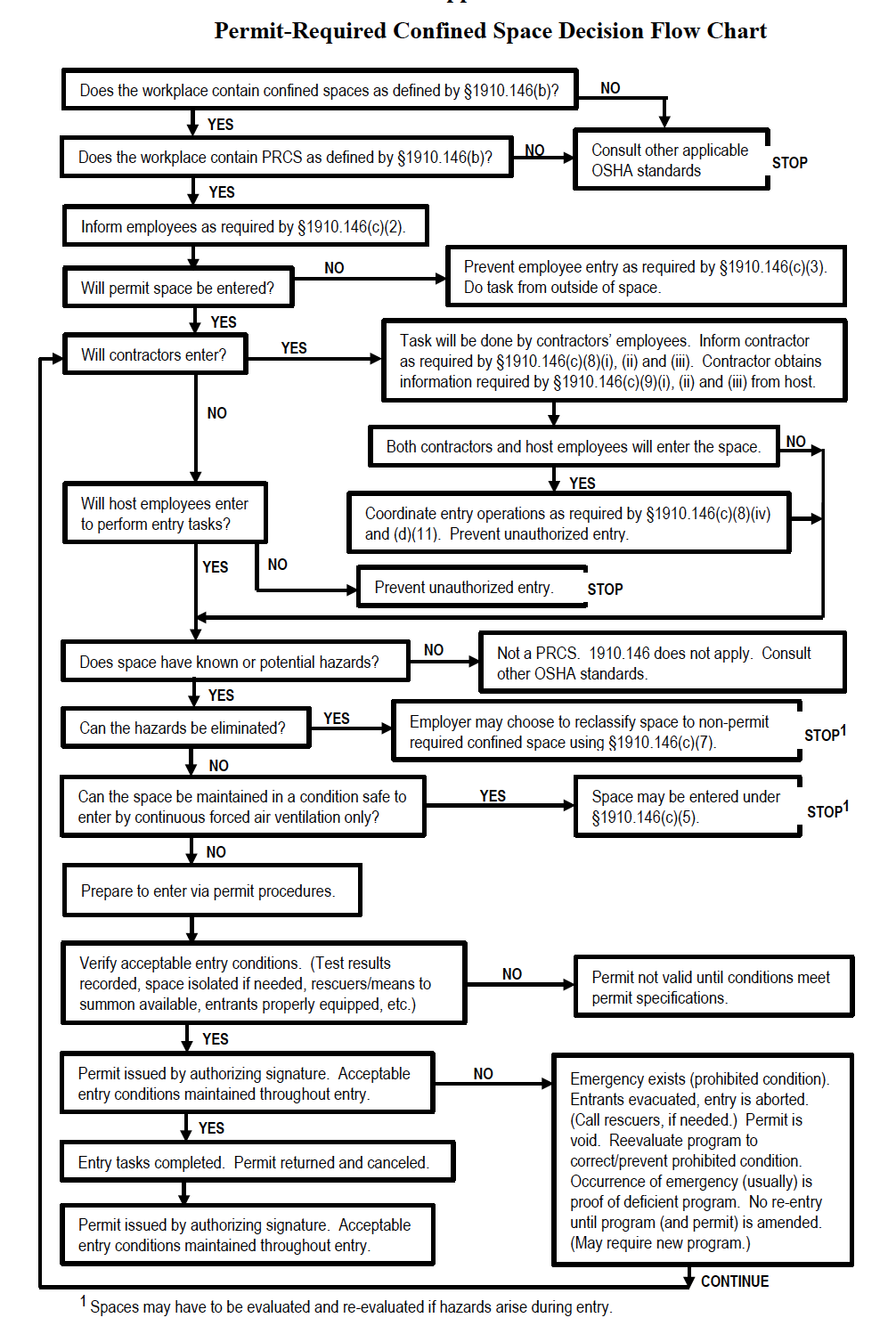
1910.146 defines “Isolation” as
the process by which a permit space is removed from service and completely protected against the release of energy and material into the space by such means as: blanking or blinding; misaligning or removing sections of lines, pipes, or ducts; a double block and bleed system; lockout or tagout of all sources of energy; or blocking or disconnecting all mechanical linkages.
Lets look at this from an “investigative view point”…
Workers are inside a PRCS and are overcome by a hazardous atmosphere. In the ensuing investigation it is discovered that contractors reassembled the wrong piping which then allowed N2 to reach the space. The piping the contractor erroneously put back together was a spool piece that had been dropped out (or rolled out) of the piping that was connected to the PRCS. This dropped spool piece had not been locked or tagged in its dropped/rolled position.
What would be your root cause of this accident?
What could have been done to prevent this accident from happening?
What would we say to an entrant who has his/her lock on the lockbox, believing they had exclusive control of ALL the energy isolation devices associated with their entry into the PRCS? There’s an incident and they ask how could “X” find its way into the space. We then explain to them that although they had their lock on the proper lockbox, some of the isolation methods used to “isolate” the PRCS they were working in were not locked or tagged and someone connected the hose and flowed “X” into the space. What would we tell OSHA if this entrant filed a complaint?
It is my professional opinion, and I want to hear yours, that EACH and EVERY isolation device/method used to isolate the PRCS MUST be LOCKED OUT or TAGGED OUT (with a STRONG emphasis on LO over TO). I do realize that OSHA allows us to claim “blank flanges and bolted slip blinds” as “Lockout Devices” meaning these are equivalent to using a lock in the eyes of OSHA compliance. But again, it is my professional opinion that if we do not lockout or tagout these blank flanges and bolted slip blinds we have NO assurances that they will be recognized in the field as an isolation device protecting workers and we will have no means to ensure they are not removed during the entry.
Some more info from OSHA’s LOTO Preamble that supports my potions that these isolation methods MUST be locked or tagged in their safe position…
If bolted flanges or slip blinds are used, a means must be devised so that each authorized employee can be identified as a participant in the project when he/she is working on it. For example, individual identification can be achieved by each authorized employee hanging his/her tag on the blank flange or the slip blind when he/she starts work and removing his/her tag when he/she stops work. The tag, in this case, supplements the blank flange or blind by identifying the employees performing the maintenance, thereby establishing a method of continuous individual accountability for the employees. An effective system of administrative control, such as the use of a single master tag with provision for individuals to sign in and out as they begin or end their work on the machine or equipment, would satisfy this requirement.
Some blinds are very EASY to lock-in-place, as the one shown below. Some facilities would permit a tag to be hung on the OPEN side of this spectacle blind, but I follow LOTO to the letter and this isolation device can be LOCKED OUT with a chain and lock, thus I would require this blind to be LOCKED in the CLOSED position.
There are a lot of neat ways to lockout other types of blinds/blanks. The one shown below is a patented device that locks a cover over the bolts and nuts so that they can not be removed. I am not 100% certain if this device is available commercially, but this device would make locking out these blinds/blanks very easy. CLICK HERE for the patent info and more images.

So does your facility apply a lockout or tagout device to your blinds/blanks and/or disconnects and misalignment(s) energy isolation methods?