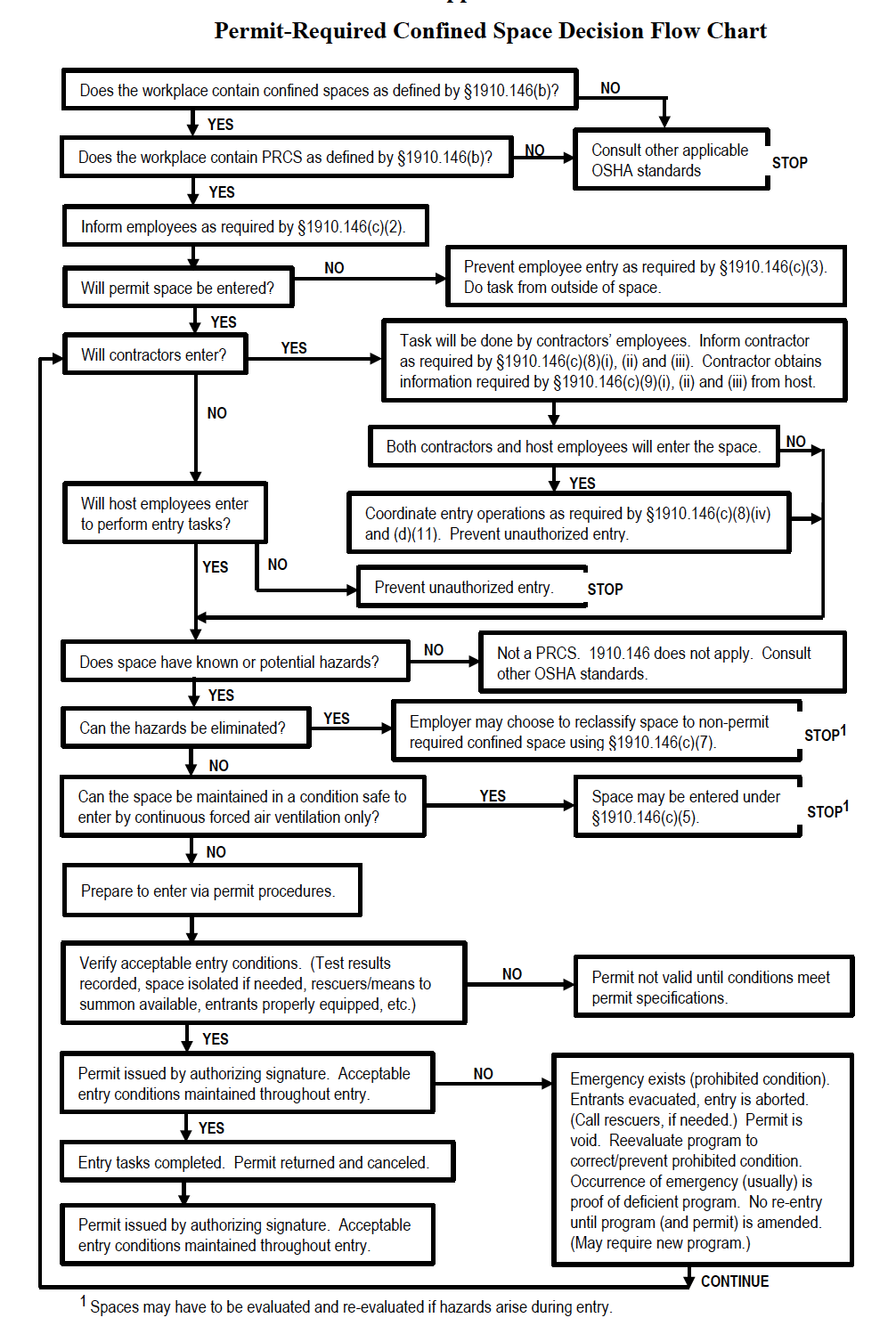
Moments before a blast ripped through a railcar on April 14, 2015, a check of the air quality inside indicated a serious risk of an explosion. Despite the warning, the company sent two employees, aged 41 and 45, into the railcar to work without monitoring the air continuously for explosive hazards as required, nor providing the employees with emergency retrieval equipment or properly fitted respirators. The explosion that resulted blew the railcar’s escape ladder off and killed the two men, trapping one inside and hurling the other off the top of the railcar. A third employee was injured. After its investigation following the explosion, OSHA cited the railcar cleaning service for seven egregious willful, three willful, two repeated, 20 serious, and one other than serious safety and health violations on Oct. 13, 2015. The company faces penalties of $963,000. OSHA also placed the company in the agency’s Severe Violator Enforcement Program. The egregious willful violations involve multiple instances of failing to monitor air quality properly in confined spaces as required and for not fit-testing employees required to use respirators in railcars. In the most recent citations, the facility also failed to:
Citation 1 Item 1
Type of Violation: Serious; $5,000
29 CFR 1910.23(a)(5): Every pit and trapdoor floor opening, infrequently used, was not guarded by a floor opening cover of standard strength and construction. While the cover is not in place, the pit or trap opening was not constantly attended by someone or was not protected on all exposed sides by removable standard railings:
The employer is failing to protect employees from fall hazards of 5’9.5 into a sewer pit opening measuring 1’1O” by 1’2″ in that the plywood covering the opening was not of sufficient strength to prevent individuals or equipment from falling through.
Citation 1 Item 2
Type of Violation: Serious; $7,000
29 CFR 1910.120(p)(1): Employers conducting operations at treatment, storage, and disposal (TSD) facilities specified in 29 CFR 1910.120(a)(1)(iv) and who are not exempted by 29 CFR 1910.120(a)(2)(iii) did not develop and/or implement a written safety and health program for employees involved in hazardous waste operations:
The employer is failing to develop and implement the elements of the written safety and health program that pertain to employees involved with the handling, storage, treatment and disposal of hazardous wastes including but not limited to highly flammable petroleum waste products, waste product that contain benzene, ethanol waste products and methanol waste products that are generated from the cleaning of rail cars in that; provisions are not provided for safe handling, decontamination and emergency response.
Citation 1 Item 3
Type of Violation: Serious; $7,000
29 CFR 191O.120(p)(3): A medical surveillance program meeting the requirements of 29 CFR1910.120(f) was not developed and implemented:
At the work sites, the employer is failing to develop and implement a medical surveillance program for employees who are involved with the handling, storage, treatment and disposal of hazardous wastes including but not limited to highly flammable petroleum waste products, ethanol waste products and methanol waste products that are generated from the cleaning of rail cars.
Citation 1 Item 4
Type of Violation: Serious; $7,000
29 CFR 1910. 120(p)(4): A decontamination procedure meeting the requirements of 29 CFR 1910.120(k) was not developed and implemented:
At the work sites, the employer is failing to develop and implement decontamination procedures for employees who are involved with the handling, storage, treatment and disposal of hazardous \\:astes including but not limited to highly flammable petroleum waste products, ethanol waste products and methanol waste products that are generated from the cleaning of rail cars.
Citation 1 Item 5a
Type of Violation: Serious; $7,000
29 CFR 191O.120(p)(7)(i): A training program for employees exposed to health hazards or hazardous substances at treatment, storage and disposal operations \Vas not developed and implemented to enable employees to perform their assigned duties and functions in a safe and healthful manner so as not to endanger themselves or other employees:
At the work sites, the employer is failing to develop and implement a training program for employees who are exposed to health hazards such as but not limited exposure to benzene, ethanol and methanol while they are involved with the handling, storage, treatment and disposal of hazardous wastes including but not limited to petroleum waste products, ethanol waste products and methanol waste products that are generated from the cleaning of rail cars.
Citation 1 Item 5b
Type of Violation: Serious; Grouped
29 CFR 1910.1200(h)(1): Employees were not provided effective information and training on hazardous chemicals in their work area at the time of their initial assignment and whenever a new hazard that the employees had not been previously trained about was introduced into their work area:
The employer is failing to protect employees from chemical hazards including but not limited to fires, explosions, cancer, skin irritation, eye irritation, respiratory irritation, and both acute and chronic systemic toxicity in that; employees involved the cleanup and handling of railcar commodities including but not limited to volatile petroleum products containing benzene, methanol, and ethanol were not provided \Vi th effective training on the proper precautions necessary to prevent and limit exposure.
Citation 1 Item 6a
Type of Violation: Serious; $7,000
29 CFR 1910.134(c)(1)(ii): The written respiratory protection program did not contain provisions for medical evaluations of employees required to use respirators:
The employer is failing to protect employees from respiratory hazards such as but not limited to exposure to benzene and other volatile organic compounds that employees are exposed to while cleaning rail tank cars containing petroleum products and denatured alcohol in that the respiratory protection program does not provide the provisions to effectively establish and implement medical evaluations for employees who are required wear tight fitting full-face and half-face 3M respirators.
Citation 1 Item 6b
Type of Violation: Serious; Grouped
29 CFR 1910.134(c)(1)(iii): The written respiratory protection program did not contain fit test procedures for tight-fitting respirators:
The employer is failing to protect employees from respiratory hazards such as but not limited to exposure to benzene and other volatile organic compounds that employees are exposed to while cleaning rail tank cars containing petroleum products and denatured alcohol in that; the respiratory protection program does not provide the provisions to effectively establish and implement fit testing for employees who are required to wear tight fitting full-face and half-face 3M respirators.
Citation 1 Item 6c
Type of Violation: Serious; Grouped
29 CFR 1910.134(c)(1)(ix): The written respiratory protection program did not contain procedures for regularly evaluating the effectiveness of the program:
The employer is failing to protect employees from respiratory hazards such as but not limited to exposure to benzene and other volatile organic compounds that employees are exposed to while cleaning rail tank cars containing petroleum products and denature alcohol in that; the respiratory protection program does not provide the procedures for regularly evaluating the effectiveness of the program where employees are required to wear tight fitting full-face and half-face 3M respirators.
Citation 1 Item 6d
Type of Violation: Serious; Grouped
29 CFR 1910.134(c)(3): The employer did not designate a program administrator who was qualified by appropriate training or experience to administer or oversee the respiratory protection program and to conduct the required evaluations of program effectiveness:
The employer is failing to protect employees from respiratory hazards such as but not limited to exposure to benzene and other volatile organic compounds that employees are exposed to while cleaning rail tank cars containing petroleum products in that; the employer did not designate a program administrator who was qualified by appropriate training or experience to effectively administer and oversee the respiratory protection program when employees were required to wear tight fitting negative pressure full-face and half-face 3M respirators.
Citation 1 Item 7
Type of Violation: Serious; $7,000
29 CFR 1910.134(e)(1): The employer did not provide a medical evaluation to determine the employee’s ability to use a respirator, before the employee was fit tested or required to use the respirator in the workplace:
The employer is failing to protect employees from hazards associated with the use of tight fitting negative pressure respirators including but not limited to respiratory distress, psychophysiological stress and complications of preexisting medical conditions such as asthma and hypertension in that; employees are not provided with a medical evaluation to determine their ability to use a respirator prior to first use or fit testing where they are required to wear tight fitting negative pressure 3M half-mask and full-mask respirators for protection from chemicals including but limited benzene and volatile organic compounds while cleaning rail tank cars containing petroleum products.
Citation 1 item 8
Type ofViolation: Serious; $7,000
29 CFR 1910.134(f)(2): Employee{s) using tight-fitting facepiece respirators were not fit tested prior to initial use of the respirator and annually thereafter:
The employer is failing to protect employees from respiratory hazards such as but not limited to exposure to benzene and other volatile organic compounds while cleaning rail tank cars. This violation was most recently documented where employee #5, who was not fit tested prior to initial use and at least annually thereafter was required to wear a tight fitting 3M half-face respirator for protection while entering and cleaning out rail tank cars CTCX733725 and CTCX733546 that contained sweet crude oil.
Citation 1 Item 9
Type of Violation: Serious; $7,000
29 CFR 1910.134(k)(3): Training was not provided prior to requiring employees to use a respirator in the workplace:
The employer is failing to protect employees from respiratory hazards such as but not limited to exposure to benzene and other volatile organic compounds that employees are exposed to while cleaning rail tank cars containing petroleum products in that~ the employer did not provide the required training to employees on the use of respirators as outlined in 29 CFR 19I0.134(k)(l) prior to their required use of tight fitting negative pressure full-face and half-face 3M respirators.
Citation 1 Item 10a
Type of Violation: Serious; $7,000
29 CFR 1910.146(d)(3)(iv): Under the permit-required confined space program required by 29 CFR 1910.146(c)(4), the employer did not develop and implement the means. procedures, and practices necessary for safe permit entry operations. including effective purging, inerting, flushing or ventilating of the permit spaces:
The employer is failing to effectively purge, inert, flush or ventilate permit spaces that employees enter, which contain atmospheric hazards including but not limited to flammable environments above 10% of the LEL in that on 14 April 2015 two employees were fatally injured as the result of a flash fire and explosion that occurred when they were inside using steel scrapers and tools to clean the interior walls of rail tank car NATX303912 that contained natural gasoline, a highly flammable liquid with a flashpoint of 0°F. The atmosphere inside the rail tank car was measured between 22% and 328% of the LEL by the employer prior to authorizing employees to enter.
Citation 1 Item 10b
Type of Violation: Serious;
29 CFR 1910.146(d)(3)(vi): Under the permit-required confined space program required by 29 CFR 1910.146(c)(4), the employer did not develop and implement the means, procedures, and practices to verify that conditions in a permit space were acceptable for entry throughout the duration of an authorized entry:
The employer is failing to develop and implement the means procedures and practices to verify that employees are protected from atmospheric hazards including but not limited to flammable environments above 10% of the LEL throughout the duration of authorized entry into permit required confined spaces in that; on 14 April 2015 two employees were fatally injured as the result of a flash fire and explosion that occurred when they were inside scraping the interior walls of rail tank car NATX303912 that contained natural gasoline, a highly flammable liquid with a flashpoint of 0°F. The atmosphere inside the rail tank car \Vas measured at 22% of the LEL by the employer at the time employees were permitted to enter.
Citation 1 Item 11
Type of Violation: Serious; $7,000
29 CFR 1910.146(g)(1): The employer did not provide training so that all employees whose work was regulated by 29 CFR 1910.146 (permit required confined spaces) acquired the understanding, knowledge, and skills necessary for the safe performance of the duties assigned under 29 CFR 1910.146:
The employer is failing to protect employees entering permit required confined spaces from atmospheric hazards including but not limited to flammable environments above 10% of the LEL, oxygen deficiency and carbon monoxide in that; the employer did not ensure that each employee whose work involves permit required confined space entry while cleaning and estimating inside rail tank cars containing chemicals including but not limited to volatile petroleum products, natural gasoline and ethanol received adequate training and had an appropriate understanding of the signs, symptoms and consequences of exposure to atmospheric hazards, fire and explosion hazards, rescue procedures and equipment, ventilating and purging, and the appropriate intervals to monitor atmospheres.
Citation 1 Item 12
Type of Violation: Serious; $7,000
29 CFR 1910.146(k)(1)(iii)(A): The employer who designated rescue and emergency services, pursuant to paragraph (d)(9) of this section, did not select a rescue team or service from those evaluated that had the capability to reach the victim(s) within a time frame that was appropriate for the permit space hazard( s) identified:
The employer is failing to protect employees entering permit required confined spaces from atmospheric hazards including but not limited to flammable environments above 10% of the LEL, oxygen deficiency, carbon monoxide, and smoke inhalation in that; on April 14, 2015 a rescue team or service was not selected that had the capability to reach the victim trapped inside of rail tank car WATX303912 that contained volatile petroleum products such as but not limited to natural gasoline
within an appropriate amount of time for rescue.
Citation Item 13
Type of Violation: Serious; $7,000
29 CFR 1910.151(b): There was neither an infirmary, clinic, or hospital used for the treatment of all injured employees in near proximity to the workplace nor a person or persons adequately trained to render first aid:
The employer is failing to provide prompt medical treatment to employees for the following instances:
A) the employer did not ensure that at least one employee was provided who is adequately trained to render first aid where a local infirmary, clinic, or hospital was more than 3 to 4 minutes from the site, and the actual emergency response time was 8 minutes.
B) the employer did not ensure that at least one employee was provided who is adequately trained to render first aid where a local infirmary, clinic, or hospital was more than 3 to 4 minutes from the site.
C) the employer did not ensure that at least one employee was provided who is adequately trained to render first aid where a local infirmary, clinic, or hospital was more than 3 to 4 minutes from the site.
Citation 1 Item 14
Type of Violation: Serious; $5,000
29 CFR 1910.157(e)(2): Portable fire extinguishers were not visual1y inspected at least monthly:
The employer is failing to protect employees from fire hazards in that; fire extinguisher were not visually inspected at least monthly and were found to be not charged and readily available for use in the vicinity of diesel and gasoline storage tanks.
Citation 1 Item 15
Type of Violation: Serious; $5,000
29 CFR 191O.157(g)(1): An educational program was not provided for all employees to familiarize them with the genera! principles of fire extinguisher use and the hazards involved with incipient stage fire fighting:
The employer is failing to protect employees from fire hazards in that where fire extinguishers are provided for voluntary use, employees are not provided with training to familiarize themselves with the general principles of their use and the hazards involved with incipient stage fires.
Citation 1 Item 16
Type of Violation: Serious; $4,000
29 CFR 191O.178(p)(1): Powered industrial truck(s) found to be in need of repair, defective, or in any way unsafe had not been taken out of service until restored to safe operating condition(s):
The employer is failing to protect employees from struck-by and cut hazards from broken glass in that; the Manitou diesel powered forklift (model .M230HC-PS, serial number M23QH0486) was operated with a shattered windshield.
Citation 1 Item 17a
Type of Violation: Serious; $4,000
29 CFR 1910.215(a)(4): Grinding machinery was not used with work rest(s) to support offhand grinding work:
The employer is failing to protect employees from caught-in and entanglement hazards in that; the left side of the Performance brand 8-inch bench grinder is missing a work rest where employees use the grinder to sharpen tools inside the conex box.
Citation 1 item 17b
Type of Violation: Serious; Grouped
29 CFR 1910.215(b)(9): The distance between the abrasive wheel periphery(s) and the adjustable tongue or the end of the safety guard peripheral member at the top exceeded one fourth inch:
The employer is failing to protect employees from struck-by hazards in that; on the left side of the Performance brand 8-inch bench grinder, the tongue guard is not adjusted to within one fourth inch from the abrasive wheel that employees use to sharpen tools inside the conex box.
Citation 1 Item 18a
Type of Violation: Serious; $5,000
29 CFR 1910.303(b)(2): listed or labeled electrical equipment was not used or installed in accordance with instructions included in the listing or labeling:
The employer is failing to protect employees from electrical shock and fire hazards from improperly utilized electrical equipment in that; an extension cord was mounted to the wall of a conex box, and spliced directly to nonmetallic sheathed cabling that provides power to a receptacle box mounted to a workbench.
Citation I Item 18b
Type of Violation: Serious; Grouped
29 CFR 1910.305(g)(1)(iv)(A): Flexible cords and/or cables \Vere used as a substitute for the fixed wiring of a structure:
The employer is failing to protect employees from electrical shock and fire hazards from improperly utilized electrical equipment in that; an extension cord \Vas mounted to the wall of a conex box and spliced directly to nonmetallic sheathed cable to provide power to a receptacle box mounted was used as a substitute for fixed wiring of the structure.
Citation 1 Item 18c
Type of Violation: Serious; Grouped
29 CFR 1910.305(g)(2)(ii): Flexible cords were not used only in continuous lengths without splice or tap:
The employer is failing to protect employees from electrical shock and fire hazards from improperly utilized electrical equipment in that; an extension cord plugged into a receptacle was spliced directly to nonmetalic sheathed cable to provide power to a workbench receptacle inside the conex box.
Citation 1 Item 19
Type of Violation: Serious; $5,000
29 CFR 1910.305(i)(2)(vii): A receptacle installed in a wet location where the product intended to be plugged into it \Vas to be attended while in use (for example, portable tools) did not have an enclosure that was weatherproof when the attachment plug cap was removed:
The employer is failing to protect employees from electrical shock hazards at the railcar cleaning site in that; equipment such as but not limited to lighting that is attended while in use is plugged into receptacles in an outside environment exposed to rain, snow, condensation and other sources of moisture that do not have enclosures that are weatherproof when the attachment plug cap is removed.
Citation 1 Item 20a
Type of Violation: Serious; $5,000
29 CFR 1910.1200(f)(6)(ii): Except as provided in 29 CFR 1910.1200(f)(7) and 29 CFR 191O.1200(f)(8), the employer did not ensure that each container of hazardous chemicals in the workplace was labeled, tagged or marked with the product identifier and words, pictures, symbols, or combination thereof, which provide at least general information regarding the hazards of the chemicals and which, in conjunction with the other information immediately available to employees under the
hazard communication program, would provide employees with the specific information regarding the physical and health hazards of the hazardous chemical:
The employer is failing to protect employees from chemical hazards including but not limited to skin, eye, and respiratory irritation, and both acute and chronic systemic toxicity in that; each container of hazardous chemicals in the workplace was not marked with the product identifier and words, pictures, symbols, or combination thereof so that employees had the necessary information to adequately protect themselves when handing hazardous chemicals for the following instances:
A) A blue plastic drum containing liquid petroleum and hydrocarbon type solvents next to the diesel washer was not labeled
B) Two clear plastic 5 gallon jugs and a green bucket containing unidentified oil product were not labeled inside the conex box
C) A blue water cooler containing unidentified oil product was not labeled inside the conex box
D) Three blue plastic drums were not labeled with their contents located along the west property fence
Citation 1 Item 20b
Type of Violation: Serious;
29 CFR 1910.1201(b): Markings and placarding were not retained on freight containers, rail freight cars, motor vehicles, or transport vehicles, which were required to be marked or placarded in accordance with the Hazardous Materials Regulations, until the hazardous materials which required the marking or placarding were sufficiently removed to prevent any potential hazards:
The employer is failing to protect employees from fire and explosion hazards in that: on 4/14/2015 markings and placarding used to communicate flammability hazards of the commodity were not retained on rail tank car NATX303912 that contained natural gasoline, a highly flammable petroleum product, without the hazardous materials being sufficiently removed.
Citation 2 Item 1
Type of Violation: Willful; $70,000
29 CFR 1910.134(f)(2): Employee(s) using tight-fitting facepiece respirators were not fit tested prior to initial use of the respirator and annually thereafter:
The employer is failing to protect employees from respiratory hazards such as but not limited to exposure to benzene and other volatile organic compounds while cleaning rail tank cars. This violation was most recently documented at a worksite, where employee #4, who was not fit tested prior to initial use and at least annually thereafter was required to wear a tight fitting JM half-face respirator for protection while entering and cleaning out rail tank cars NATX301439 and NATX301469 that contained denatured ethanol.
Citation 2 Item 2
Type of Violation: Willful; $70,000
29 CFR 1910.134(f)(2): Employee(s) using tight-fitting facepiece respirators were not fit tested prior to initial use of the respirator and annually thereafter:
The employer is failing to protect employees from respiratory hazards such as but not limited to exposure to benzene and other volatile organic compounds while cleaning rail tank cars. This violation was most recently documented at a worksite, where employee #1, who was not fit tested prior to initial use and at least annually thereafter, was required to wear a tight fitting 3M half-face respirator for protection while entering and cleaning out rail tank car NATX303912 that contained natural gasoline.
Citation 2 Item 3
Type of Violation: Willful; $70,000
29 CFR 1910.134(f)(2): Employee(s) using tight-fitting facepiece respirators were not fit tested prior to initial use of the respirator and annually thereafter:
The employer is failing to protect employees from respiratory hazards such as but not limited to exposure to benzene and other volatile organic compounds while cleaning rail tank cars. This violation was most recently documented at a worksite, where employee #2, who was not fit tested prior to initial use and at least annually thereafter was required to wear a tight fitting 3M half-face respirator for protection while entering and cleaning out rail tank car NATX3039I2 that contained natural gasoline.
Citation 2 Item 4
Type of Violation: Willful; $70,000
29 CFR 1910.134(f)(2): Employee(s) using tight-fitting facepiece respirators were not fit tested prior to initial use of the respirator and annually thereafter:
The employer is failing to protect employees from respiratory hazards such as but not limited to exposure to benzene and other volatile organic compounds while cleaning rail tank cars. This violation was most recently documented at a worksite, where employee #3, who was not fit tested prior to initial use and at least annually thereafter was required to wear a tight fitting 3M half-face respirator for protection while entering and cleaning out rail tank cars JATX301439 and NATX301469 that contained denatured ethanol.
Citation 2 Item 5
Type of Violation: Willful; $70,000
29 CFR 1910.146(d)(4)(viii): Under the permit-required confined space program required by 29 CFR 1910.146(c)(4), the employer did not ensure that employees properly used rescue and emergency equipment needed to comply with 29 CFR 1910.146(d)(9):
The employer is failing to ensure that employees properly use rescue and emergency equipment while entering permit required confined spaces that contain atmospheric hazards including but not limited to flammable environments above 10% of the LEL in that; on 14 April 2015 two employees who were fatally injured as the result of a flash fire and explosion that occurred when they were inside scraping the interior walls of rail tank car NATX3039J2 that contained natural gasoline, a highly flammable liquid with a flashpoint of 0°F, were not wearing body harnesses to aid in rescue from the permit required confined space.
Citation 2 Item 6
Type of Violation: Willful; $70,000
29 CFR 19l0.146(d)(5)(i): Under the permit-required confined space program required by 29 CFR 1910.146(c)(4), the employer did not adequately evaluate permit space conditions when entry operations were conducted by properly testing conditions in the permit space and continuously monitoring the areas where authorized entrants were working:
The employer is failing to protect employees entering rail tank cars containing chemical products including by not limited to natural gasoline, volatile petroleum products, and denatured ethanol from atmospheric hazards including but not limited to flammable vapors and gases in excess 10% of the LEL, carbon monoxide, displaced oxygen, hydrogen sulfide, volatile organic compounds, and benzene in that; continuous air monitoring is not conducted throughout the duration of authorized entry to ensure that the atmospheric conditions are maintained at safe levels in the areas that authorized entrants are working while cleaning, powerwashing, scraping and estimating inside railcars.
Citation 2 Item 7
Type of Violation: Willful; $70,000
29 CFR 1910.146(d)(5)(ii): Under the permit-required confined space program required by 29 CFR 1910.146(c)(4), the employer did not evaluate permit space conditions when entry operations were conducted by testing or monitoring the permit space as necessary:
The employer is failing to protect employees entering each permit required confined space from atmospheric hazards including but not limited to flammable vapors, carbon monoxide, displaced oxygen, hydrogen sulfide and benzene in that; monitoring is not conducted as necessary to ensure that the atmospheric conditions are maintained at safe levels during the duration of entry. This violation was most recently documented at the worksite where two employees were fatally injured when flammable vapors ignited inside rail tank car NATX303912. The employees were using steel scrapers and tools to dean interior walls of the rail tank car that contained natural] gasoline, a highly flammable liquid with a flashpoint of 0°F. The LEL measurements taken by the employer ranged between 22% and 328% prior to allowing the employees entry into the tank car. No additional monitoring \Vas conducted to ensure the LEL \Vas at acceptable levels for safe entry.
Citation 2 Item 8
Type of Violation: Willful; $70,000
29 CFR 1910.146(d)(5)(ii): Under the permit-required confined space program required by 29 CFR 191O.146(c)(4), the employer did not evaluate permit space conditions when entry operations were conducted by testing or monitoring the permit space as necessary:
The employer is failing to protect employees entering each permit required confined space from atmospheric hazards including but not limited to flammable vapors, carbon monoxide, displaced oxygen, hydrogen sulfide and benzene in that; monitoring is not conducted as necessary to ensure that the atmospheric conditions are maintained at safe levels during the duration of entry. This violation was most recently documented at the worksite on 14 April 2015 where two employees were inside power washing rail tank car JATX301469 that contained denatured ethanol, a highly flammable liquid with a flashpoint of -5°F. Monitoring was not conducted continuously to ensure that the atmospheric conditions \Vere maintained at safe levels during the duration of entry, when they could readily change due to the agitation and aerosolizing of the ethanol from power washing activities.
Citation 2 Item 9
Type of Violation: Willful; $70,000
29 CFR 191O.146(d)(5)(ii): Under the permit-required confined space program required by 29 CFR 1910.146(c)(4), the employer did not evaluate permit space conditions when entry operations were conducted by testing or monitoring the permit space as necessary:
The employer is failing to protect employees entering each permit required confined space from atmospheric hazards including but not limited to flammable vapors, carbon monoxide, displaced oxygen, hydrogen sulfide and benzene in that; monitoring is not conducted as necessary to ensure that the atmospheric conditions are maintained at safe levels during the duration of entry. This violation was most recently documented at the worksite on 14 April 2015 where two employees were inside power washing rail tank car NATX301439 that contained denatured ethanol, a highly flammable liquid with a flashpoint of -5°F. Monitoring was not conducted continuously to ensure that the atmospheric conditions were maintained at safe levels during the duration of entry, when they could readily change due to the agitation and aerosolizing of the ethanol from power washing activities.
Citation 2 Item 10
Type of Violation: Willful
29 CFR 1910.146(f)(10): The entry permit that documented compliance and authorized entry to a permit space did not identify the results of initial and periodic tests performed under 29 CFR 1910.146(d)(5), accompanied by the names or initials of the tester and by an indication of when the tests were performed.
The employer is failing to ensure that confined space entry permits are accurately filled out to warn employees of the atmospheric hazards inside of rail tank cars including but not limited to flammable environments above 10% of the LEL, oxygen deficiency, carbon monoxide and benzene from present from chemicals such as but not limited to volatile petroleum products, ethanol and methanol in that; on 14 April 2015 the confined space entry permit supervisor wrote on the entry permit for rail tank car NATX3039I2 that the LEL was 0% when it was actually measured at 22% of the LEL. Two employees were allowed to enter the hazardous confined space and were fatally injured when the flammable vapors inside the rail tank car ignited. The entry permit also failed to identify who took the measurements and what times the measurements were taken.
Citation 3 Item 1
Type of Violation: Repeat; $70,000
29 CFR 1910.95(c)(1): The employer did not administer a continuing, effective hearing conservation program as described in 29 CFR 1910.95(c) through (o) whenever employee noise exposures equal or exceed an 8-hour time-weighted average sound level of 85 decibels measured on the A scale, or equivalently a dose of fifty percent:
The employer is failing to protect employees from noise induced hearing loss in that; the employer is not implementing a hearing conservation program for employees where they engaged in rail tank car cleaning activities. Noise dosimetry showed employees to be exposed to noise levels exceeding the 85.0 dBA 8-hour-time-weighted average action level during previous inspections in 2015 and 2013, where the employees were performing the same railcar cleaning tasks while entering the same types of rail tank cars and using the same types of equipment.
The business was previously cited for a violation of this occupational safety and health standard or its equivalent standard 29 CFR 1910.95(c)(1), which was contained in OSHA inspection number 925994, citation number 1, item number I and was affirmed as a final order on 17 July 2014, with respect to a workplace
Citation 3 Item 2
Type of Violation: Repeat
29 CFR 191O.178(l)(1)(ii): The employer did not ensure that each operator had successfully completed the training required by paragraph (l), except as permitted by paragraph (l)(5), prior to permitting an employee to operate a forklift:
The employer is failing to protect employees from struck-by hazards in that; employees are permitted to operate forklifts without receiving training and evaluation on their safe operation.
The business was previously cited for a violation of this occupational safety and health standard or its equivalent standard 29 CFR 1910.178(l)(7) which was contained in OSHA inspection number 926243, citation number 1 Item number 2b and was affirmed as a final order on 21 November 2013
Citation 4 Item 1
Type of Violation: Other-than-Serious; $1,000
29 CFR 1904.40(a): The employer did not provide an authorized government representative the records within the four business hours:
On or about April 14, 2015 the employer failed to provide the OSHA form 300 logs, 300A summary sheets and form 301 reports of injury and illness within four business hours upon request
CLICK HERE for the citations