This week (3/20/16) we saw yet another serious incident involving a DOT propane container (MC331). And although there is NO doubt in my mind that the incident in Alabama last was clearly and unmistakably a BLEVE (most likely a COLD BLEVE from impact damage), this most recent incident in Callaway, MN was NOT a BLEVE. Here’s the evidence leading me to these suspicions…
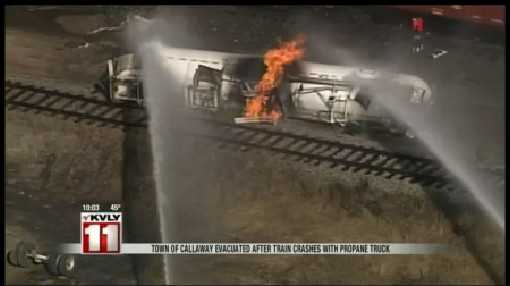
The Callaway, MN incident was caused by a driver NOT stopping at a RR Crossing. The train made direct impact with the MC331 container and caused significant damage upon impact. In the videos taken from a news helicopter we can see fire crews putting water on the ends of the container as it lays on its side – and in the middle section of the container we can see significant damage to the container and see that the fire is originating from a POOL of propane (e.g. no jet fire or single stack fire).
CP Railroad and news agency have all stated that 21 fire departments shuttled water for 10 hours and applied water to the container to COOL the container and let the fire burn itself out. But something happened at the end of those 10 hours that caused a massive explosion, which many are calling it a BLEVE – my professional opinion, knowing what I know, this was NOT a BLEVE. My suspicions are caused by a number of factors:
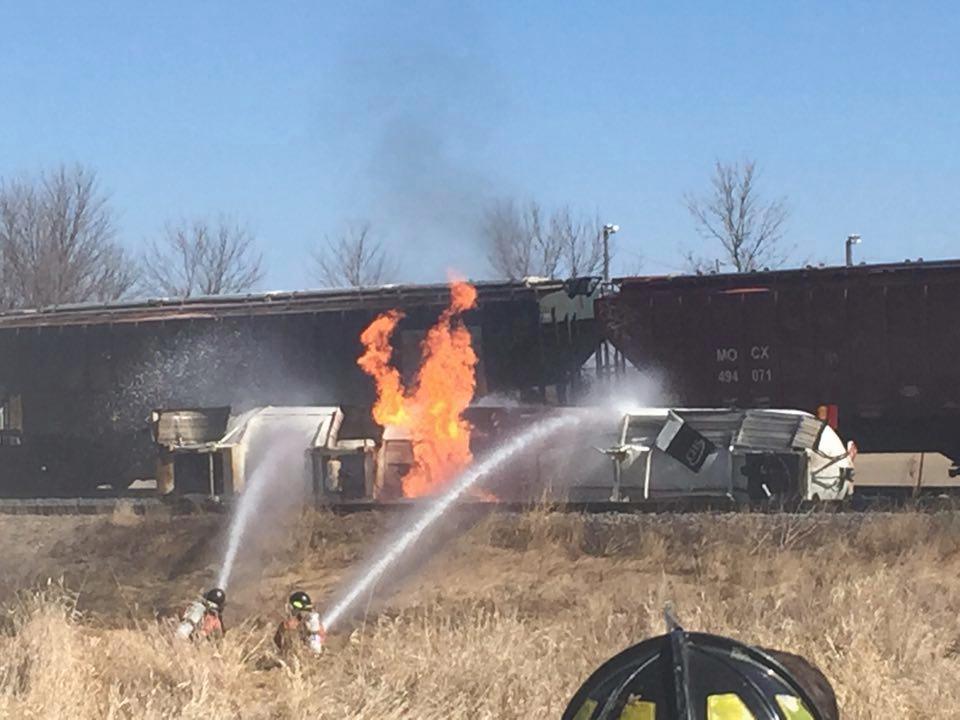
- the video and photos of this MC331 shows a hole in the side of this container about 3’X3’
- the propane was burning as a pool fire within the container and exiting via the hole in the container and its pipe work early in the event
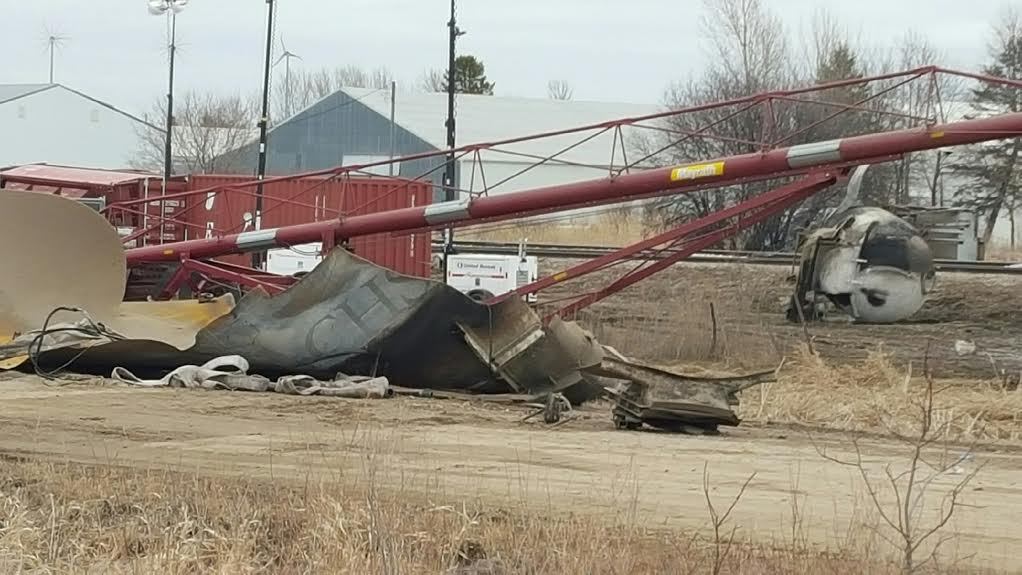
- the photo of the container AFTER the explosion tells me the detonation CLEARLY occurred INSIDE the damaged container and NOT outside after failure of the container, as is the case with a BLEVE
Here is Video showing the damage MC331 laying on its side, on fire, with FF’s applying water. Take note of the damage and the size of opening. Essentially this pressure vessel was now an atmospheric vessel and the propane was just burning off as a pool fire from within.
Here is the best evidence, a photo of the container AFTER the event. Here was can see the container was laid open, almost turned inside-out, telling use the explosion was from within. In a BLEVE we have a small breach on a pressurized container which then allows the expanding vapor to exit and this propels the vessel and if the liquified pressurized gas is flammable we then develop a vapor cloud OUTSIDE the vessel and it ignites once it is within its flammable range (e.g. the ignition of vapor is OUTSIDE the vessel in a BLEVE).
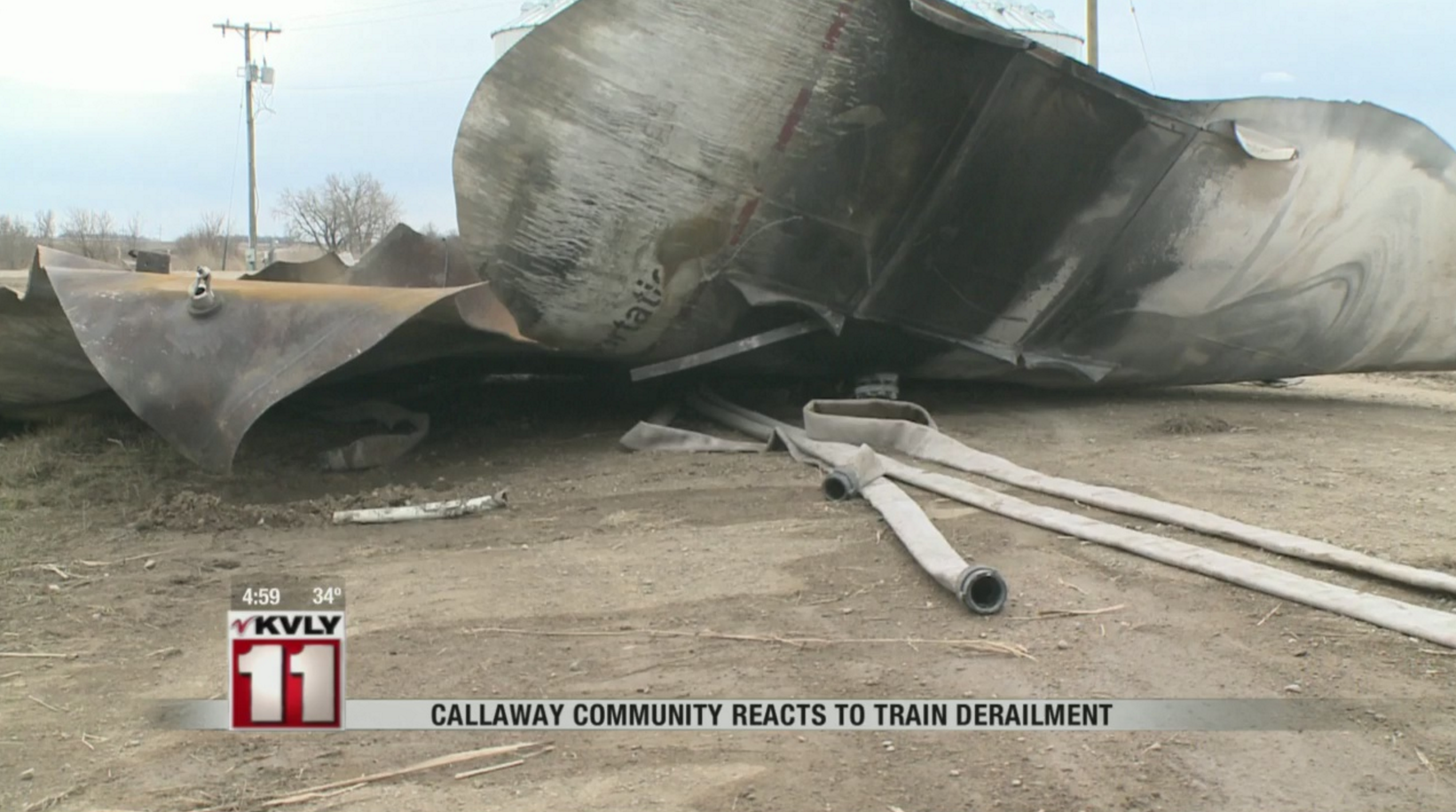
Here are two more photos showing the significant damage to the container, thus basically ELIMINATING a BLEVE potential.
The photo below shows the approximate location where part of the container came to rest after the explosion. The white area dipicts the area where half of the container came to rest, we can see the original location by the water streams from the fire fighters. The white vessel you see north of the location is a 30K LPG tank, although I am not 100% certain it is in service as it does not appear to be labeled (although it may have a fresh coat of paint on it).
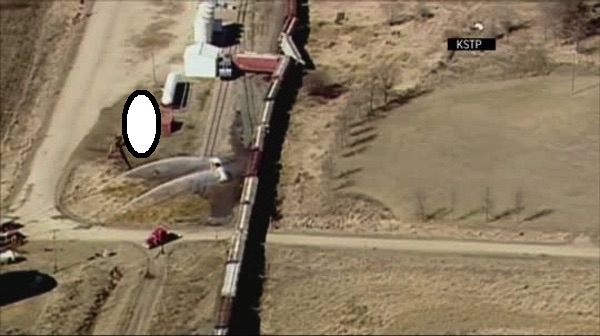
Below is another angle showing the container as it came to rest. We can see the vessel was completely ripped open.
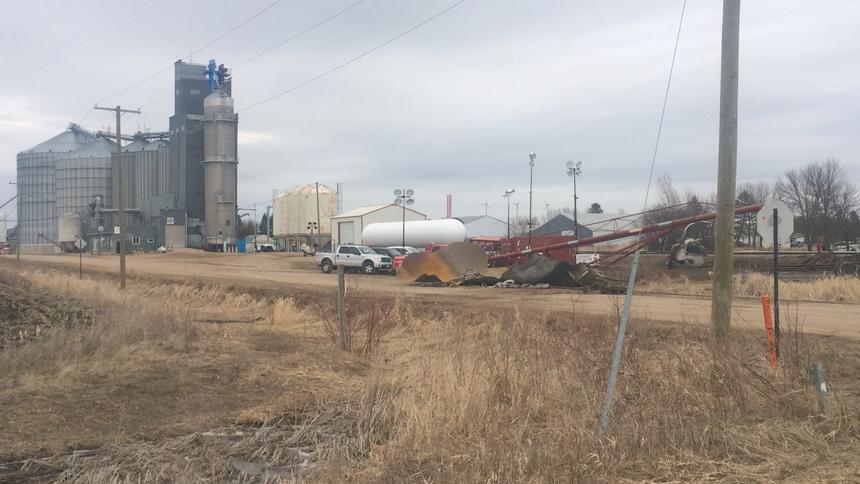
Here is a good view showing the parts of the container a distance from the other half of the container.