
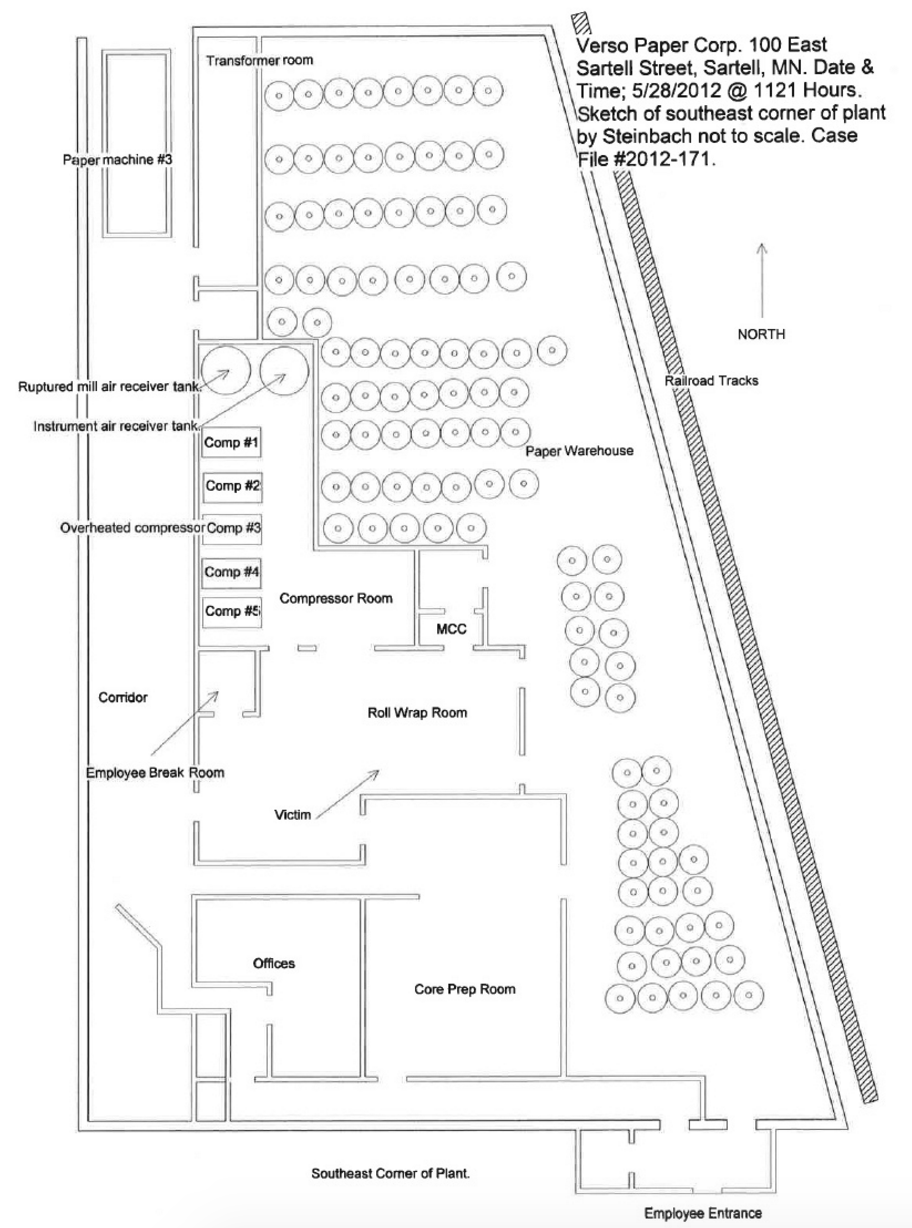
 At approximately 11:20 a.m. on May 28, 2012 Employee #1, a 50-year-old male was working in the vicinity of the mill air receiver tank when it exploded. The State Fire Marshal report stated in their report that not enough cool water was reaching the air compressor, which failed to shut down when it overheated. The report states that heat ignited oil vapors that caused a receiver tank to explode, blowing out concrete walls and igniting rolls of paper. Earlier in the day a leaking water valve was discovered under the Number three Paper Machine and employees were instructed to shut down that machine and supporting equipment so the valve could be repaired. Specific lockout/tagout procedures were not utilized. One of the pieces of equipment that was shut down was the drill well pump, which caused a decreased flow of water to the air compressors. When an employee was told to turn the drill well pump back on, he discovered that someone else had already done it.
FATAL Air Receiver Explosion (Paper Mill)