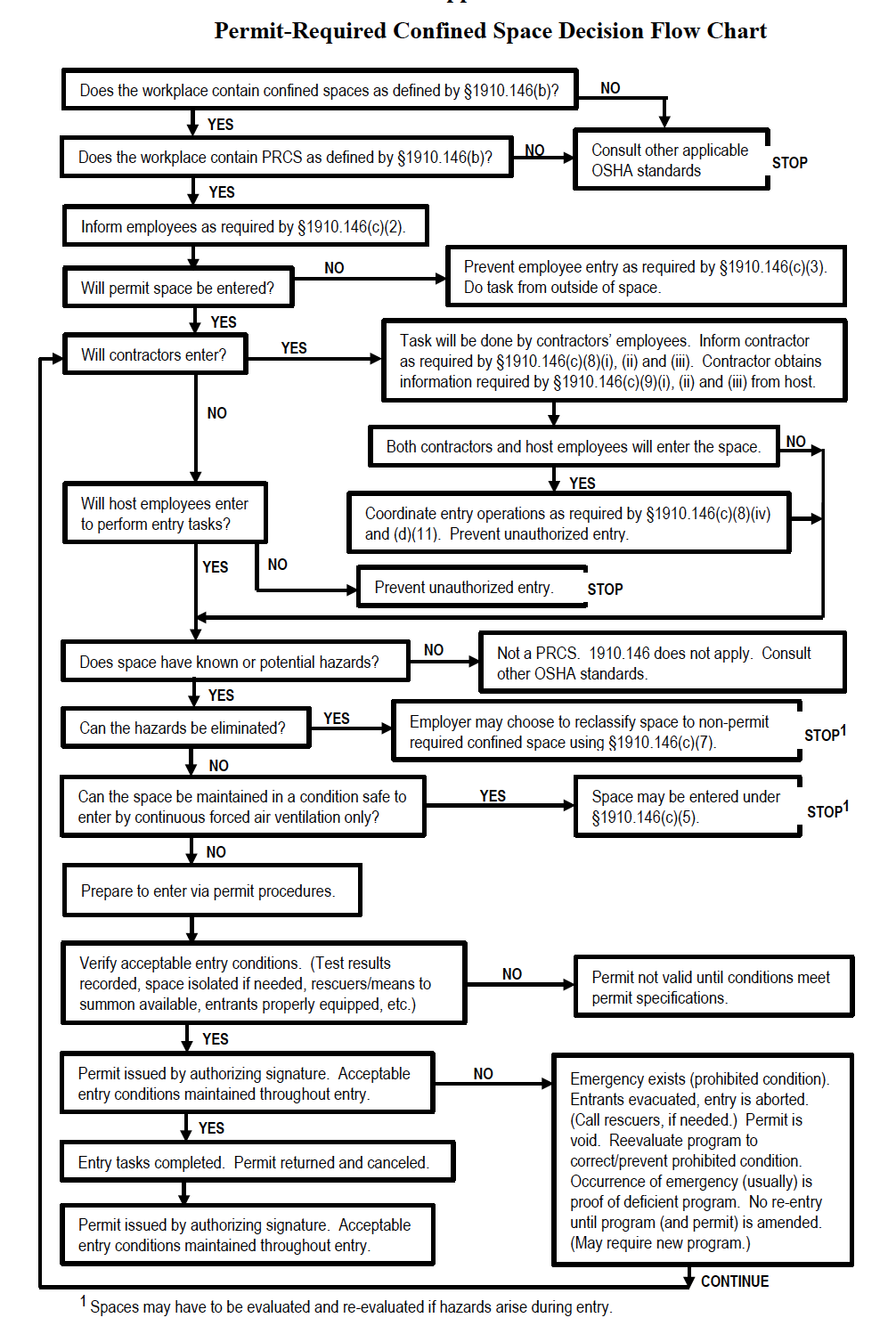
The U.S. Coast Guard gets on board (all pun intended) with ANNUAL MOCK RESCUES for enclosed spaces aboard vessels. The Maritime Safety Committee (MSC) at its ninety-second session adopted amendments to the International Convention for the Safety of Life at Sea (SOLAS), 1974, as amended, to include a requirement that “crew members with enclosed space entry or rescue responsibilities shall participate in an enclosed space entry and rescue drill to be held on board the ship at least once every two months.” The amendment was to SOLAS Chapter III, Regulation 19 (Emergency training and drills) and came into force on January 1, 2015. IMO Resolution A.1050(27) supports the new regulations and provides the “Revised Recommendations for Entering Enclosed Spaces Aboard Ships.”
Since coming into force, the Coast Guard Office of Commercial Vessel Compliance (CG-CVC-1) has received several questions related to the applicability of the regulation for U.S. Flag vessels where the specific characteristic of a ship (no human access to enclosed space, small voids, damage stability, etc) negate the need to enter an enclosed space at any time, including in the case of emergencies (fire, flooding, etc) AND where the company’s Safety Management System (SMS) strictly prohibits ANY entry into an “enclosed space” outside a shipyard period. To that end, the following guidance is provided:
- The IMO defines “enclosed spaces” as having any of the following characteristics:
- Limited openings for entry and exit,
- Inadequate ventilation,
- Is not designed for continuous worker occupancy,
- And includes, but is not limited to, cargo spaces, double bottoms, fuel tanks, ballast tanks, cargo pump-rooms, cargo compressor rooms, cofferdams, chain lockers, void spaces, duct keels, inter-barrier spaces, boilers, engine crankcases, engine scavenge air receivers, sewage tanks, and adjacent connected spaces. This list is not exhaustive and a list should be produced on a ship-by-ship basis to identify enclosed spaces.
- The ISM Code prescribes that the Company should establish plans for “key shipboard operations” and “identify potential emergency shipboard situations, and establish procedures to respond to them.” (ISM Code; Paragraphs 7 and 8)
- IMO Resolution A.1050(27) recommends that “the company should ensure that the procedures for entering enclosed spaces are included among the key shipboard operations concerning the safety of the personnel and the ship, in accordance with paragraph 7 of the ISM Code.” Furthermore, the Resolution states that “the company should ensure that a risk assessment is conducted to identify all enclosed spaces on board the ship.”
- For the purposes of this MSIB, the recommended risk assessment must be completed before an owner or operator concludes that SOLAS III/19.3.3 and 19.3.6 are not applicable given the specific characteristics of a vessel or fleet of vessels.
- If, after performing the risk assessment and identifying all enclosed spaces on a vessel or class of vessels, it is determined that there are no crewmember enclosed space entry or rescue responsibilities to enter an enclosed space at any time, even when taking into account “potential emergency shipboard situations,” then the owner or operator may conclude compliance with SOLAS III/19.3.3 and 19.3.6.
- A list of enclosed spaces, the results of the risk assessment, and a company policy prohibiting access to enclosed spaces should be documented in the SMS.
- If in light of the above considerations, the owner or operator determines that personnel may need to enter an enclosed space or have routine duties to do so, then the regulation applies in its entirety and the SMS should be updated and required drills performed.
- SOLAS III/19.3.3 and 19.3.6 only applies to vessels in operation. If a vessel is in a U.S. drydock or shipyard, then the requirements of 29 CFR 1915, Subpart B, Occupational Safety and Health Standards for Shipyard Employment take precedence and apply.
- The guidance contained in this MSIB is applicable to those vessels that are subject to SOLAS and carry the relevant certificate issued by the by the U.S. Coast Guard or a U.S. Coast Guard Authorized Class Society (ACS) indicating that the vessel is in substantial compliance with SOLAS Chapter III.
Questions regarding these new requirements should be forwarded to the Coast Guard Office of Commercial Vessel Compliance, Domestic Compliance Division (CG-CVC-1) at 202-372-1208 or by email at [email protected].
CLICK HERE for the pdf