
The information in this report is preliminary and will be supplemented or corrected during the course of the investigation.
On August 27, 2016, about 8:26 a.m. eastern daylight time, tank car AXLX 1702, specification DOT 105J500W, experienced a sudden tank shell crack shortly after it was filled with liquefied compressed chlorine at a rail car loading facility in New Martinsville, West Virginia. During the 2 1/2 hours after the crack developed, the entire 90-ton load of chlorine released from the crack and formed a large vapor cloud that migrated south from the facility along the Ohio River valley. The weather at the time of the accident was lifting fog after sunrise, 72°F, and light wind from the north at 1 mph.
Chlorine gas presents a toxic inhalation hazard and may be fatal if inhaled or absorbed through the skin. After the release, five plant employees and three contractor employees were treated for exposure injuries and released; two people were transported to the hospital. Significant vegetation damage occurred downwind from the release. No water contamination was reported.
National Transportation Safety Board (NTSB) investigators completed on-scene work in New Martinsville and at the Rescar Companies (Rescar) tank car repair facility in Dubois, Pennsylvania. The investigation will continue at NTSB headquarters in Washington, DC. Preliminary results of the investigation include the following:
- The tank car, built by ACF Industries in 1981, had water capacity of 17,380 gallons, and its original shell thickness was 0.7751 inch. It was equipped with an ACF 200 stub sill underframe. (See figure 1.)
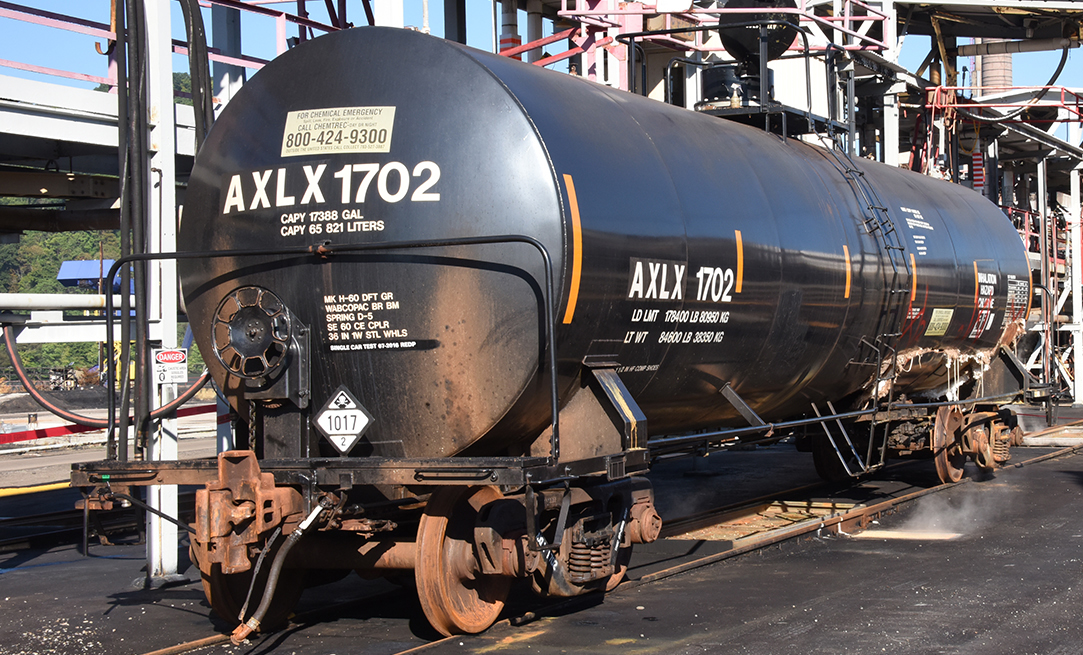
Figure 1. Tank car AXLX 1702 after chlorine release.
- The Federal Railroad Administration has previously noted defects in some tank cars equipped with ACF 200 stub sills, including tank head cracks, pad-to-tank cracks, sill web cracks, and tank shell buckling that in some instances has led to hazardous materials incidents.[1]
- Rescar received tank car AXLX 1702 in January 2016 for a 5-year interior inspection required on chlorine tank cars by the company’s maintenance instructions. The inspection revealed numerous corrosion pits in the bottom section of the tank shell. Rescar repaired the tank car between January and June 2016 before returning it to service for its first postrepair loading. The work included interior cleaning, ultrasonic thickness testing, removing internal corrosion, weld buildup intended to restore the shell thickness in corroded locations, and postweldstress-relief heat treatments.
- A circumferentially-oriented crack about 46 inches long propagated inboard of the A-end stub sill reinforcement pad on the bottom of the tank car. (See figure 2.)
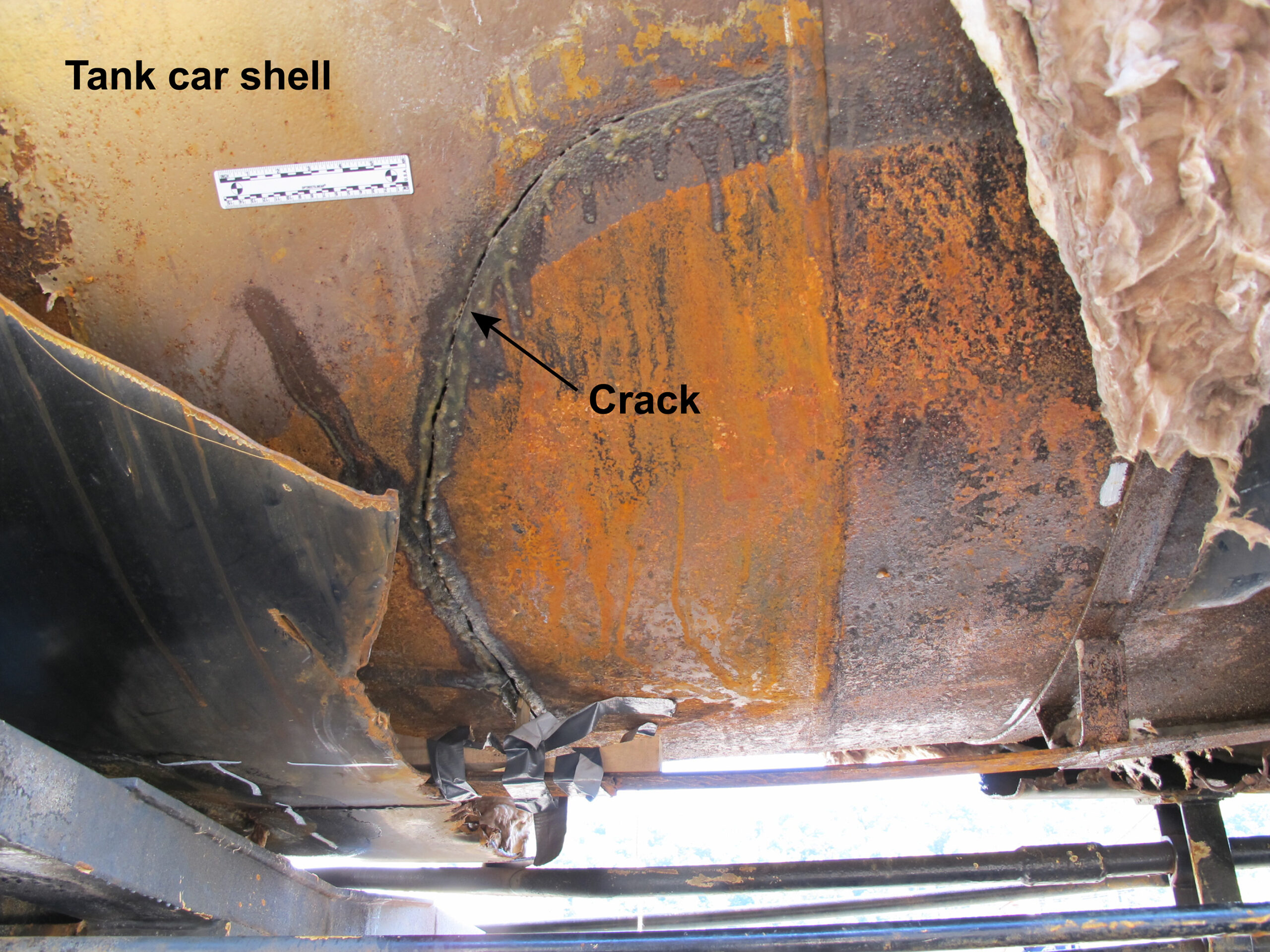
Figure 2. Cracked tank shell with portions of tank jacket and insulation removed.
- Preexisting cracks were found at the toe of two fillet weld repairs made in 2010 to the stub sill reinforcement pad. The added welds extended beyond the inboard end of the reinforcement pad.
- One of the preexeisting cracks from the 2010 weld repairs was the origin of the tank shell crack.
- At one end, the crack arrested near a region of the tank shell that exhibited internal surface thermal scaling and tested softer than surrounding steel.
- Investigators found buckling in the tank shell between the end of the stub sill reinforcing pad and the adjacent girth weld, as well as several areas of repair to the tank shell that measured below the minimum allowed thickness of 0.7438 inch.
CLICK HERE for the NTSB Press Release