
Relief System Design is not actually rocket science, so when our Recognized and Generally Accepted Good Engineering Practice (RAGAGEP) tells us that our relief valve discharge is to be in the “Upward” direction, this is not meant to be a “trick question”. But it does seem to stump a lot of engineers, case in point…
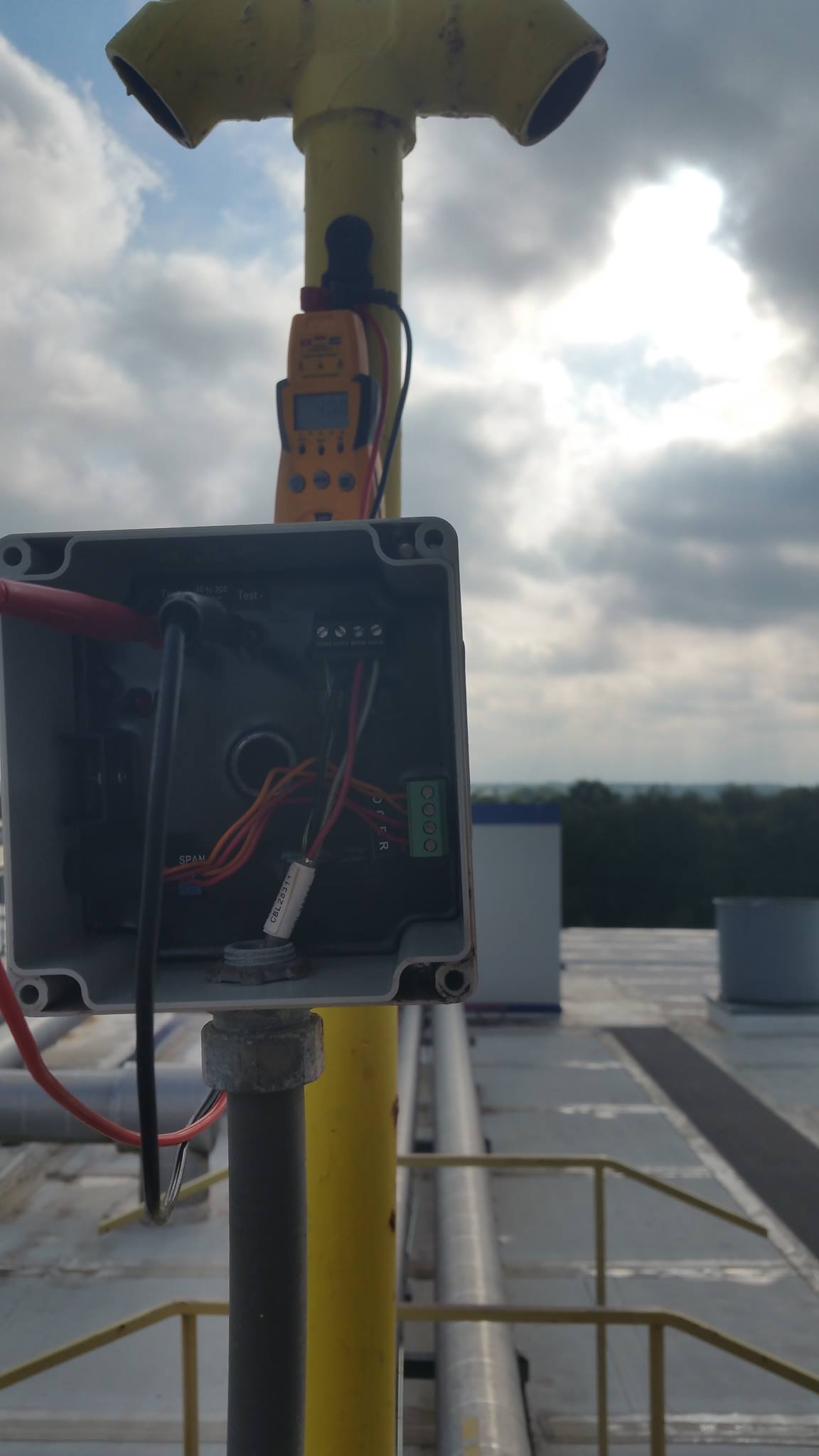
We actually have a lot to talk about when it comes to this picture. The obvious is the direct the vent(s) point. This picture is of an RV discharge on an Ammonia Refrigeration process and our chosen RAGAGEP for this process is IIAR-2. Using the latest edition, we see that it states:
15.5.1.5 *The termination of the discharge shall be directed upward and arranged to avoid spraying ammonia on persons in the vicinity.
(Did you notice the stair railings in the picture, under the RV discharge?)
This edition of the code has an explanation for this requirement:
A.15.5.1.5 The termination of discharge is considered the final several feet of the relief piping. The vent end point of relief piping may include a design to prevent rain and snow from entering. Many designs provide a method to prevent rain and snow from entering. The design at the vent end point may be a “tee” diffuser, a “double 45 degree” diffuser, a “bull’s horn” diffuser, a “spring self-closing flapper cap,” or a “sock hood cover.” The “spring self-closing flapper cap” is used on natural gas and tractor exhausts. The “sock hood cover,” which is typically bright safety yellow, orange, or red in color, has a light flexible string attached between the hood and the relief pipe stack for its containment if lifted. Another design method that may be incorporated has a fully open vent end point that is the “exterior stack extension” diffuser. The “exterior stack extension” diffuser has the relief termination piping extended on center up and into a separate larger-diameter stack extension. Any rain and snow that gets into the extended larger diameter stack draws to the internal surface and drops down and drains out drain hole(s) at the bottom. This keeps the rain and snow from getting into the relief termination piping that is on center internally.
The other concern we see in this picture is the installation of an ammonia sensor in the vent pipe. This has become more and more common in the refrigeration industry and is intended to aid in identifying when RV’s have lifted. But there is actually a RAGAGEP for the placement of these sensors… NFPA 70. Although there is an exemption from the refrigeration engine room from being a Hazardous Location (HAZLOC) when the proper ventilation is provided, we MUST understand that is the ONLY exemption for ammonia refrigeration processes. I have argued for years that ventilation discharge locations and venting locations should be classified as Class I, Div 1, Group D HAZLOCs. Ammonia is clearly a Group D flammable, even IIAR and ASHRAE agree on this.
Based on this fact and using NFPA 497, we can see that there is a “bubble” that has a 5’ radius around the vent discharges. So unless that electrical control panel is designed for a HAZLOC (and there is no mention of it being such in the owners manual), it should have been installed at least 5’ from the vent’s discharge to atmosphere. Of course, once again, the discharge should have been UPWARD and then the 5’ bubble would have been adequate; however, with this current design, if we ever stood a chance to ignite NH3 outdoors this may be the arrangement to do it.
Imagine doing work on this detector or the control box while the process is LIVE! You would not hear any alarms on the roof before an RV lifts and discharges NH3 right where you are standing!
SAFTENG Members can see my 2012 article on this design:
- Ammonia and HAZLOC’s (join the debate)
- Challenging the NH3 Refrigeration & Electrical Classification (UPDATED 3/3/12)
A couple of statements in the owner’s manual that I found telling while looking at the above photo…
Make sure ammonia does not discharge onto sensor assembly or personnel working on sensor (i.e. mount sensor opposite side of discharge).
Enclosure: 18 gauge stainless steel housing. Captive screw in hinged lid. For non-classified areas.
CLICK HERE for the owners manual
Like we say… a picture is worth a thousand words.