
A 43-year-old male employee was fatally injured in an explosion. On the day of the accident, the victim, a trailer mechanic, was working alone repairing a trailer in the maintenance shop of a freight distribution facility. There were no witnesses to the incident, and the building was deemed structurally unsound following the explosion. Through a detailed investigation, and incorporating findings from the Fire Marshall’s Report, it was determined that a 55-gallon drum of Diesel Anti-Gel, a Category 2 Flammable liquid (flashpoint below 100°F or 3.78°C), was most likely involved in the explosion. The Fire Marshalls Report determined that there were vapors from the Diesel Anti-Gel present on the floor in front of the drum and in the drum itself. The valve handle on the drum may have become unknowingly opened as employees moved through the often traveled area. Possible ignition sources in the area included static and an electrical arc resulting from the use of a nearby dropped electrical cord. Citations issued included, excessive quantities of flammable liquids being stored, containers of flammable liquids not covered, a flammable liquid container without a self-closing valve, and lack of grounding or bonding on containers of flammable liquids.
Citation(s) as Originally Issued…
A complete inspection was conducted at the accident scene. Some of the items cited may not directly relate to the fatality.
Citation 1 Item 1
29 CFR 1910.106(e)(2)(ii)(b)(2) More than 120 gallons of category 2, 3, or 4 flammable liquids in containers were located outside of inside storage rooms or storage
cabinets:
In that there was a possible total of 207 gallons of category 2 & 3 flammable liquids being stored inside the Maintenance Shop near the center of the building.
Citation 1 Item 2
29 CFR 1910.106(e)(2)(iv)(a) Category 1 or 2 flammable liquids, or category 3 flammable liquids with a flashpoint below 100F (3.78C) were not kept in covered containers when not actually in use:
In that the 55 gallon drum of Diesel Anti-Gel located near the center of the Maintenance Shop had a 4 mm hole in the drum lid.
Citation 1 Item 3
29 CFR 1910.106(e)(2)(iv)(d) Flammable liquids were not drawn from or transferred into vessels, containers, or portable tanks within a building only through a closed piping system, from safety cans, by means of a device drawing through the top, or from a container or portable tanks by gravity through an approved self-closing valve:
In that a 55 gallon drum of Diesel Anti-Gel located near the center of the Maintenance Shop that was used for dispensing did not have a self-closing valve.
Citation 1 Item 4
29 CFR 1910.106(e)(6)(i) Adequate precautions were not taken to prevent the ignition of flammable vapors:
In that the Diesel Anti-Gel vapors ignited causing an explosion in the Maintenance Shop while an employee was repairing a tail light on the trailer.
Citation 1 Item 5
29 CFR 1910.106(e)(6)(ii) Category 1 or 2 flammable liquids, or Category 3 flammable liquids with a flashpoint below 100F (3.78C) were dispensed into containers without the nozzle and container being electrically interconnected:
In that employees who transfer the Diesel Anti-Gel in the Maintenance Shop did not ground and bond the 55-gallon drum, the spout coming from the drum, and the 5-gallon gas can when transferring the liquid.
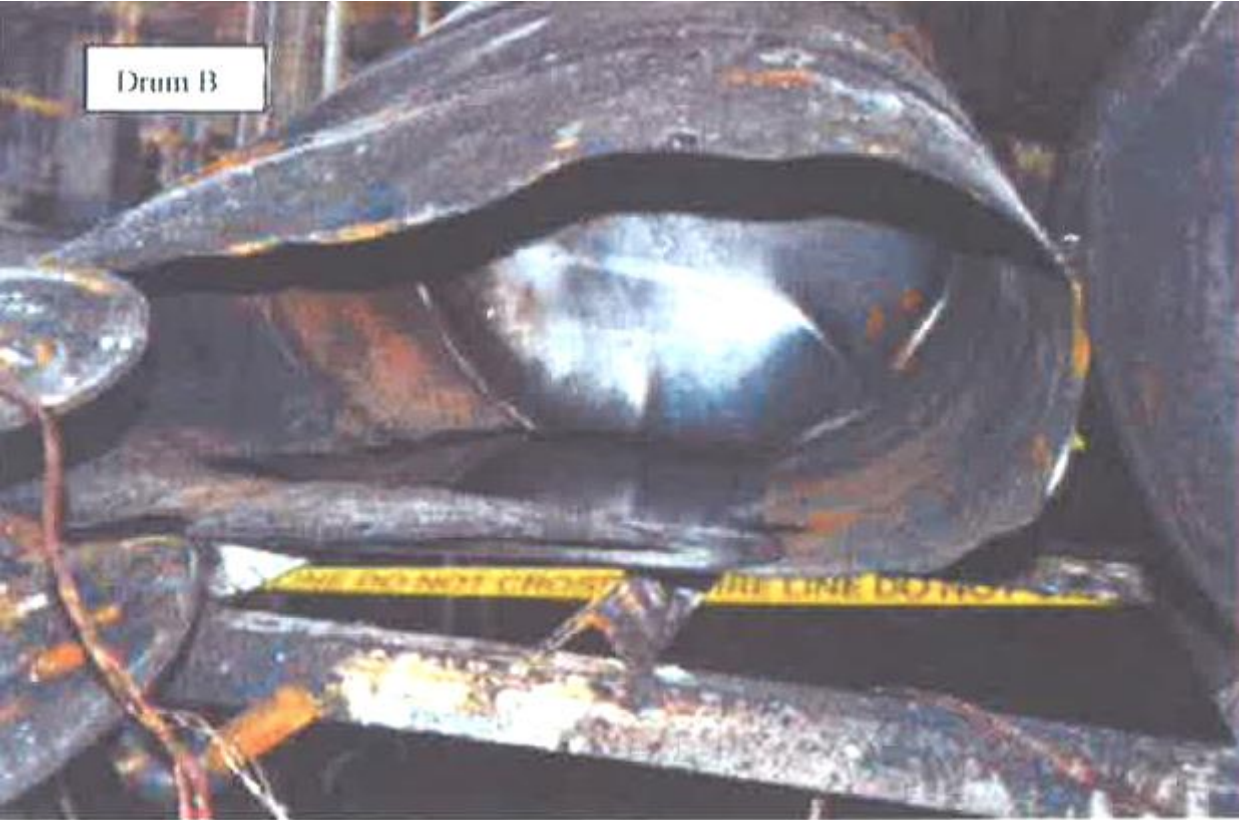
Photo 1 of 1 – Drum B, Category 2 flammable liquid, determined by the Knox County Fire Marshall to be the fuel source of the initial explosion.