It has been a while since we have mentioned/discussed the refrigerant HFO-1234yf – which has taken the car manufacturer’s on a ride down the PSM lane of H_LL! I have had several discussions with these businesses and for the life of me, I am puzzled as to where this idea that NFPA 55: Compressed Gases and Cryogenic Fluids Code is the most fitting RAGAGEP to uses as the baseline RAGAGEP in the design and construction of the process. I have argued for several years now that NFPA 58: Liquefied Petroleum Gas Code is a much better code/standard to use. I get a lot of push back on this suggestion and I am always puzzled at the rationale the end-user puts forth as to why they wish/want to use NFPA 55 instead. But I always ask them this simple question:
Where in your process is HFO-1234yf ever in the state of a “compressed gas”?
The discussion pauses for a couple of minutes and the response is usually… “well your splitting hairs with that”. Really? Those “hairs” MUST be split as it matters IMMENSELY and here is why!
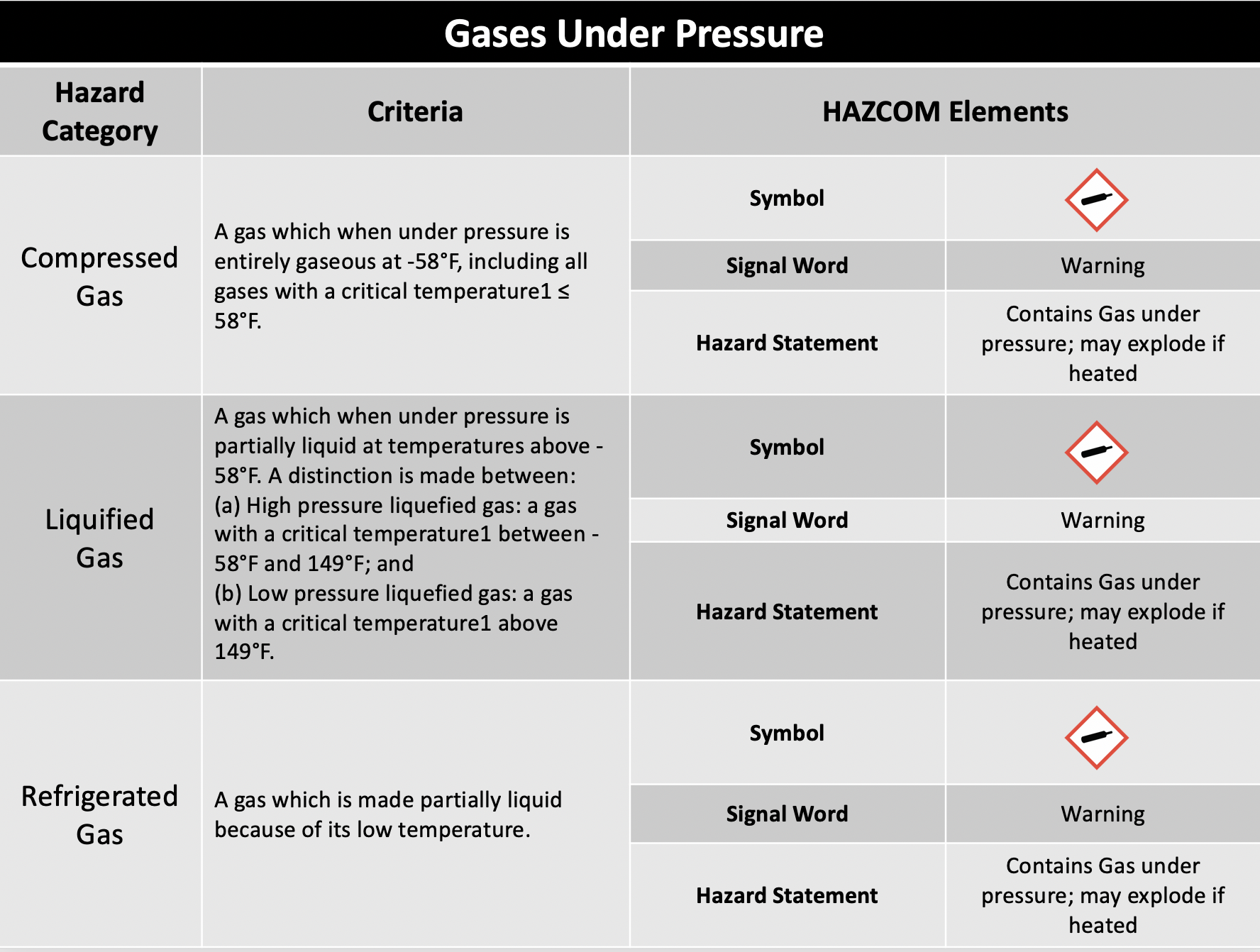
Gases are stored/processed in four (4) states:
1) Compressed Gas – A gas which when under pressure is entirely gaseous at -58°F, including all gases with a critical temperature* ≤ -58°F.
2) Liquified Gas – A gas which when under pressure is partially liquid at temperatures above -58°F. A distinction is made between:
(a) High pressure liquefied gas: a gas with a critical temperature* between -58°F and 149°F; and
(b) Low pressure liquefied gas: a gas with a critical temperature* above 149°F.
3) Refrigerated Liquified Gas – A gas that is made partially liquid because of its low temperature.
4) Dissolved Gas – A gas which when under pressure is dissolved in a liquid phase solvent.
In an HFO-1234yf process at a car manufacturer or a plant using it as a “blowing agent,” the HFO is stored and transferred as a Liquified [Pressurized] Gas. At no time in the process is HFO a Compressed Gas (as defined above). So since it is not a “compressed gas” how do we justify using a “compressed gas” standard/code as our baseline RAGAGEP? This takes me to NFPA 58 which is the very best flammable gas standard on the planet! Well written, simple to follow, has layers of protection, etc. AND it is written for a flammable gas that is stored and handled as a Liquified [Pressurized] Gas. HFO and Propane(LPG) are also BOTH Category 1 Flammable Gases; so, unfortunately, we did not have an HFO-1234yf RAGAGEP to use so we had to seek assistance in some other code/standard and NFPA 58 is almost a perfect fit. NFPA 55, Chapter 7, Section 6 (7.6) covers flammable gases, including liquefied flammable gases, but it is clear that the section is lacking for a bulk process design. The standard is written mostly for portable containers, although the standard says it can apply to stationary containers, it just does not even come close to NFPA 58 and the guidance it provides for the design and construction of an HFO process. But that is my opinion, what say you?
For my Anhydrous Ammonia friends, especially those in the fertilizer industry, we can have NH3 in our process in two (2) states:
1) Liquified Gas, and
2) Refrigerated Liquified Gas
In some fertilizer facilities, the NH3 is stored as a “refrigerated liquified gas” as near atmospheric pressures and even though some of the refrigerated tanks hold millions of pounds of NH3, the refrigerated tank is rarely the Worst-Case Release Scenario for the RMP. So again, the state the gas is in MAKES A HUGE difference in how we design and manage its hazards!