First thing – Rest In Peace Gerardo Castorena and Frank Flores and may God be with your loved ones during this most difficult time. Also to the residents who have lost their homes and/or been displaced, I wish you a speedy return to some sense of normalcy. And to the workers who have lost their way of living and wonder what their future holds I wish you peace of mind and comfort.

I mean no disrespect to anyone with this analysis and I am in NO WAY associated with this incident or investigation – SO I KNOW NO MORE than what my experience, photos, and drone footage are telling me. I have no inside information regarding the facts of this incident. I am just not yet convinced that this was a propylene explosion. Should some of the speculation/reporting in the media about workers smelling gas (propylene has little to NO odor – unless the business bought it odorized) and being on the phone with a friend at 4:00 am become fact then I will revisit my analysis. But as of tonight, the HFD issued a statement to the press that at this time they are only stating Propylene was impacted by the explosion and they do not yet know if it was the source of the explosion. I am sure investigators are wanting to talk to the friend of the worker who was killed, as she has stated she was on the phone with one of the deceased workers just before the explosion. She states the worker was telling her something was not right and how he could smell gas and he heard hissing sounds. Another worker arrived and he hung up and the two went to investigate and moments later the explosion occurred. This is compelling evidence so I am sure they are wanting to interview her ASAP. Until her story is confirmed, I am leaning towards a metal dust explosion and I lay out my case below. There is a lot of misinformation coming from the media and I have spent this evening piecing together the before and after images and based on my experience with Propylene and COM DUST – I do not believe this damage which covers a 1-mile radius and felt 10 miles away was a VCE event involving Propylene. Here is why…
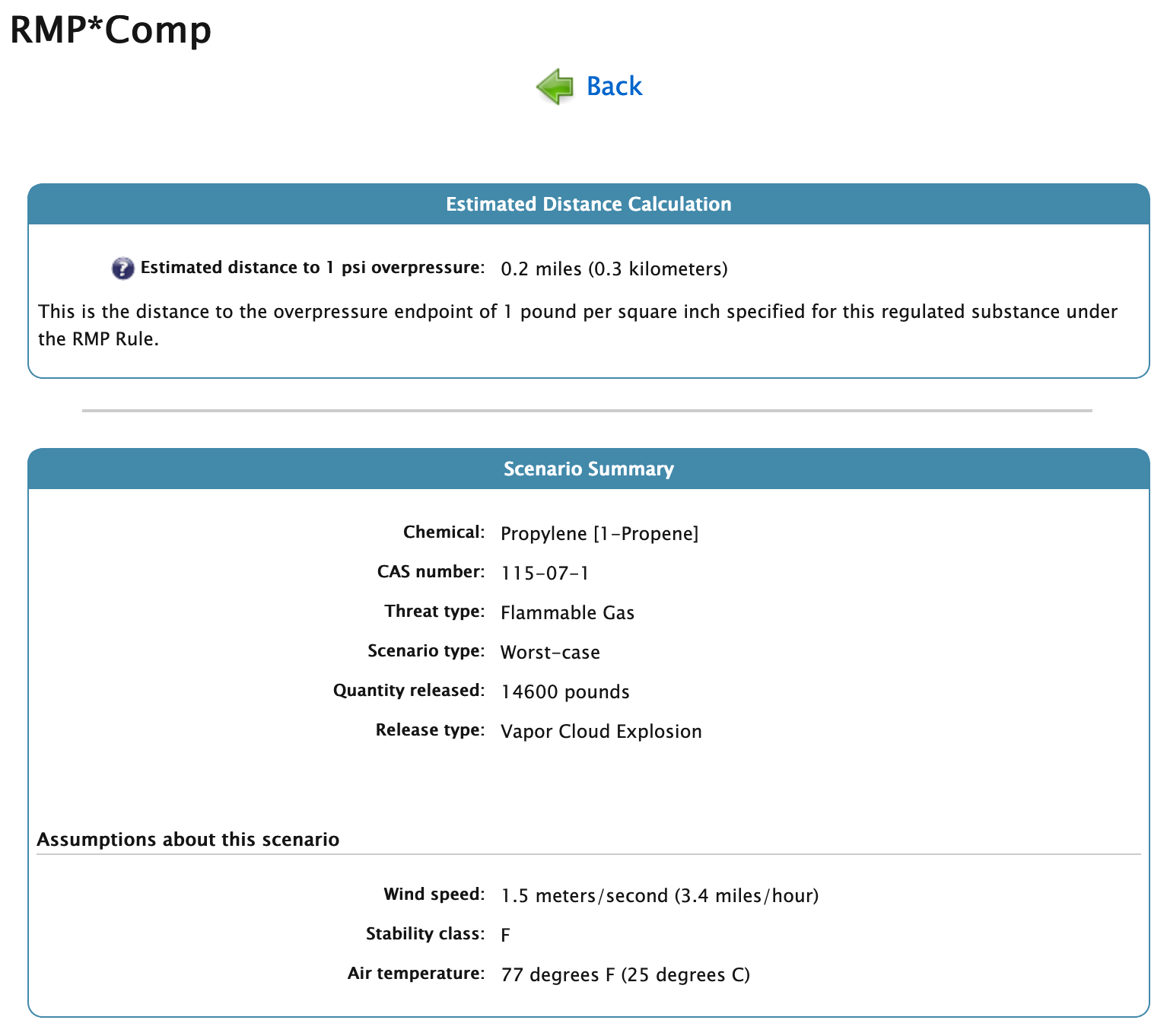
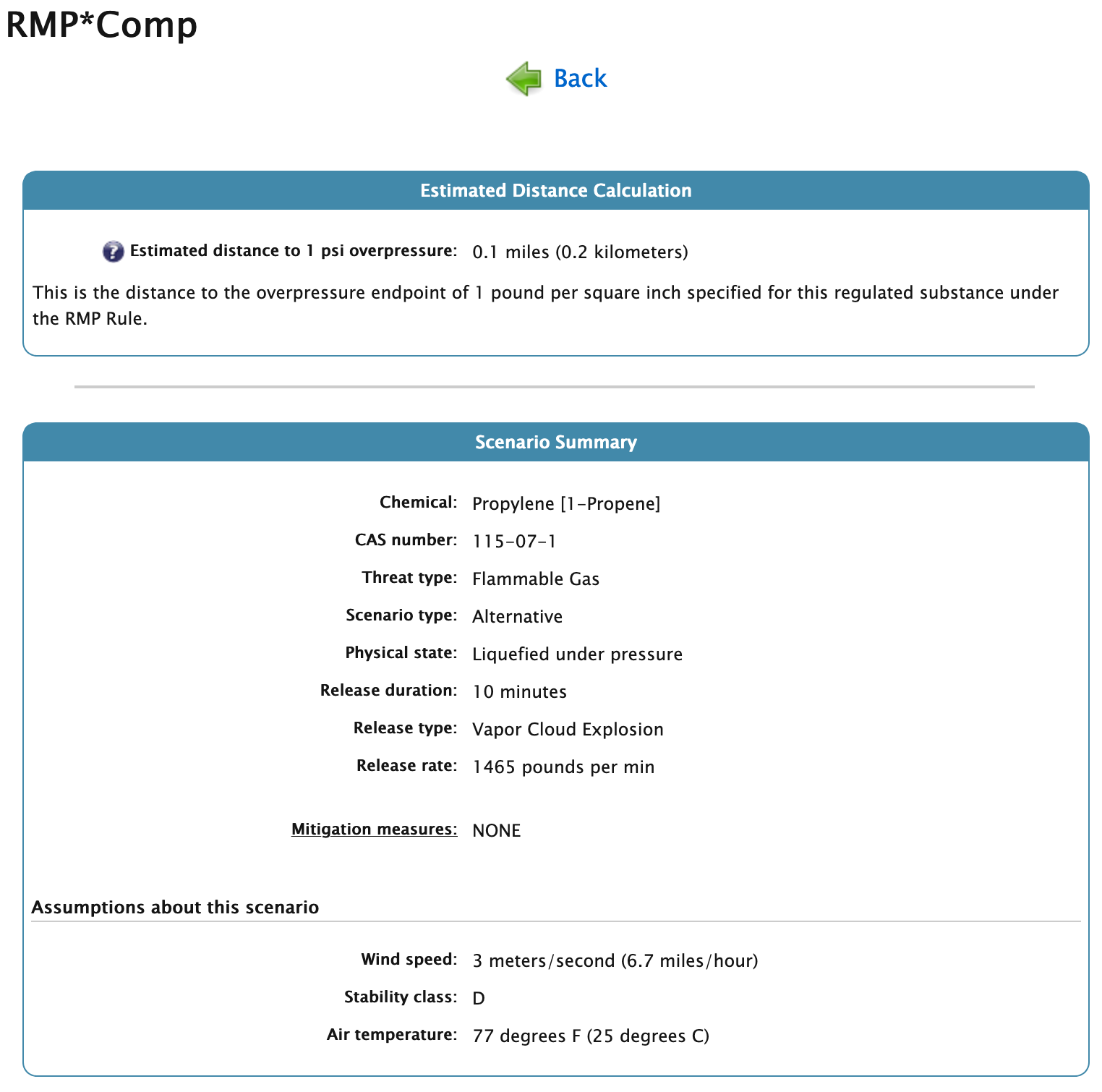
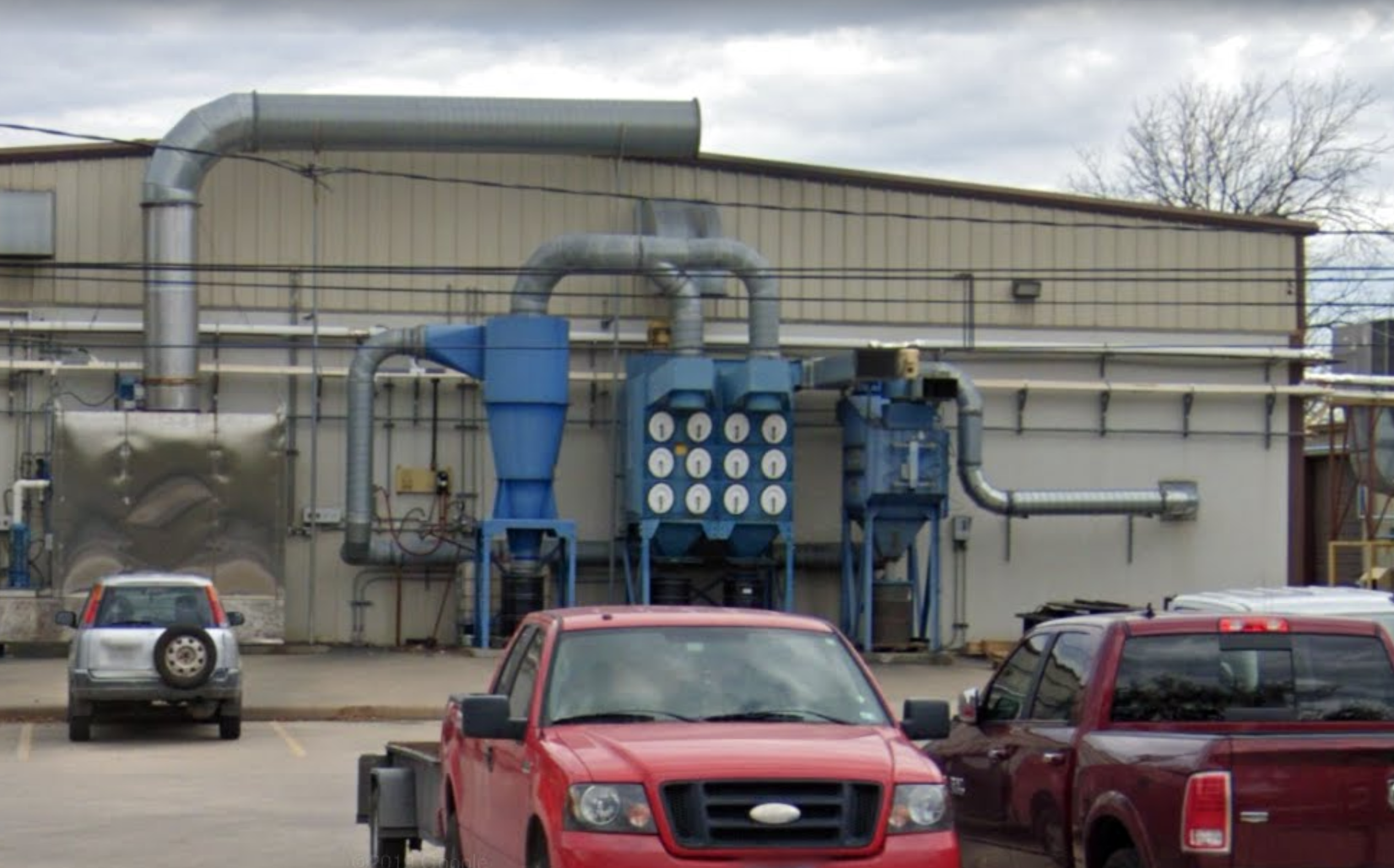
We have seen it before, a non-descript business and in all accounts a very nice business that had been in business for over 50 years. Reports have stated this tragedy was the result of a Propylene Explosion – at this time I would challenge that assumption and until I know what was inside the building below, I am leaning toward this being a metal dust explosion. The HFD Chief has stated, and it appears to be from aerial photos and drone footage, the Propylene tank was a 2,000-gallon tank. It is a pressure vessel, so we use 85% of the tank capacity which is 1,700 gallons. Propylene weighs 8.62 pounds/gallon making the tank (if full) around 14,654 pounds. Using EPA’s RMP COMP software and running some Worst-Case Release scenarios the worst I can get is 1 psi out 0.2 miles. As a point of reference, a single pane window will break at around 0.5 psi. These scenarios (see RMP Comp reports below) are assuming 100% of the Propylene was released and formed a vapor cloud and ignited, which is highly doubtful seeing how we had Propylene still burning for sometime after the explosion. Aluminum dust, on the other hand, has a Pmax of 162.0 psi per gram of dust. That is 0.035274 ounces of dust!!! The facility used different dust in its powder coating and had its own lab for testing its powder coating dust. The building at the center of the explosion was built around 2010/2011 time frame and from news accounts and their videos, it appears this building may have been the lab (although I am not 100% on what took place in the building – ONLY 100% sure the building was the epicenter of the blast). I do know from “before” pictures that this building had a serious dust collection system associated with it and this dust collector and some of the filters were blow OUT and yet some of the structure remained standing after the explosion
Here is my breakdown of this tragedy with videos from news and before and after pics…
First, the BEFORE pic using Google Earth. The building circled in red is the epicenter of the blast which will be quite obvious from pic #2 below. Use the vertical pressure vessel (appears to be an air receiver) in the yellow circle as your point of reference. The white roof to the right of the epicenter is the valve shop.
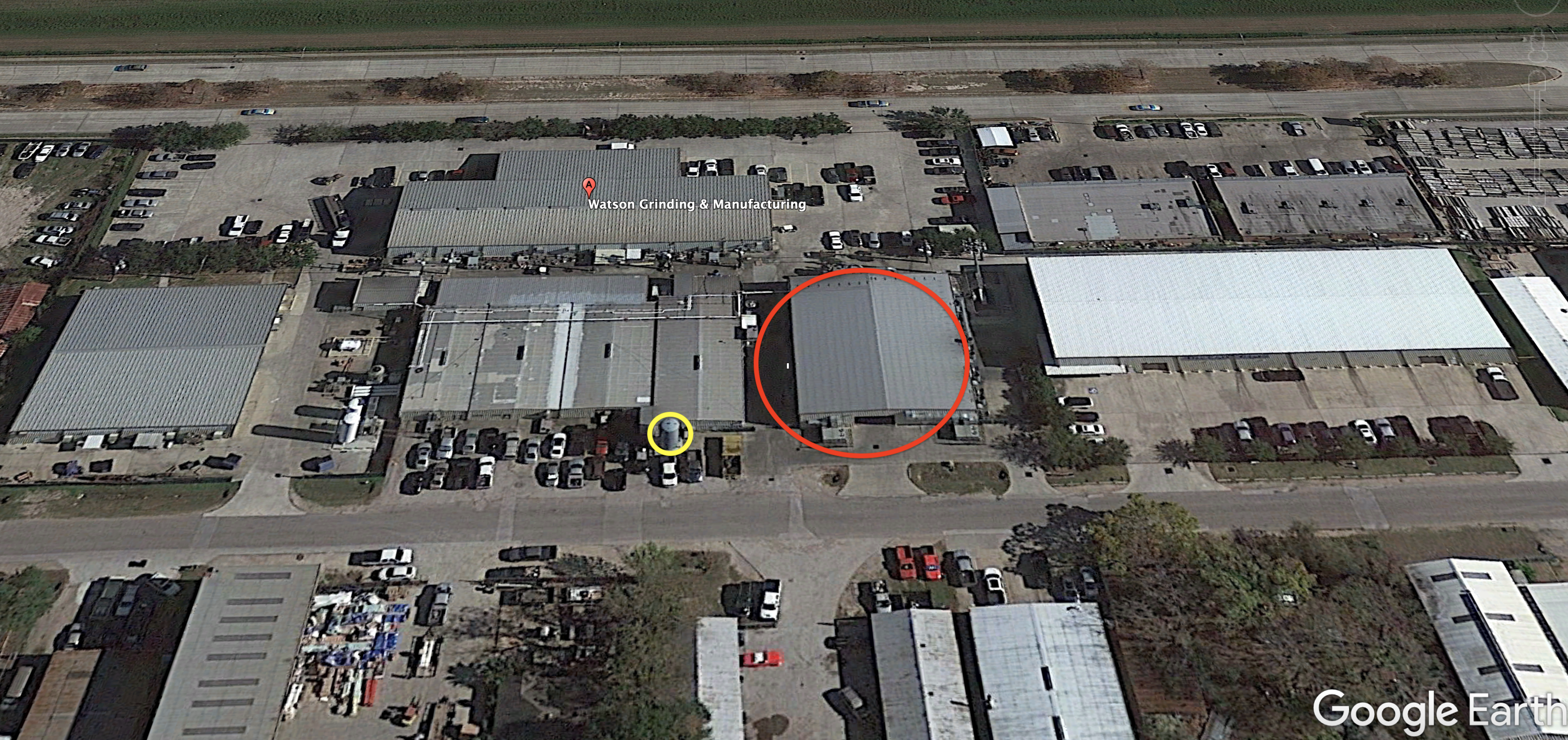
Source: Google Earth
Pic #2 – POST Explosion
Notice the vertical gray vessel to the left and the new Valve Shop on the right. As we can see the building in the red circle above is 100% gone and it took about 1/2 of the building to its left and some of the valve shop.
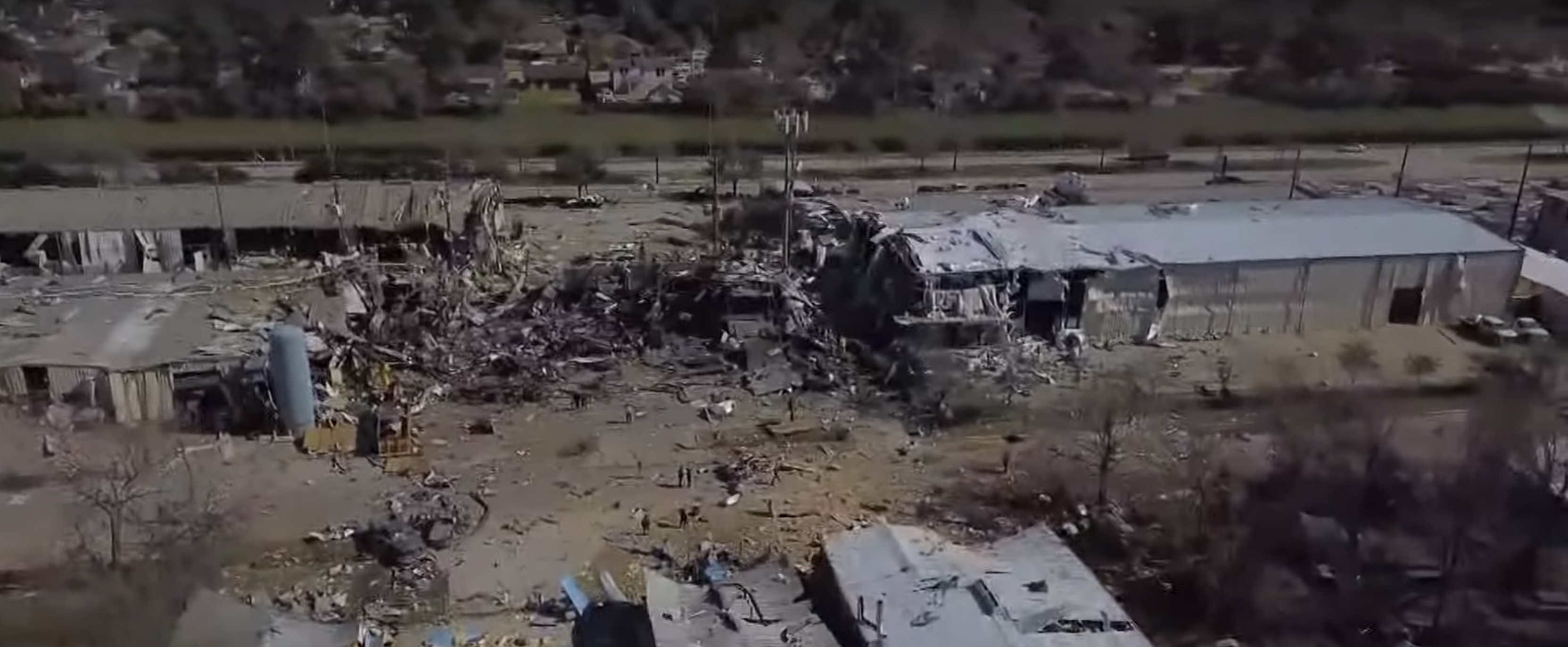
Source: KHOU11
Pic #3 – Another angle of the epicenter
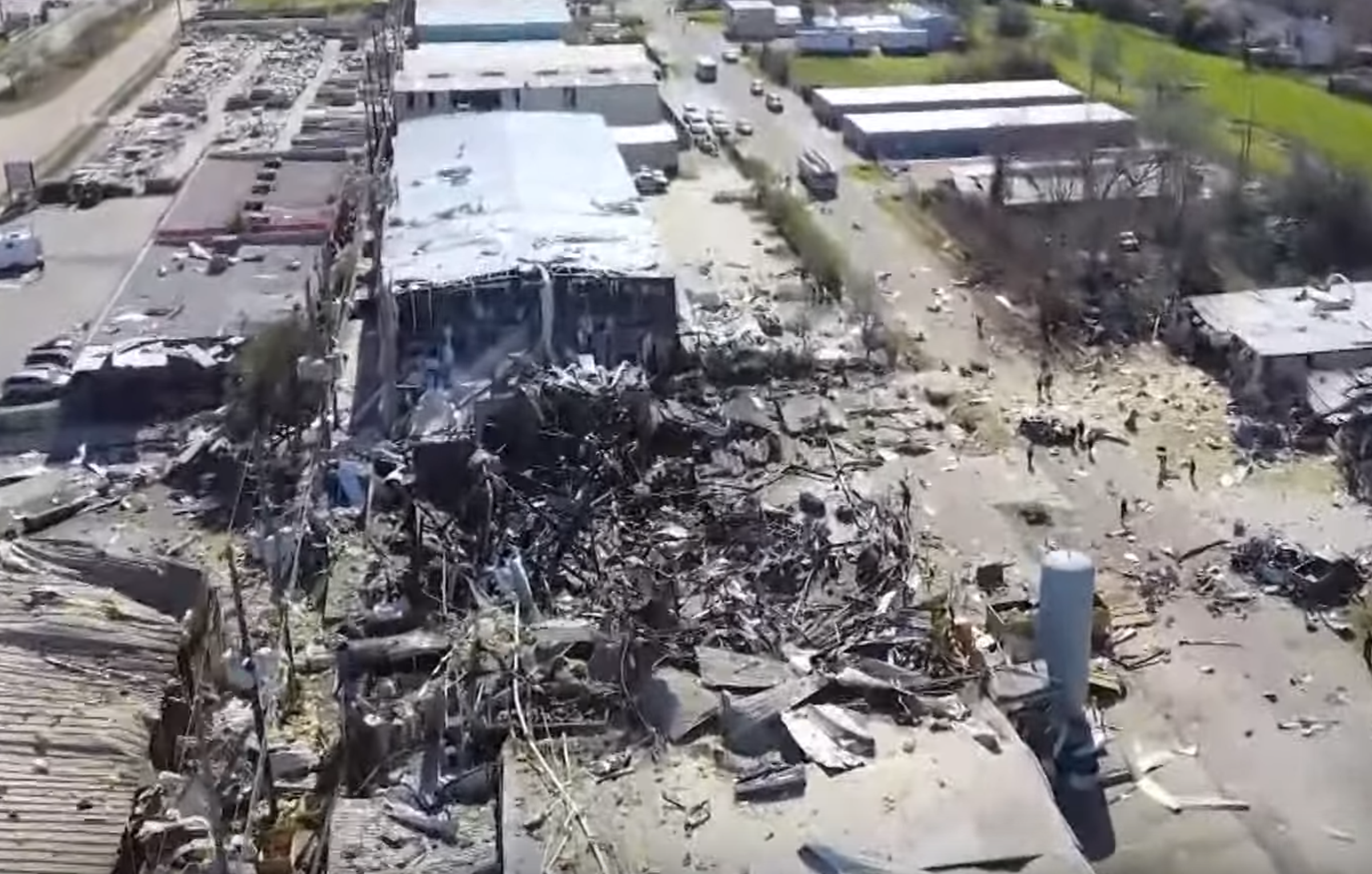
Source: KHOU11
Pic #4 and 5 – The storage tanks POST explosion (still intact); some have reported that an oxygen tank exploded and some have said the propylene tank (in the yellow box) exploded. No tanks were involved in the explosion.
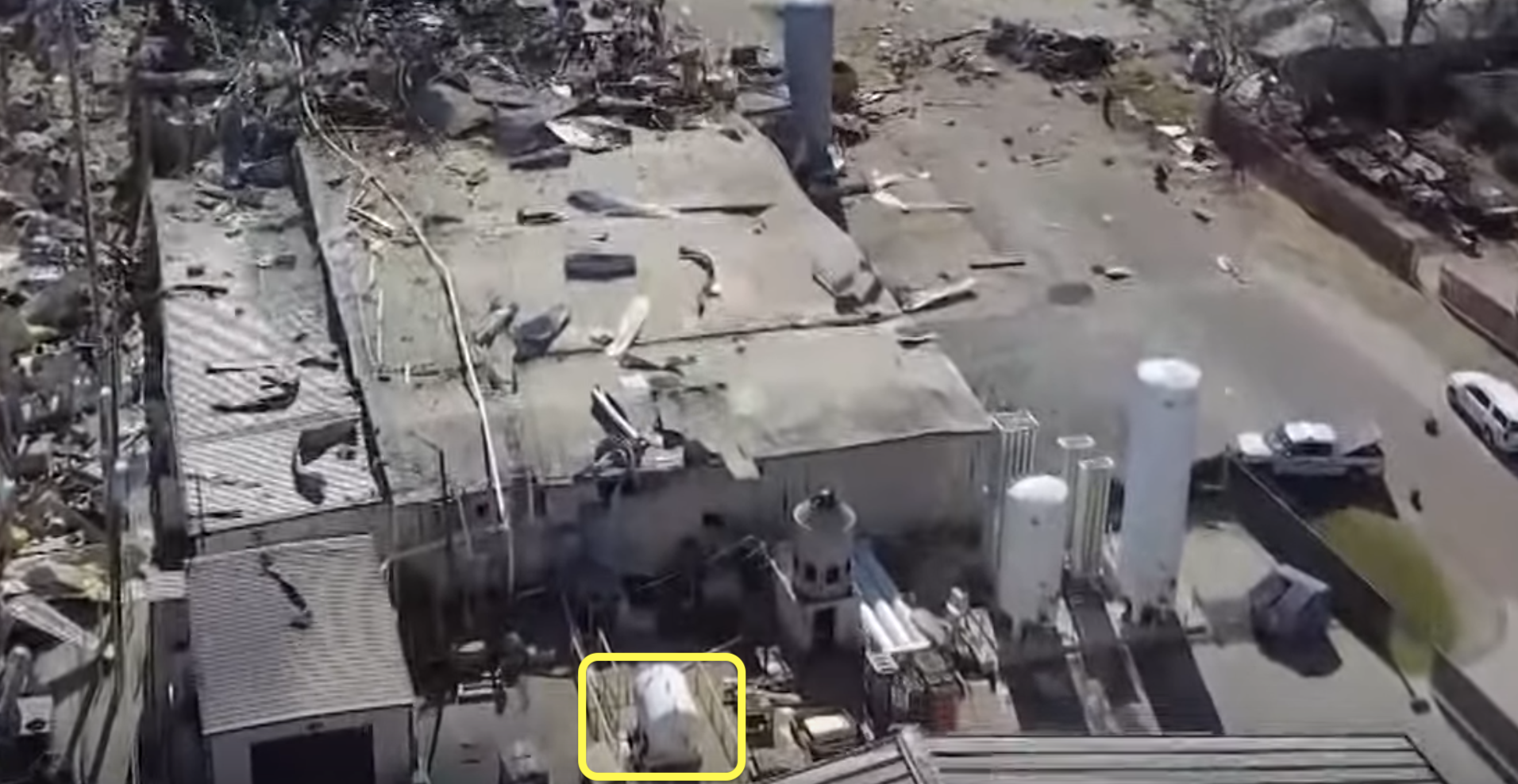
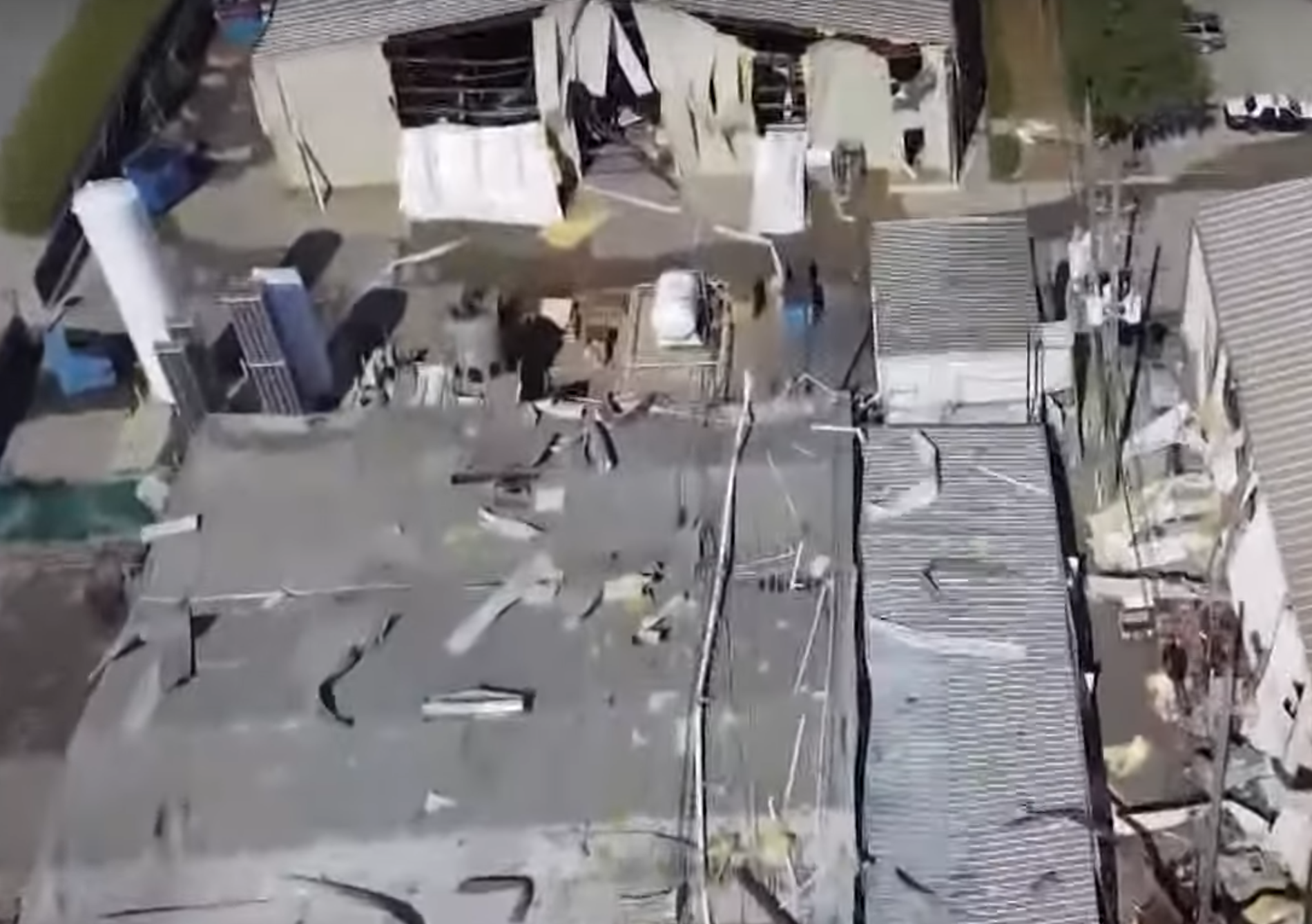
Source: KHOU11
Pic #6 – the building at the epicenter has its concrete pad poured in January 2010. I am not sure what they colored sections of concrete are, but this appears to be re-enforced concrete for robot cells (seen in their videos) – but I have no idea at this point. All I know is that in January 2010 this was the state of the building.
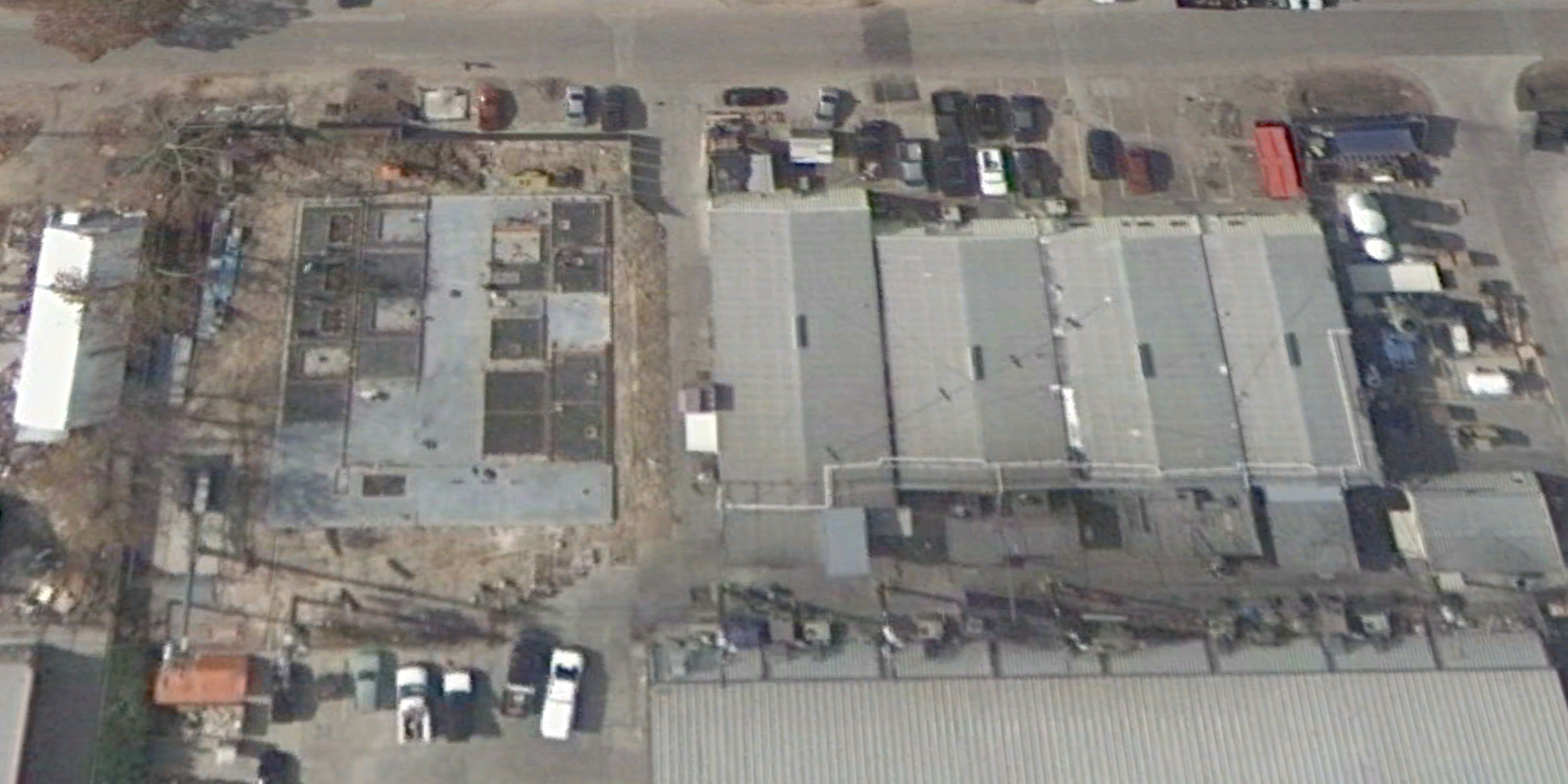
Source: Google Earth
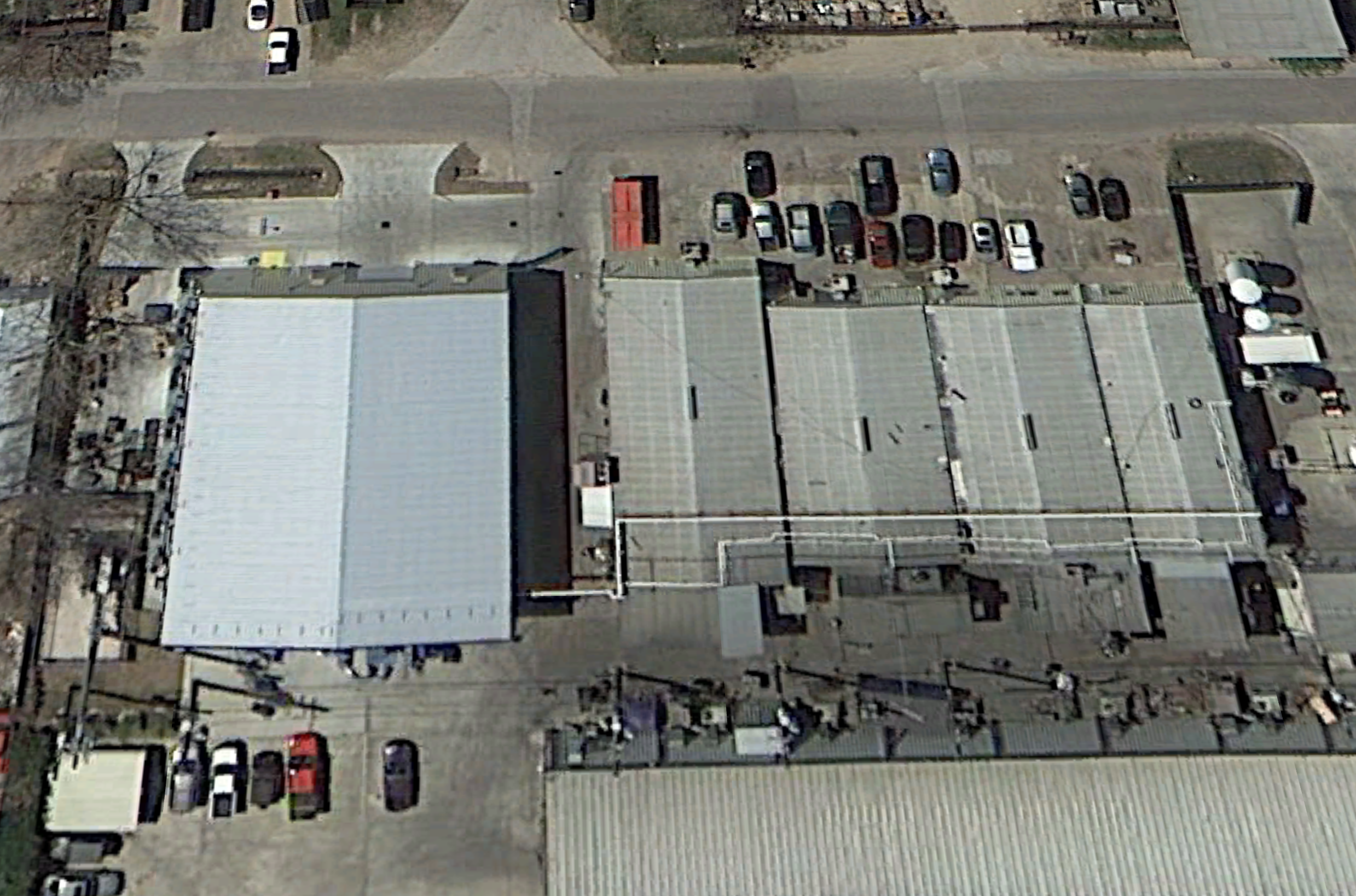
Pic #7 – Building structure completed in 3/2011 (that is the date of the Google Earth image – NOT the official completion date)
Source: Google Earth
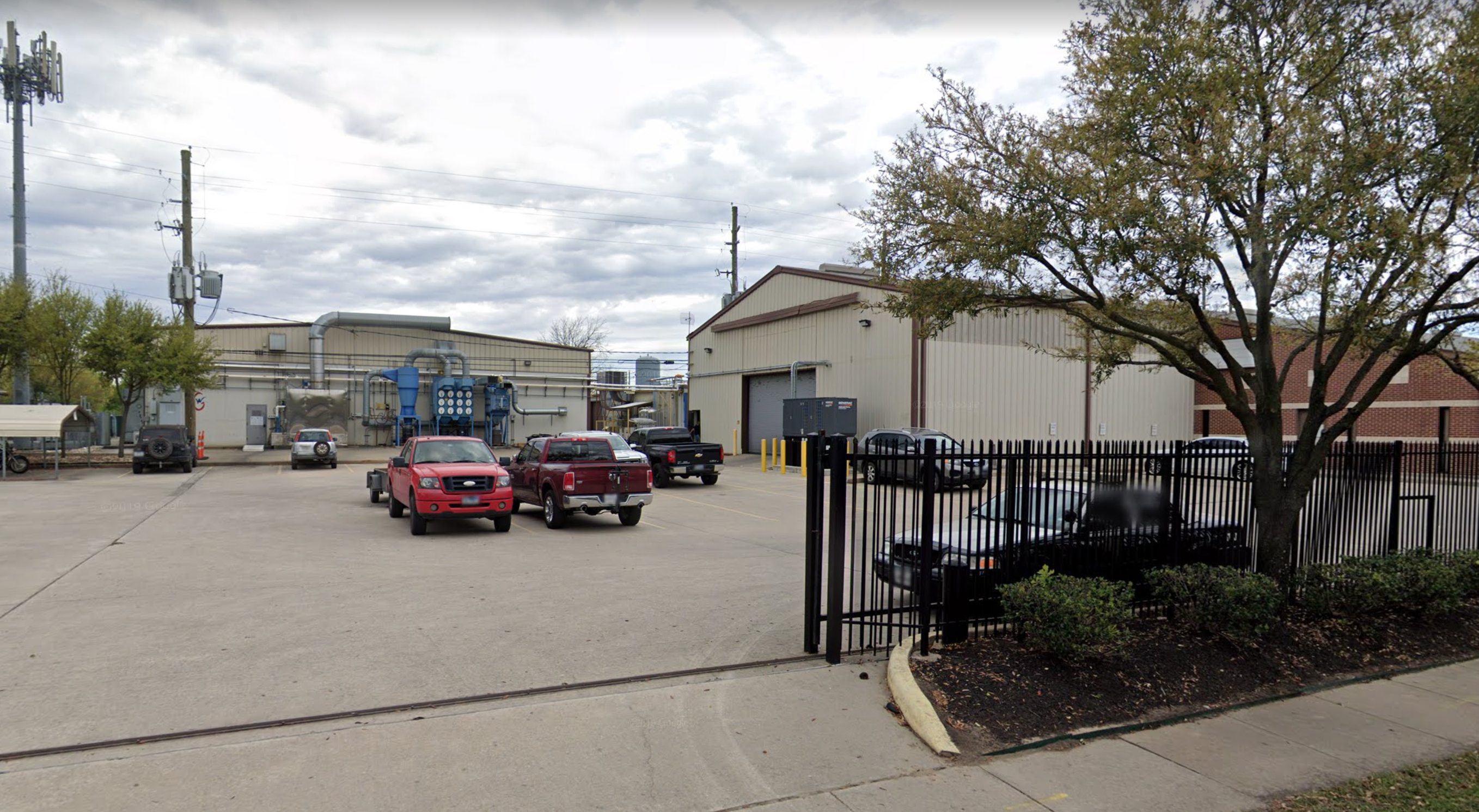
Pic #8 – The dust collection system outside the building (take notice of the cell phone tower in the upper left of the frame as a point of reference when viewing POST explosion pics)
Source: Google Maps Street View
Pic #9 – Zoomed in on Dust Collector
Source: Google Maps Street View
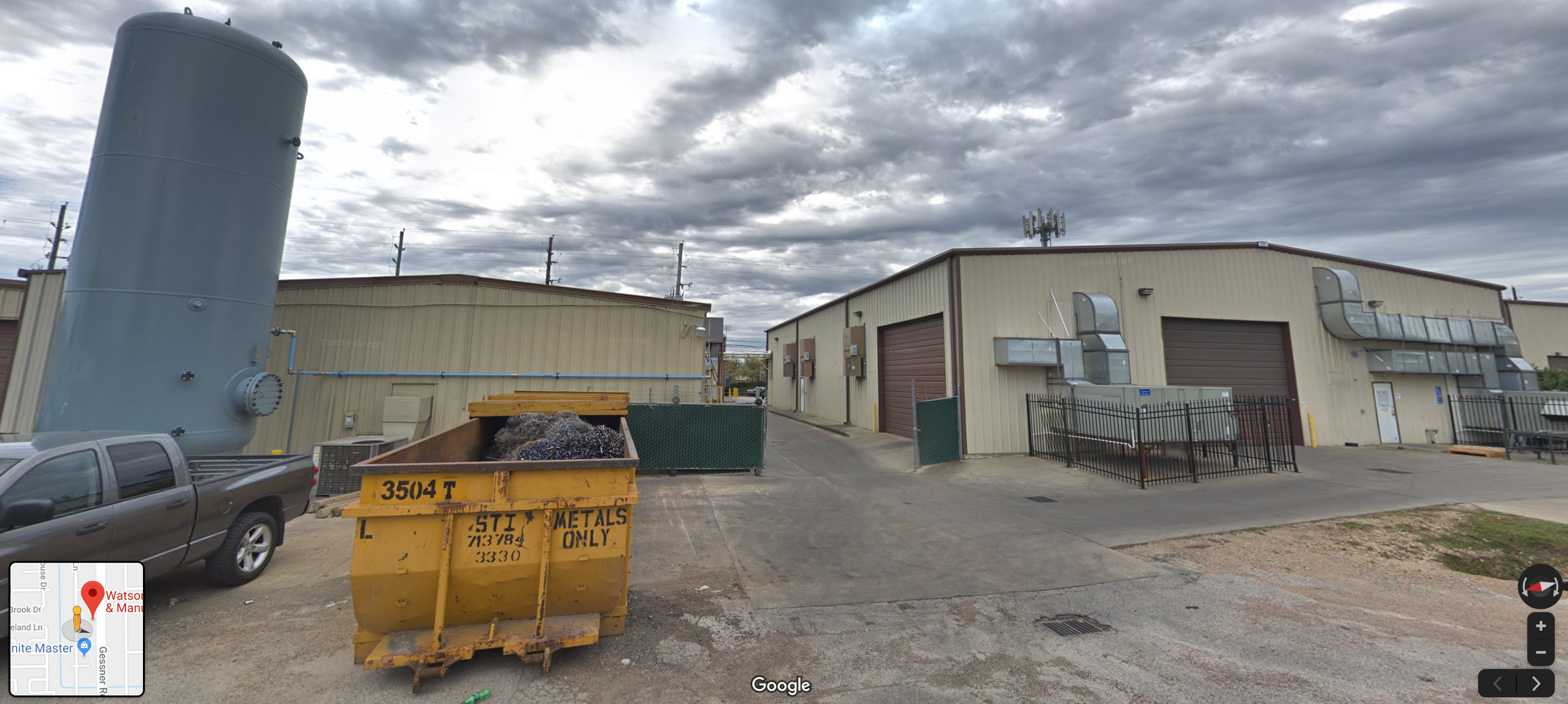
Pic #10 – Rear of Buildings with Air Receiver for reference
Source: Google Maps Street View
Pic #11 – Estimate of Structure Loss – cell phone tower as a point of reference over top of the building. We can also see the dumpster of metal shavings in this pic, as well as the post-explosion pics.
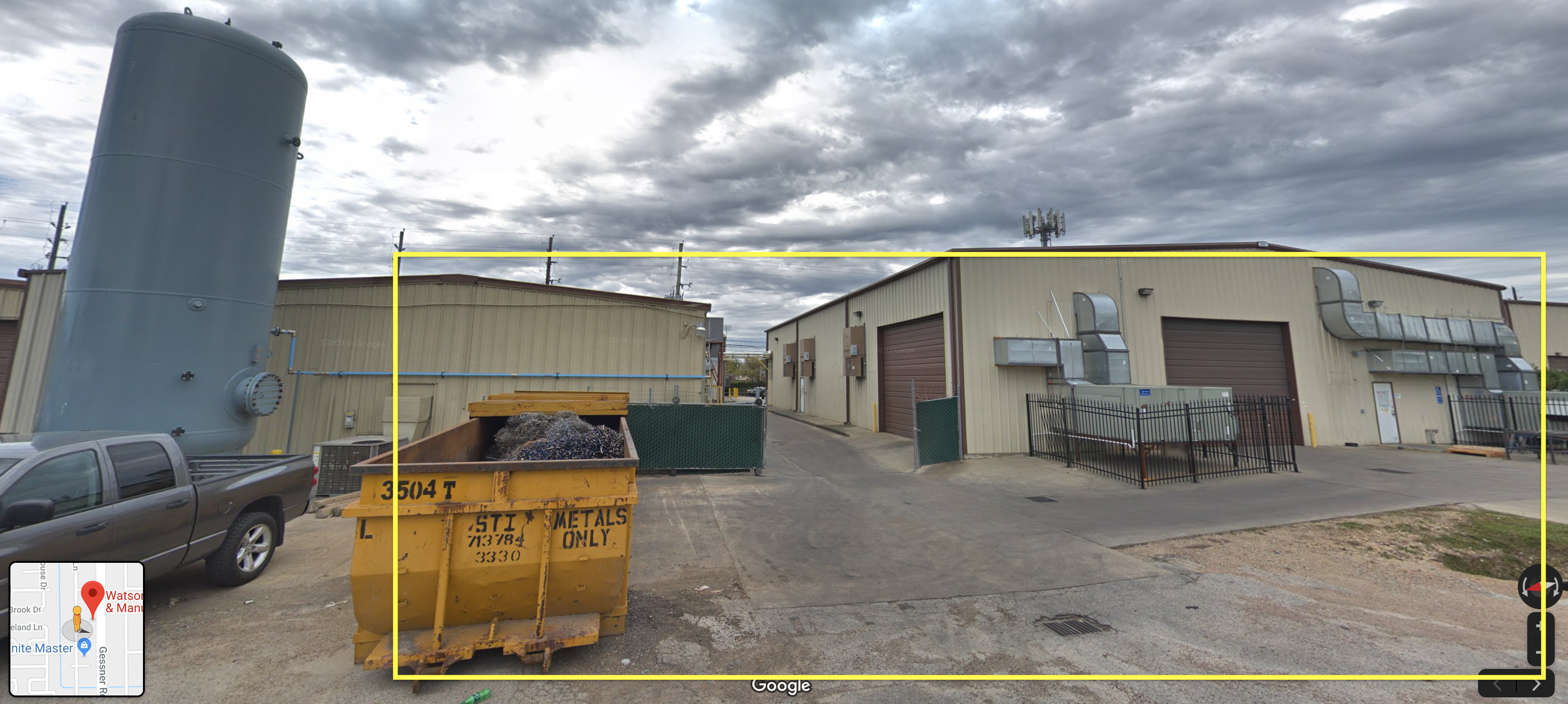
Source: Google Maps Street View
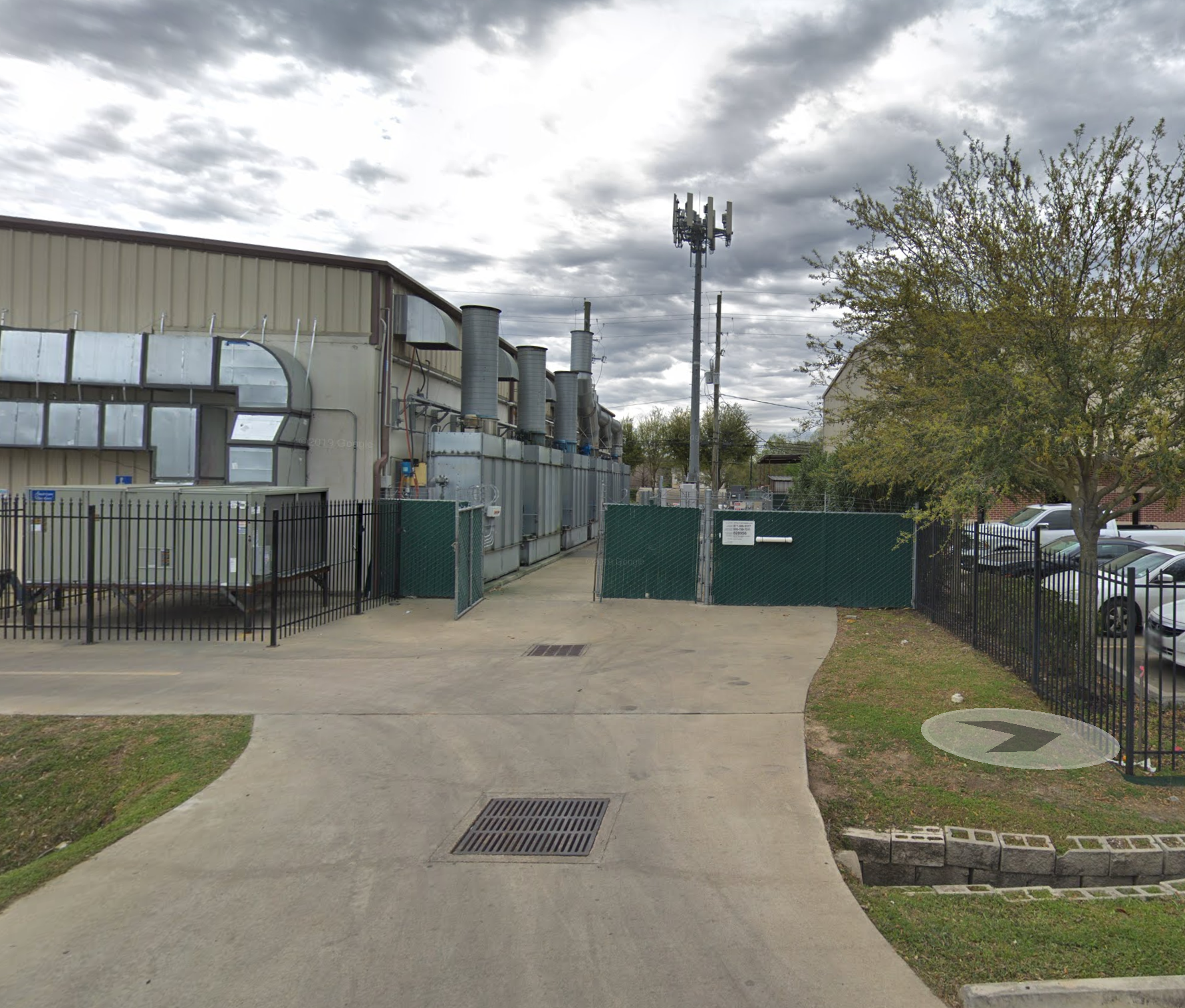
Pic #12 – this side of the building appears to have some pollution control devices, but I have no idea what for. Not sure of they are some type of scrubber or TOX.
We can see the cell phone tower as a point of reference.
Pic #13 – This is screenshot from Drone footage showing the front of the building where the dust collectors were shown in Pics #8 and #9 above. The cell phone tower and the tall gray air receiver are points of reference.
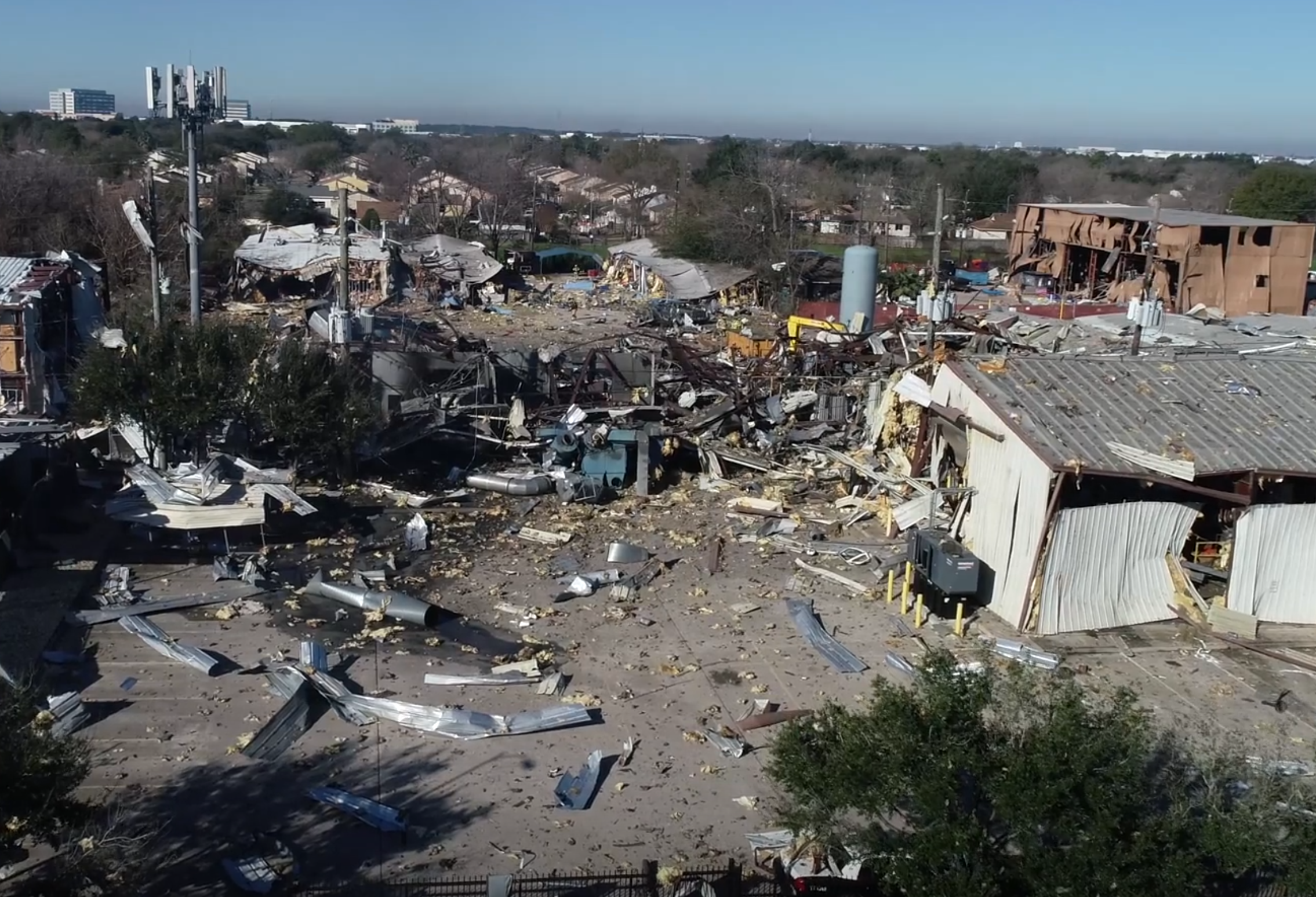
Source: Houston Chronicle
Pic #14 – RMP Comp* Reports for Propylene WCS and ARS
The propylene tank was a 2,000-gallon tank. It is a pressure vessel, so we use 85% of the tank capacity which is 1,700 gallons. Propylene weighs 8.62 pounds/gallon making the tank (if full) around 14,654 pounds. Using EPA’s RMP COMP software and running some Worst-Case Release scenarios the worst I can get is 1 psi out 0.2 miles.