
This OSHA citation involves items other than LOTO. Still, the LOTO citations caught my eye precisely because the equipment-specific procedures did NOT state how pneumatic sources (e.g., air) were to be verified at a Zero Energy State (ZES). The means to verify a ZES is a critical step in LOTO, and far too often, the procedure will merely state… “Verify Zero Energy” does not tell the user HOW TO VERIFY a ZES for each energy source. This OSHA citation points out the following:
- Procedures do not indicate the location of the air valves, how to lock them out, and how to verify that they have been de-energized.
- Procedures do not indicate the location of the main power or how many electrical boxes are needed to be locked out
- Verification step of the LOTO procedure for pneumatic does not specify how to verify that the pneumatic energies were locked out
- Specific written procedures did not include the magnitude of energies, location of energy sources, and verification of de-energized energy sources
Just like we tell authorized employees to use the “Start/Stop Button” to verify the electrical energy is at a ZES, we have to provide the means to verify that the air is at a ZES. Pneumatic sources are “stored energy” and require EXTRA steps to bleed off the energy AND to ensure the energy does not re-accumulate due to a leaking isolation device. This is why I always suggest the use of a “dump valve” for pneumatic sources.
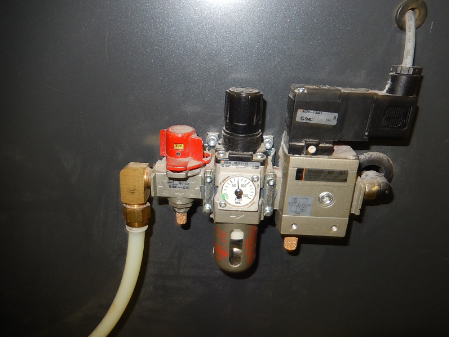
The alleged violations below have been grouped because they involve similar or related hazards that may increase the potential for injury or illness.
Citation 1 Item 1a
Type of Violation: Serious; $13,359
29 CFR 1910.147(c)(4)(ii)(B): The energy control procedure did not clearly and specifically outline specific procedural steps for shutting down, isolating, blocking and securing machines or equipment to control hazardous energy:
On or about November 5, 2019, employees perform maintenance and service on various equipment. Employees were exposed to struck-by, caught in and amputation hazards in that:
a) bag line 3 – The lockout/tagout procedure does not indicate the location of the air valves, how to lock them out and how to verify that they have been deenergized.
b) bag line 3- The lockout/tagout procedures does not indicate the location of the main power or how many electrical boxes are needed to be locked out.
Citation 1 Item 1b
Type of Violation: Serious
29 CFR 1910.147(c)(4)(ii)(D): The energy control procedures did not clearly and specifically outline the requirements for testing a machine or equipment to determine and verify the effectiveness of lockout devices, tagout devices, and other energy control:
On or about November 5, 2019, employees perform maintenance and servicing on various equipment. Employees were exposed to struck-by, caught in and amputation hazards in that:
a) bag line# 3 – The verification step of the lockout/tagout procedure for pneumatic, does not specify how to verify that the pneumatic energies were locked out.
Citation 1 Item 2
Type of Violation: Serious; $13,359
29 CFR 1910.147(c)(5)(i): Locks, tags, chains, wedges, key blocks, adapter pins, self-locking fasteners, or other hardware were not provided by the employer for isolating, securing or blocking of machines or equipment from energy sources:
On or about November 5, 2019, employees performed maintenance and service to equipment. The employer did not provide a means to lock out pneumatic energy sources on Line III when it is being serviced or maintained to prevent the release of stored energy.
Citation 1 Item 3
Type of violation: Serious; $8,111
29 CFR 1910.178(p)(1): Powered industrial truck(s) found to be in need of repair, defective, or in any way unsafe had not been taken out of service until restored to safe operating condition:
a) Clark sit down propane power forklift- On or about November 5, 2019, forklift horn was not operational and the name plate of the forklift was broken and it was not taken out of service.
Citation 1 Item 4
Type of Violation: Serious; $8,111
29 CFR 1910.242(b): Compressed air used for cleaning purposes was not reduced to less than 30 p.s.i.:
a) Line 3 – On or about November 5, employees used compressed air to clean mulch residue from themselves, and surfaces inside the equipment. The pressure measured in excess of 55 psi.
The alleged violations below have been grouped because they involve similar or related hazards that may increase the potential for injury or illness.
Citation 1 Item 5a
Type of Violation: Serious; $4,866
29 CFR 1910.305(g)(1)(iv)(A): Flexible cords and/or cables were used as a substitute for the fixed wiring of a structure:
On or about November 5, 2019, employees were exposed to electric shock hazards where employees used equipment receiving power from flexible cords. Instances include:
a) Line III: Employees operating equipment including light fixtures receiving power from a flexible cord.
b) Production area: Light sign powered by a flexible cord.
Citation 1 Item 5b
Type of Violation: Serious
29 CFR 1910.305(g)(1)(iv)(D): Flexible cords and cables were attached to building surfaces:
a) Line III – On or about November 5, 2019, employees were exposed to shock and fire hazards associated with the use of extension cords attached to the structure of the equipment. The extension cord was used to provide power to light fixtures used throughout the day.
b) Production area – On or about November 5, 2019, employees were exposed to electrical shock and fire hazards associated with the use of extension cords attached to the building structure. The extension cord was used to provide power to signs used throughout the day.
Citation 2 Item 1
Type of Violation: Repeat; $26,718
29 CFR 1910.147(c)(6)(i)(B): The periodic inspection of the energy control procedure was not conducted to correct any deviations or inadequacies identified:
In the bulk mill and bagging area, employees repaired and maintained the equipment. Specific written procedures did not include the magnitude of energies, location of energy sources and verification of deenergized energy sources. The periodic inspection was not conducted, on or about 11/5/19.
The business was previously cited for a violation of an equivalent Occupational Safety and Health Standard 1910.147(c)(6)(i)(B), which was contained in OSHA inspection number 1374883, citation 1, item 2 issued May 3, 2019, and was affirmed as a final order on July 2, 2019, with respect to a workplace located in GA.
Citation 2 Item 2
Type of Violation: Repeat; $26,718
29 CFR 1910.147(c)(7)(i)(A): Authorized employee(s) did not receive training in the recognition of applicable hazardous energy sources, the type and magnitude of the energy available in the workplace, and the methods and means necessary for energy isolation:
a) In the bagging area employees servicing equipment, including Line III, were exposed to amputation and electrical hazards. Lockout/tagout training as required by the standard was not provided, on or about 11/5/19.
The business was previously cited for a violation of an equivalent Occupational Safety and Health Standard 1910.147(c)(7)(i)(A), which was contained in OSHA inspection number 1374883, citation 1, item 3 issued May 3 2019 and was affirmed as a final order on July 2, 2019, with respect to a workplace located in GA.
Citation 2 Item 3
Type of Violation: Repeat; $26,718
29 CFR 1910.147(d)(4)(i): Lockout or tagout devices were not affixed to each energy-isolating device by authorized employees:
In the production area, employees performing PM’s, unjamming equipment and accessing moving parts were exposed to amputation hazards. Employees did not lock the energies prior to perform the repairs, on or about 11/5/19.
The business was previously cited for a violation of an equivalent Occupational Safety and Health Standard 1910.147(d)(4)(i), which was contained in OSHA inspection number 1374883, citation 1, item 4 issued May 3, 2019, and was affirmed as a final order on July 2, 2019, with respect to a workplace located in GA.
The alleged violations below have been grouped because they involve similar or related hazards that may increase the potential for injury or illness.
Citation 2 Item 4a
Type of Violation: Repeat; $19,085
29 CFR 1910.219(d)(1): Pulley(s) with part(s) seven feet or less from the floor or work platform were not guarded in accordance with the requirements specified in 29 CFR 1910.219(m) and (o):
On or about November 5, 2019, and at times prior to,
a) McT Hot Seal Operator, SN CM 169680: The employer did not ensure the pulleys of the machine were guarded. The operator guides bags of product through the machine to be hot sealed, exposing the employee to amputations and caught in between hazards.
b) Line III – In the production area, employees were exposed to an ingoing nip points from the belt and pulley located less four feet from the ground, when a control panel was moved and exposed an opening on the line for access, on or about 11/5/19.
The business was previously cited for a violation of an equivalent Occupational Safety and Health Standard 1910.219(d)(1), which was contained in OSHA inspection number 1374883, citation 1, item 7a issued May 3, 2019, and was affirmed as a final order on July 2, 2019, with respect to a workplace located in GA.
Citation 2 Item 4b
Type of Violation: Repeat
29 CFR 1910.219(e)(1)(i): Horizontal belts which had both runs seven feet or less from the floor level were not guarded with a guard that extended to at least fifteen inches above the belt:
On or about November 5, 2019, and at times prior to,
a) McT Hot Seal Operator, SN CM 169680: The employer did not ensure the v-belt of the belt and pulley system was guarded. The operator guides bags of product through the machine to be hot sealed, exposing the employee to amputations and caught in between hazards.
b) Line III – In the production area, employees were exposed to an ingoing nip points from the horizontal located less than the ground, when the control panel was moved and exposed an opening on the line for access, on or about 11/5/19.
The business was previously cited for a violation of an equivalent Occupational Safety and Health Standard 1910.219(d)(1), which was contained in was previously cited for a violation of an equivalent Occupational Safety and Health Standard 1910.219(e)(l)(i), which was contained in OSHA inspection number 1374883, citation 1, item 7b issued May 3 2019 and was affirmed as a final order on July 2, 2019, with respect to a workplace located in GA.
The alleged violations below have been grouped because they involve similar or related hazards that may increase the potential for injury or illness.
Citation 3 Item 1a
Type of Violation: Other-than-Serious; $911
29 CFR 1910.157(c)(1): Portable fire extinguishers were not mounted, located and identified so that they were readily accessible without subjecting the employees to injuries:
On or about November 5, 2019, employees in the Production area were exposed to hazards associated with improperly stored fire extinguishers where the following deficiencies found included but were not limited to:
a) Office- Fire extinguisher was mounted and properly marked, but was blocked by doors and it was not yearly inspected.
b) Production area- Fire extinguisher was not mounted, identified by signage and not mounted, left on the ground, not yearly inspected, it was blocked by pallets and was empty.
c) Production area – Fire extinguisher was not mounted, identified with signage, left on the ground, and not yearly inspected.
d) Production area – Fire extinguisher not mounted, identified with signage, left on the ground and not yearly inspected.
Citation 3 Item 1b
Type of Violation: Other-than-Serious
29 CFR 1910.157(e)(2): Portable fire extinguishers were not visually inspected at least monthly:
a) On or about November 5, 2019, throughout the facility, employees engaged in work activities associated with the production of mulch exposed to hazards associated with portable fire extinguishers that were not inspected on a monthly basis, deficiencies included, but were not limited to fire extinguishers that were not mounted or located in designated areas, blocked by equipment, and missing annual and monthly inspection tags.
Citation 3 Item 1c
Type of Violation: Other-than-Serious
29 CFR 1910.157(e)(3): Portable fire extinguishers were not subjected to an annual maintenance check:
a) Production area – On or about November 5 , 2019, the employer did not ensure that portable fire extinguishers were inspected and maintained on an annual basis as required.
b) Production area- On or about November 5, 2019, the employer did not ensure that the portable fire extinguisher were inspected when the yellow tag on the extinguisher was ripped off.
Citation 3 Item 2
Type of Violation: Other-than-Serious; $911
29 CFR 1910.178(a)(6): The employer did not ensure that all nameplates and markings were in place:
Throughout the facility – On or about November 5, 2019, and at times prior to, nameplate on the Clark forklift was illegible.
CLICK Here for the Citations