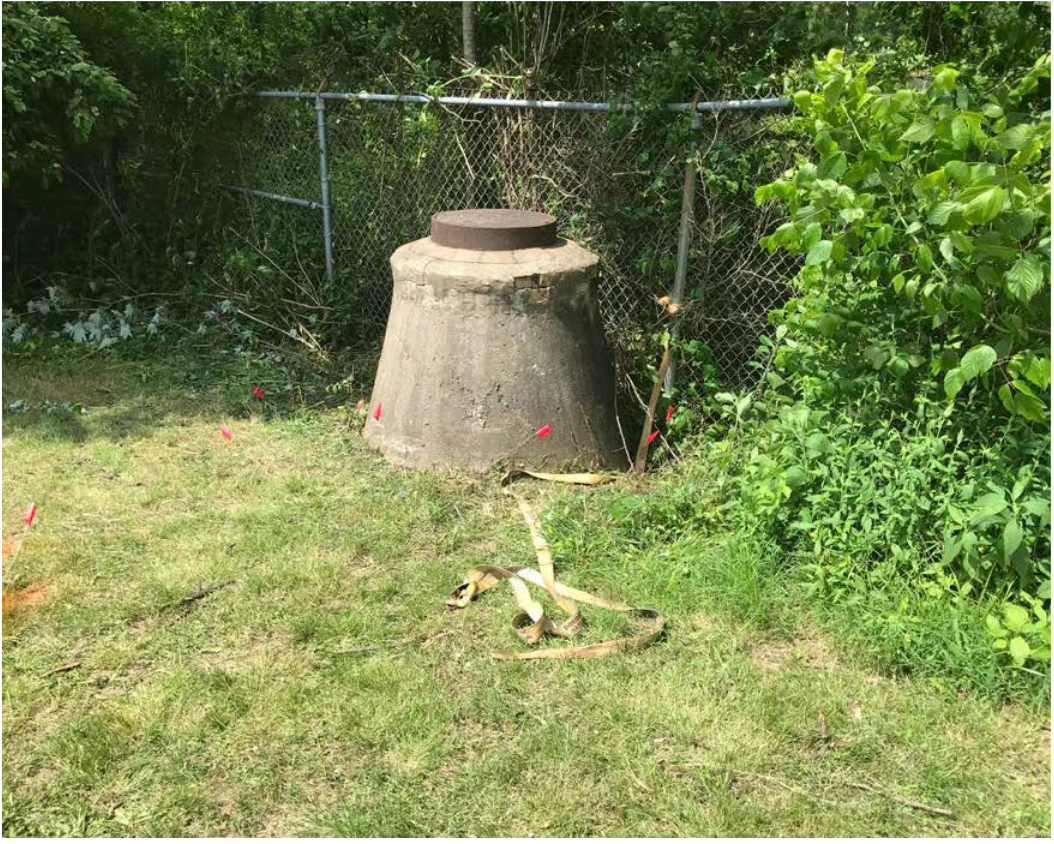
 A 38-year-old male employee was overexposed to hydrogen sulfide (or possibly an oxygen-deficient atmosphere) while inside a manhole. A second employee tried to rescue the victim but was also overcome. The second employee was rescued by an employee of the Waste Water Treatment facility. The two-man crew had been hired by the Waste Water Treatment Plant to clear a blocked sewer line. They were going to clear the blockage from above the sewer system using a jetter; however, they could not successfully place the jetter line in the sewer from ground level. It was decided that the manhole needed to be entered to place the jetter line in place. The victim entered the manhole by climbing down the ladder inside the manhole. He successfully placed the line to clear the blockage and began to climb out of the manhole when he was overcome with either hydrogen sulfide or an oxygen-deficient atmosphere and lost consciousness. When the other two employees saw him fall into the 2’ of standing water in the bottom of the manhole, the helper tied a ratchet strap to a nearby fence then around his own waist and entered the manhole to attempt a rescue of the victim.
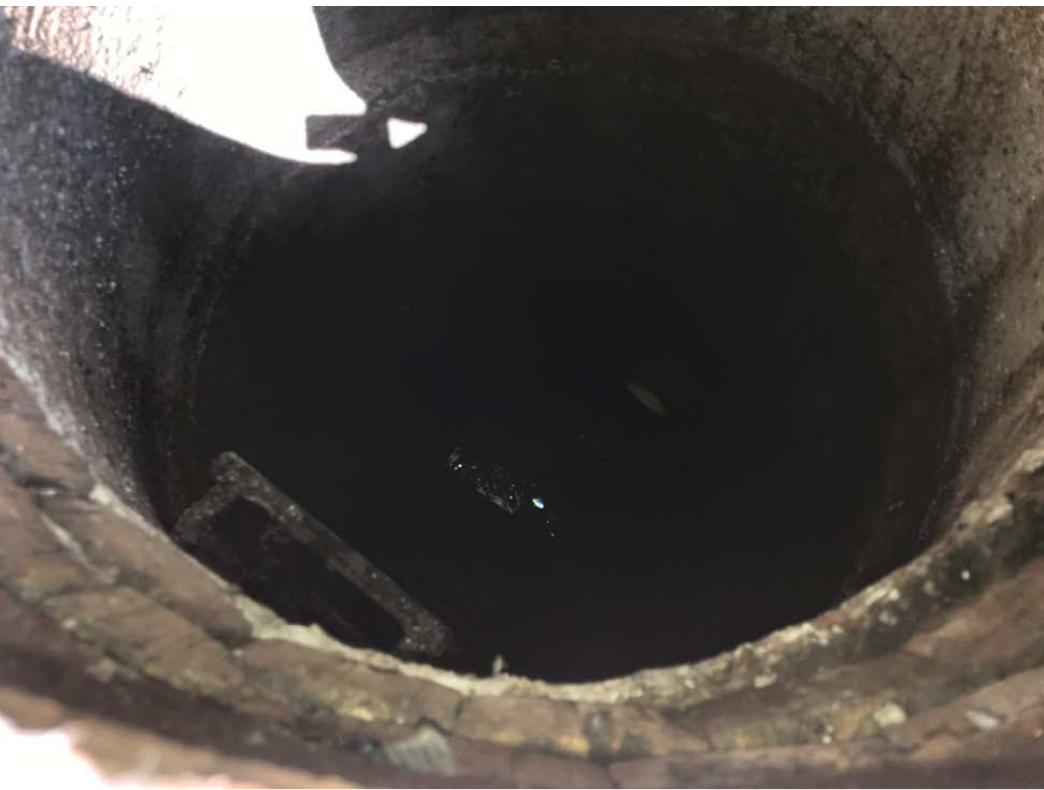
He climbed to the bottom and lifted the victim out of the water but was unable to pull him up the ladder to safety. He then began climbing out of the manhole and lost consciousness too. The waster water employee was able to pull the helper up to the top to access fresh air. After regaining consciousness, he was able to exit the manhole with the assistance of the other employee.
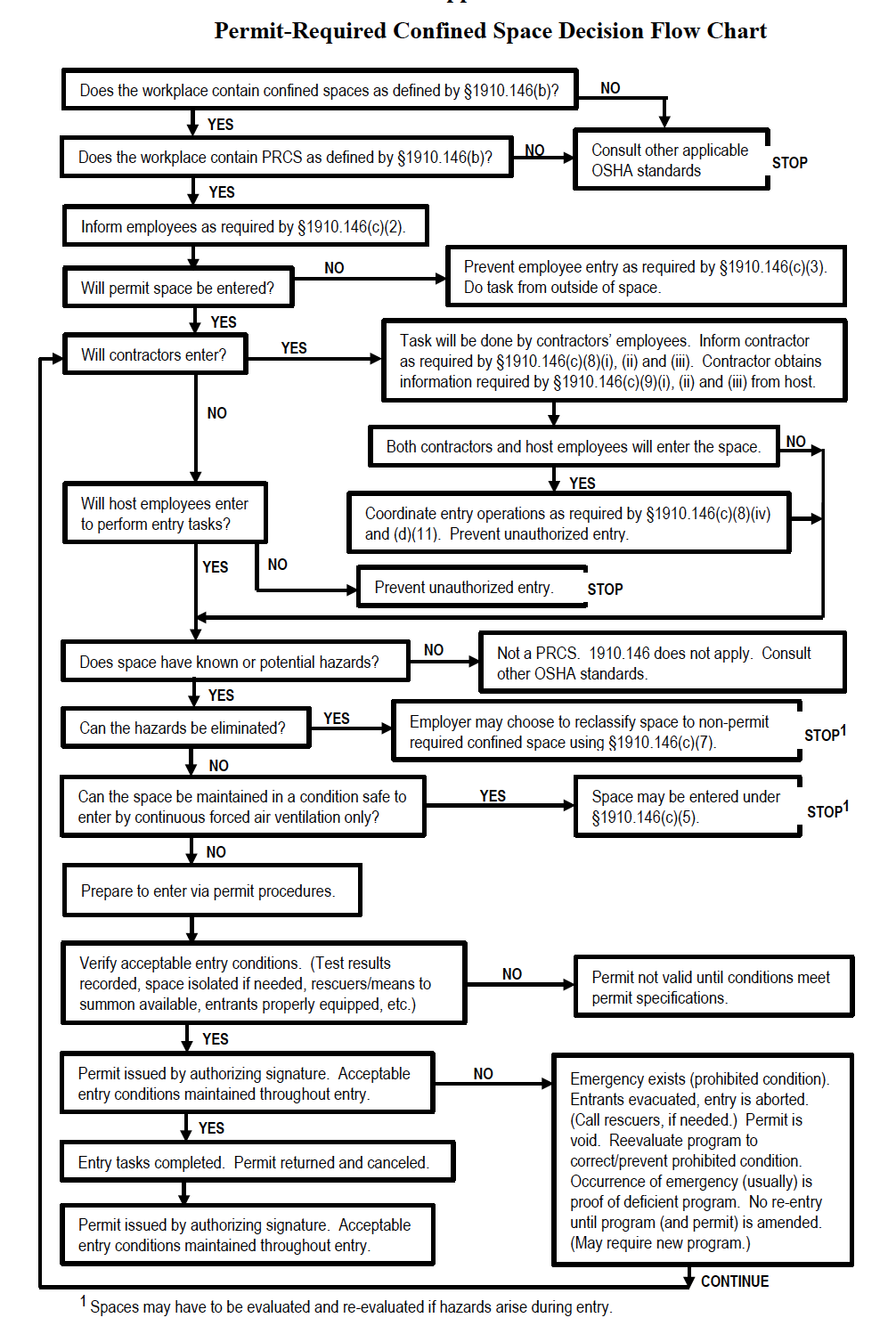
There was no monitoring of the space prior to entry, no consideration of the space as being a PRCS, neither or the employees was trained on PRCS entry/procedures, and a host of other violations. The wastewater facility was also cited for similar violations due to their employees’ exposures.
Citation 1 Item 1a
Type of Violation: Serious; $4,000
29 CFR 1910.146(c)(4): When the employer decided that its employees would enter permit spaces, the employer did not develop and implement a written permit space entry program that complied with 29 CFR 1910.146:
On 05/29/2020, the employer had not developed and implemented a written permit space entry program when employees entered a manhole that was a permit required confined space.
Citation 1 Item 1b
Type of Violation: Serious; Grouped
29 CFR 1910.146(c)(9)(i): Each contractor who was retained to perform permit space entry operations did not obtain any available information regarding permit space hazards and entry operations from the host employer:
On 05/29/2020, the employer, a contractor retained to clear a blockage in the sewer lines, did not obtain available information regarding permit space hazards and entry operations from the host employer.
Citation 1 Item 1c
Type of Violation: Serious; Grouped
29 CFR 1910.146(c)(9)(iii): Each contractor who was retained to perform permit space entry operations did not inform the host employer of the permit space program that the contractor would follow and of any hazards confronted or created in the permit space, either through a debriefing or during the entry operation.
On 05/29/2020, the employer, a contractor retained to clear a blockage in the sewer lines, did not inform the host employer of the permit space program that the contractor would follow and of any hazards confronted or created in the permit space. The employer did not implement a permit space entry program when employees entered a manhole that was a permit-required confined space.
Citation 1 Item 1d
Type of Violation: Serious; Grouped
29 CFR 1910.146(d)(3): Under the permit-required confined space program required by 29 CFR 1910.146(c)(4), the employer did not develop and implement the means, procedures, and practices necessary for safe permit space entry operations required by this section:
On 05/29/2020, the employer did not develop and implement the means, procedures, and practices necessary for safe permit space entry operations including, but not limited to:
a. Specifying acceptable entry conditions;
b. Providing each authorized entrant with the opportunity to observe any monitoring or testing of permit spaces;
c. Purging, inerting, flushing, or ventilating the permit space as necessary to eliminate or control atmospheric hazards; and
d. Verifying that conditions in the permit space are acceptable for entry throughout the duration of an authorized entry.
Citation 1 Item 1e
Type of Violation: Serious; Grouped
29 CFR 1910.146(d)(8): Under the permit-required confined space program required by 29 CFR 1910.146(c)(4), the employer did not designate the persons who were to have active roles in entry operations, identify the duties of each such employee, and did not provide each such employee with the training required by paragraph (g) of this section:
On 05/29/2020, the employer did not designate the persons who were to have active roles in entry operations including authorized entrants, attendants, entry supervisors, or persons who test or monitor the atmosphere in a permit space. The employer did not identify the duties of each such person or provide them with the training required by paragraph (g) of this section.
Citation 1 Item 1f
Type of Violation: Serious Grouped
29 CFR 1910.146(d)(9): The employer did not develop and implement procedures for summoning rescue and emergency services, for rescuing entrants from permit spaces, for providing necessary emergency services to rescued employees, and/or for preventing unauthorized personnel from attempting a rescue:
On 05/29/2020, the employer did not develop and implement procedures for summoning rescue and emergency services for rescuing entrants from permit spaces nor for preventing unauthorized personnel from attempting a rescue.
Citation 1 Item 1g
Type of Violation: Serious; Grouped
29 CFR 1910.146(d)(10): Under the permit-required confined space program required by 29 CFR 1910.146(c)(4), the employer did not develop and implement a system for the preparation, issuance, use, and cancellation of entry permits:
On 05/29/2020, the employer did not develop and implement a system for the preparation, issuance, use, and cancellation of entry permits.
Citation 1 Item 2a
Type of Violation: Serious; $4,000
29 CFR 1910.146(d)(1): Under the permit-required confined space program required by 29 CFR 1910.146(c)(4), the employer did not implement the measures necessary to prevent unauthorized entry:
On 05/29/2020, the employer did not implement the measures necessary to prevent unauthorized entry into the manhole, a permit-required confined space. Two service technicians entered a 17-foot-deep manhole with approximately 2 feet of standing water where they were exposed to atmospheric hazards.
Citation 1 Item 2b
Type of Violation: Serious; Grouped
29 CFR 1910.146(d)(4): The employer did not provide the equipment specified in paragraphs (d)(4)(i)- (d)(4)(ix) of this section at no cost to employees, did not maintain that equipment properly, and did not ensure that employees use that equipment properly:
On 05/29/2020, the employer did not provide the appropriate equipment for entry into a permit-required confined space including, but not limited to:
a) Testing and monitoring equipment needed to comply with paragraph (d)(5) of this section;
b) Ventilating equipment needed to obtain acceptable entry conditions;
c) Communications equipment necessary for compliance with paragraphs (h)(3) and (i)(5) of this section;
d) Personal protective equipment insofar as feasible engineering and work practice controls do not adequately protect employees; and
e) Rescue and emergency equipment needed to comply with paragraph (d)(9) of this section, except to the extent that the equipment is provided by rescue services.
Citation 1 Item 2c
Type of Violation: Serious; Grouped
29 CFR 1910.146(d)(5)(i): Under the permit-required confined space program required by 29 CFR 1910.146(c)(4), the employer did not evaluate permit space conditions when entry operations were conducted by testing conditions in the permit space to determine acceptable entry conditions exist before entry was authorized to begin, except that, if isolation of the space is infeasible because the space is large or is part of a continuous system (such as a sewer), pre-entry testing shall be performed to the extent feasible before entry is authorized and, if entry is authorized, entry conditions shall be continuously monitored in the areas where authorized entrants are working:
On 05/29/2020, the employer did not evaluate permit space conditions to determine if acceptable entry conditions existed and did not continuously monitor the area where authorized entrants worked. The confined space, a manhole, was part of a continuous sewer system.
Citation 1 Item 2d
Type of Violation: Serious; Grouped
29 CFR 1910.146(d)(6): Under the permit-required confined space program required by 29 CFR 1910.146(c)(4), the employer did not provide at least one attendant outside the permit space into which entry was authorized for the duration of entry operations:
On 05/29/2020, the employer did not provide at least one attendant outside the permit space into which entry was authorized for the duration of entry operations.
Citation 1 Item 2e
Type of Violation: Serious; Grouped
29 CFR 1910.146(e)(1): Before entry was authorized, the employer did not document the completion of measures required by 29 CFR 1910.146(d)(3) by preparing an entry permit:
On 05/29/2020, the employer did not prepare an entry permit to document completion of the measures required by this standard including, but not limited to:
a) Specifying acceptable entry conditions;
b) Providing each authorized entrant with the opportunity to observe any monitoring or testing of permit spaces;
c) Purging, inerting, flushing, or ventilating the permit space as necessary to eliminate or control atmospheric hazards; and
d) Verifying that conditions in the permit space are acceptable for entry throughout the duration of an authorized entry.
Citation 1 Item 2f
Type of Violation: Serious; Grouped
29 CFR 1910.146(g)(1): The employer did not provide training so that all employees whose work was regulated by 29 CFR 1910.146 acquired the understanding, knowledge, and skills necessary for the safe performance of the duties assigned under 29 CFR 1910.146:
On 05/29/2020, the employer did not provide training so that all employees whose work was regulated by the permit-required confined spaces standard acquired the understanding, knowledge, and skills necessary for the safe performance of duties assigned under the standard.
Citation 1 Item 2g
Type of Violation: Serious; Grouped
29 CFR 1910.146(h): The employer did not ensure that all authorized entrants were trained to perform the duties required by (h)(1)-(5) of this section (29 CFR 1910.146):
On 05/29/2020, the employer did not ensure that all authorized entrants were trained to perform the duties required by (h)(1)-(5) of this section (29 CFR 1910.146).
Citation 1 Item 3a
Type of Violation: Serious; $4,000
29 CFR 1910.1200(e)(1): The employer did not develop, implement, and/or maintain at the workplace a written hazard communication program which describes how the criteria specified in 29 CFR 1910.1200(f), (g), and (h) will be met:
On 05/29/2020, the employer had not developed, implemented, and maintained a written hazard communication program which at least described how criteria for labels and other forms of warning, safety data sheets, and employee information and training would be met. An adequate program would:
Citation 1 Item 3b
Type of Violation: Serious; Grouped
29 CFR 1910.1200(g)(8): The employer did not maintain in the workplace copies of the required safety data sheets for each hazardous chemical, and did not ensure that they were readily accessible during each work shift to employees when they were in their work area(s):
On 05/29/2020, the employer did not maintain in the workplace copies of the required safety data sheets for each hazardous chemical. Employees were exposed to hazardous chemicals including, but not limited to; hydrogen sulfide.
Citation 1 Item 3c
Type of Violation: Serious; Grouped
29 CFR 1910.1200(h)(1): Employees were not provided effective information and training on hazardous chemicals in their work area at the time of their initial assignment and whenever a new hazard that the employees had not been previously trained about was introduced into their work area:
On 05/29/2020, the employer did not ensure that all employees were trained on hazardous chemicals in their work area at the time of their initial assignment.