
The PSM Unit enforces occupational safety and health standards applicable to 14 petroleum refineries and 1,940 chemical plants in California. The chemical plants handle or process 50 million to 120 million pounds of hazardous chemicals every year. Inspections target high-risk facilities and focus on timely, effective abatement.
Table 1. Inspections completed during the calendar year 2017
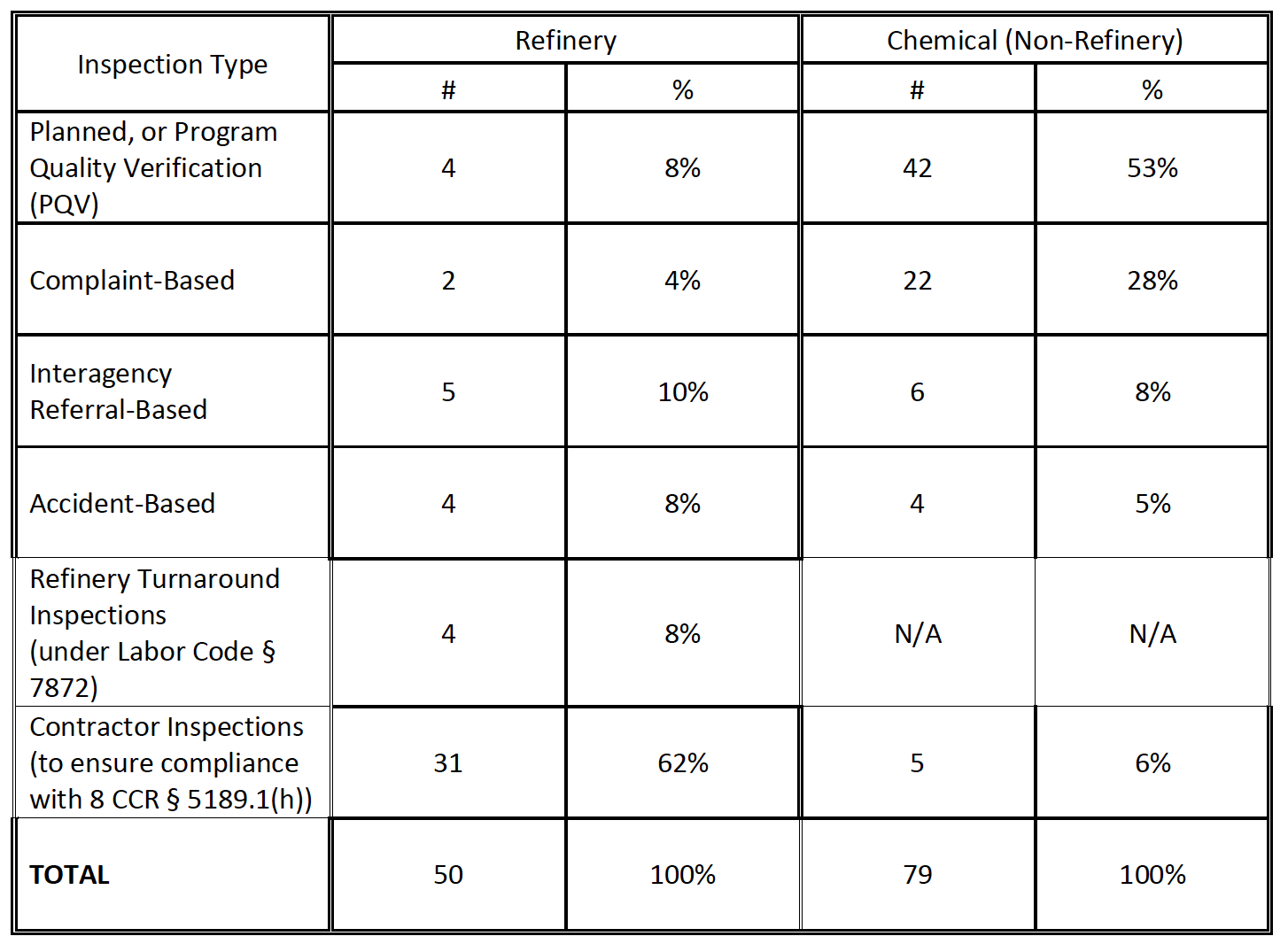
Table 2. Classifications of violations cited in investigations conducted during the calendar year 2017
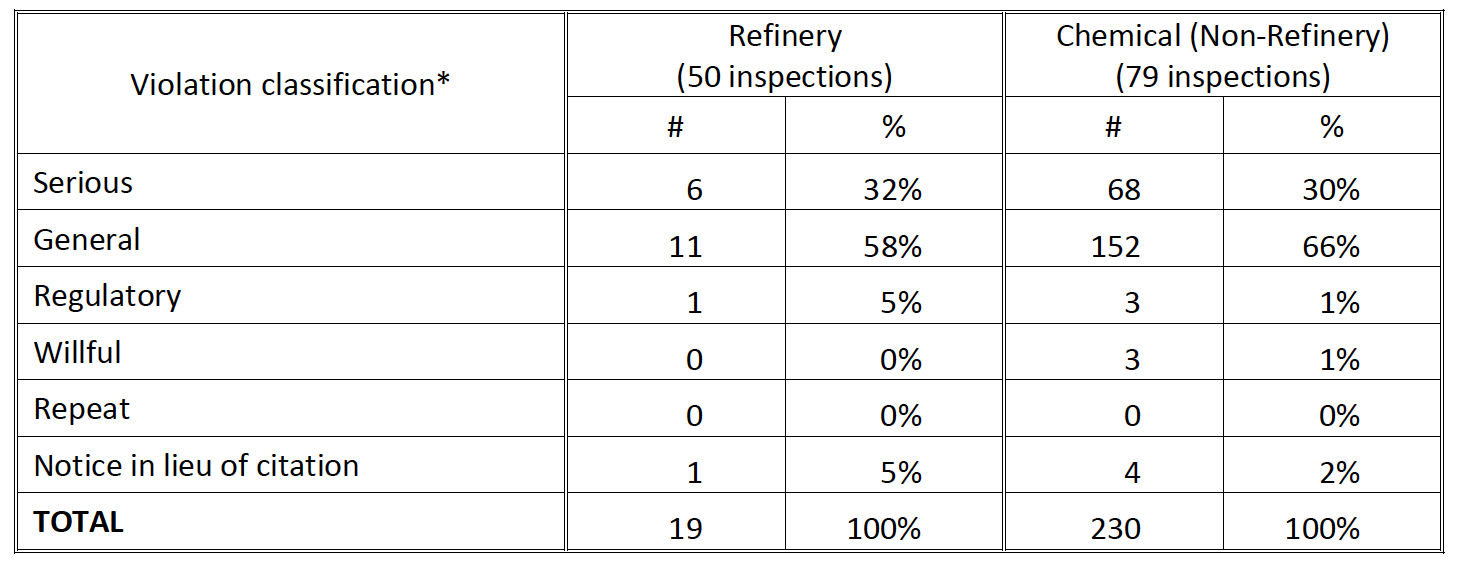
* Serious means there is a realistic possibility that death or serious physical harm could result from the hazard. General means the violation is not severe but does have a relationship to the occupational safety and health of employees. Regulatory means the offense is not pressing or general and pertains to permit, posting, recordkeeping, or reporting requirements. Willful means evidence shows that the employer committed an intentional and knowing violation. Repeat is where the employer repeats a prior violation of a substantially similar regulatory requirement. A notice in place of citation may be issued when the violative condition is not directly related to employee safety or health or when the violative condition type is general or regulatory and is not immediately related to employee safety and health.
Table 2 does not show the results for several in-progress refinery inspections that began in the second half of 2017, so the reported outcomes do not reflect the full impact of enforcement efforts to date. The delay in beginning these inspections was caused by two significant refinery inspections that merit mention because of their extent and importance. The PSM Unit was able to successfully carry out these comprehensive enforcement efforts due to the recently approved increase in inspectors and the advanced technical training PSM inspectors receive.
Chevron Richmond Refinery
This inspection required 2,600 hours of inspector time and additional outside subject matter expertise. Enforcement efforts uncovered a systemic need to address pressure relief valves throughout the refinery. At the conclusion of this six-month investigation, the PSM Unit cited Chevron for one serious, one regulatory, and eight widespread violations. Following an appeal, the settlement agreement documented Chevron’s acknowledgment of and commitment to addressing the process safety issue discovered during the inspection by requiring the refinery to replace or re-calculate every pressure relief valve setpoint in the facility by Recognized and Generally Accepted Good Engineering Practices (RAGAGEP). This overall reduction will significantly increase safety for the facility and surrounding communities.
Torrance Refinery
The Alkylation/Hydrofluoric Acid Unit at the Torrance Refinery has garnered much attention from the public, regulators, and the Legislature because of the risks for workers and surrounding communities associated with its activities. The PSM Unit opened a PQV inspection at this refinery in July 2017 and had dedicated 2,800 hours of inspector time to this inspection as of January 1, 2018, compared to the standard 1,200 hours per review. In response to extensive evaluations performed by PSM Unit inspectors of the health and safety risks and best practices to address them, the refinery has assigned a special team to improve its safeguards. The new safeguards exceed existing abatement requirements and will significantly enhance the safety of workers and the public.
Staffing
Current staffing levels in the PSM Unit are shown in Table 3. As of March 1, 2018, there were one vacant Senior Safety Engineer and two vacant District Manager positions in the process of being filled.
Discussion of any challenges
While the PSM Unit is now fully staffed and on track to meet the PQV inspection goals outlined in the Budget Change Proposal, first achievements were delayed. Staff changes and turnover combined with the mandatory postponement of hiring newly appropriated positions until July 1, 2017, protracted the proposed timeline.
The PSM Unit is committed to the robust training of staff to ensure effective enforcement and promote compliance with strong standards to protect the health and safety of the state’s workforce. In addition to mandated requirement and operations training, the PSM Unit increased inspector training from the federally mandated 160 hours in 2012 to 340 hours in subsequent years to ensure staff are trained on new regulatory requirements in California Code of Regulations, title 8, section 5189.1 (effective October 1, 2017) and legislative mandates in Labor Code sections 7872 and 7873 (SB 1300, 2014) and Health and Safety Code section 25536.7 (SB 54, 2013).
Empowered by the new legislation and regulation, and the subsequent staffing approvals, PSM Unit now has the tools and quality and quantity of staff necessary to successfully enforce California’s internationally recognized standards in process safety.