
The short answer is ABSOLUTELY WE CAN, but we need to be very careful about how we manage our hazardous materials. The purpose of this article is to clear the air about EPA’s use of our own Tier II reports against our facility… they can be an “indicator” of PSM/RMP covered processes but they are NOT an absolute. Let me explain…
EPA inspectors have been trained to use the facility’s Tier II reports as a means to identify potential RMP covered processes. In fact, some in EPA actually compare Tier II reporting to RMP reporting, looking for inconsistencies. Some facilities have even received correspondence from EPA regarding their lack of RMP reporting based on their Tier II reporting and some facilities have even received a friendly visit from the agency based on their Tier II’s and the lack of an RMP on file.
But we must understand that just because a facility reports they have a PSM or RMP chemical on-site in excess of the PSM or RMP threshold does NOT mean the facility is covered by the standard(s). First and foremost, the PSM and RMP standards cover “processes” and not “facilities”. This is a KEY distinct that must be made.
For example, at my last facility, our Tier II reports stated we had over 30,000 pounds of anhydrous ammonia (NH3) and yet NH3 was NOT one of our PSM/RMP covered chemicals in our RMP. The facility has been asked about this 2-3 times during EPA visits…
“How can you explain over 30,000 pounds of NH3 on site and your RMP does not list an RMP covered process with NH3?
It’s actually quite easy… We have 5 processes that contain NH3 and a NH3 Cylinder Storage container:
- Process #1 (Ice Plant) = 8,800 pounds
- Process #2 (Ice Plant) = 7,900 pounds
- Process #3 (Latent Heat Plant) = 7,500 pounds
- Process #4 (Latent Heat Plant) = 8,000 pounds
- Pilot Plant = 5,000 pounds (3,500 pounds in their refrigeration process and the rest in cylinder storage)
Each one of these processes is in a separate building which are all over at least 3,500’ apart from each other (e.g. not co-located such that a single event such as a fire or explosion would impact multiple processes) and the processes are not “interconnected”. Thus we had over 30,000 pounds reported for the facility and NH3 was not one of our RMP (or PSM) chemicals. I will say this about the business, these processes were managed as if they were PSM/RMP covered, but “officially” they were NOT covered processes.
So if EPA asks how we can have more than the PSM/RMP thresholds on site and NOT have a covered process, we MUST be able to accurately explain how this can be. Make darn sure you do not have this happening… as what we see are is indeed a PSM/RMP covered chlorine process, as there is more than 2,500 pounds of CL2 located such that a single event (e.g. fire) would impact more than 2,500 pounds.
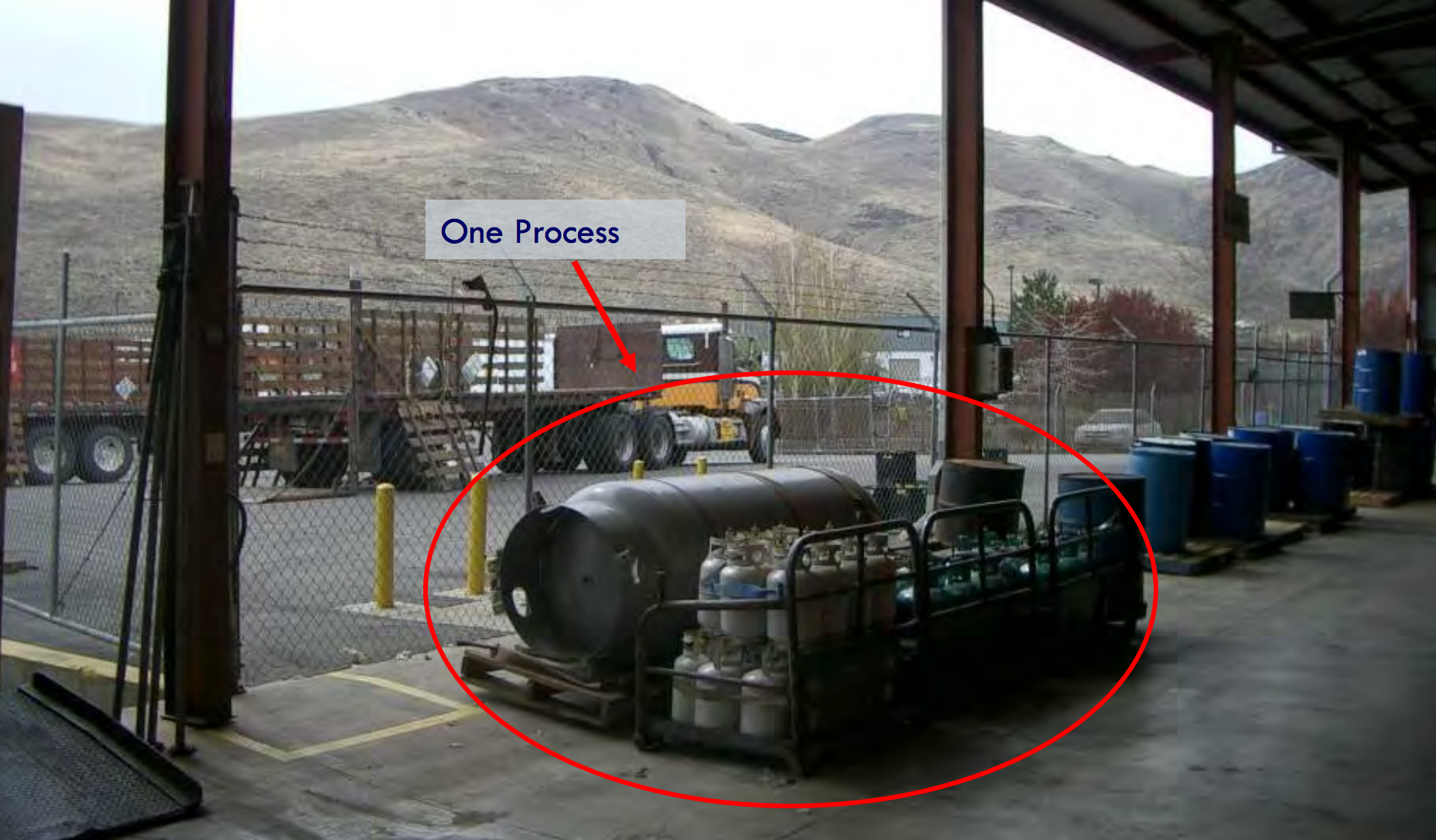
Source: EPA Region VII