
In 2014, Part XI – Confined Spaces was identified as a priority for review by the Labour Program’s Occupational Health and Safety Advisory Committee (OHSAC). The OHSAC made up of representatives from the Labour Program and employee and employer groups, conducted an in-depth review of Part XI between 2014 and 2017.
The proposed changes are actually more in-line with OSHA’s 1910.146 and 1926.1201-.1213 standards.
Some of the more notable revisions include:
- add a new sub-type of confined spaces: hazardous confined spaces
- require the employer to perform an assessment of the work area to identify all confined spaces
- establish and maintain a record of confined spaces, which would be accessible to those entering those spaces;
- appoint a qualified person to determine whether the confined space is a hazardous confined space; and
- maintain records of all employees who received instruction and training on emergency procedures and obligations when working in confined spaces
- require that confined spaces be reinspected when-ever there is a change to the structure, the intended use, or the immediate surrounding area
- align with requirements in other jurisdictions in Canada by increasing the minimum level of oxygen in the air in a confined space to 19.5%, up from 18%;
- add the requirement for the employer to develop emergency procedures for all hazardous confined spaces, in collaboration with the policy committee, the workplace committee, or the health and safety representative;
- add the requirement for continuous atmospheric monitoring when it is noted in the hazard assessment report created by the qualified person. It would also require that atmospheric testing equipment be used by a qualified person, and be used, calibrated and maintained in accordance with the manufacturer’s specifications; and
- expand the employer’s obligation towards those granted access to hazardous confined spaces to include contractors, and require employers to share their procedures with them. Employers would also be required to ensure that all persons allowed access to hazardous confined spaces, including contractors, have received training on safely working in and occupying the hazardous confined space.
- Once a space has been determined to be a confined space, a qualified person, defined as a person who, because of their knowledge, training and experience, is qualified to perform that duty safely and properly, would then be required to evaluate each identified confined space for the existence of potential hazards and risks, and would establish appropriate safe work procedures for hazardous confined spaces.
- The qualified person would then be required to divide the spaces into the two groups: non-hazardous and hazardous
- Hazardous confined spaces would include physical restrictions, with the added risk due to a hazard, such as hazardous substances or oxygen-deficient atmospheres.
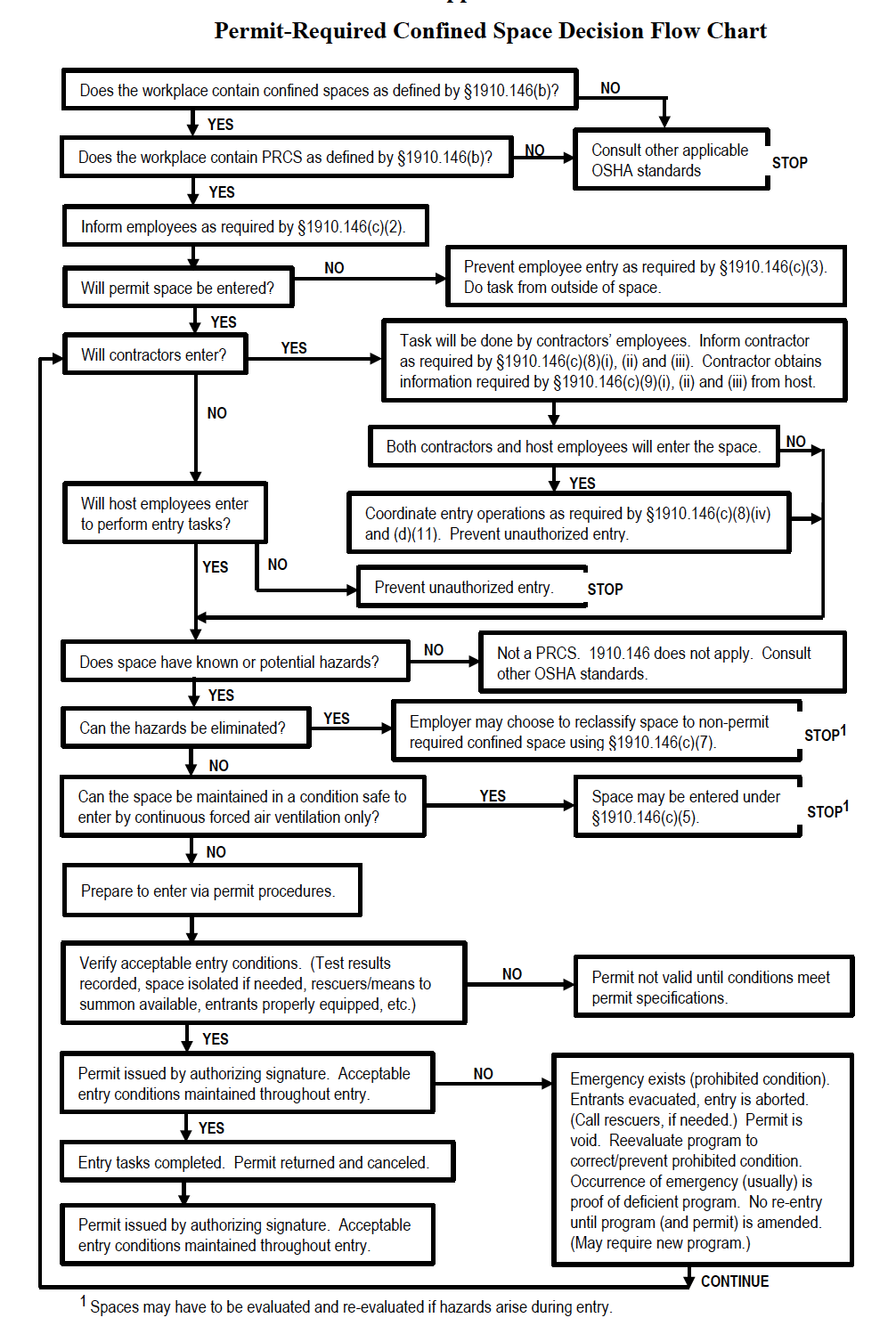
1. Confusion regarding the identification of various confined spaces and employers’ responsibilities towards those working in them
Correct identification of confined spaces is critical due to the unique hazards they present. Failure to correctly identify a workspace as a confined space may cause workers to be exposed to hazards that are not obvious, but that exist due to the nature of the space. This can result in severe injury or death. Incorrectly identifying a workspace as a confined space when it is not can cause employers to implement unnecessary controls, leading to costly operational inefficiencies.
Updated standards and best practices in domestic and international jurisdictions have shown that some federal safety provisions need modernization. In 2016, the Canadian Standards Association (CSA) updated and published Management of Work in Confined Spaces(Z1006-16). This Standard provides a comprehensive framework for establishing and maintaining an effective program for the health and safety of employees entering and working in confined spaces. Updates made to the Standard are seen as industry best practices. The current Regulations do not align with this Standard.
The objective of these proposed amendments is to protect the health and safety of employees working in confined spaces by addressing the current shortcomings in Part XI of the COHSR.
The proposed regulatory amendments would accomplish the following:
1. Mitigate the risk of injury or death by improving the knowledge surrounding, and the identification of, confined spaces
The proposed Regulations would update the definition of a confined space based on the physical characteristics of the space.
A confined space is a space that:
(a) is enclosed or partially enclosed;
(b) is not designed or intended for continuous human occupancy; and
(c) has a limited or restricted means of access or egress or an internal configuration that could complicate pro-visions of first aid, evacuation, rescue or other emergency measures.
The proposed amendments would also add a new sub-type of confined spaces: hazardous confined spaces.
These types of spaces would include further risk to the health and safety of the person working in it. A hazardous confined space is defined as a confined space that, when entered, occupied or exited by persons, presents hazards likely to cause injury, illness or other adverse health effects to persons entering, occupying or exiting it because of
(a) its design, construction, location or atmosphere;
(b) the materials or substances in it; or
(c) any other conditions relating to it.
The proposed amendments would also require the employer to
- perform an assessment of the work area to identify all confined spaces;
- establish and maintain a record of confined spaces, which would be accessible to those entering those spaces;
- appoint a qualified person to determine whether the confined space is a hazardous confined space; and
- maintain records of all employees who received instruction and training on emergency procedures and obligations when working in confined spaces.
2. Modernize and strengthen provisions and align them with industry practices and standards
The proposed amendments would
(a) provide flexibility to allow more than one qualified person to perform the assessment of the confined spaces present in the workplace;
(b) require that a confined space be reinspected when-ever there is a change to the structure, the intended use, or the immediate surrounding area;
(c) align with requirements in other jurisdictions in Canada by increasing the minimum level of oxygen in the air in a confined space to 19.5%, up from 18%;
(d) add the requirement for the employer to develop emergency procedures for all hazardous confined spaces, in collaboration with the policy committee, the workplace committee, or the health and safety representative;
(e) add the requirement for continuous atmospheric monitoring when it is noted in the hazard assessment report created by the qualified person. It would also require that atmospheric testing equipment be used by a qualified person, and be used, calibrated and maintained in accordance with the manufacturer’s specifications; and
(f) expand the employer’s obligation towards those granted access to hazardous confined spaces to include contractors, and require employers to share their procedures with them. Employers would also be required to ensure that all persons allowed access to hazardous confined spaces, including contractors, have received training on safely working in and occupying the hazardous confined space.
3. Add clarity to promote compliance
The proposed regulatory amendments would provide further clarity by ensuring consistent referencing to other sections of the COHSR and ensure the correct use of new terminology.
For example, recent changes to the Policy Committees, Work Place Committees and Health and Safety Representatives Regulations caused “workplace committee or health and safety representative” to also include “policy committees.” The proposed amendments will change all references in Part XI to say “the policy committee or, if there is no policy committee, the workplace committee or the health and safety representative.” The proposed regulatory amendments will also clarify the requirements for the qualified person’s hazardous assessment report and the requirement for employers to maintain records of all employees who receive instruction and training regarding confined spaces.
Regulatory analysis
1. Mitigate the risk of injury or death by improving the knowledge surrounding, and the identification of, confined spaces
Part XI of the COHSR prescribes the health and safety requirements for employers and employees with respect to working areas that meet the definition of a confined space. Under the current definition, a confined space must be an enclosed or partially enclosed space, not intended or designed for human occupancy, have restricted means of access or egress, and contain a hazard. If any one of these requirements is misapplied, then the space may not be properly identified as a confined space, which means that adequate controls may not be in place, or employers may be implementing controls that are not necessary. The proposed amendments would change the definition of a confined space to simplify the identification process and would modernize safety requirements to reflect current best safety practices in the workplace. Succinctly defining hazardous confined spaces would allow for employers to properly implement controls to prevent injury, illness, or other adverse health effects to workers entering those spaces.
2. Modernize and strengthen provisions and align them with industry practices and standards
The proposed amendments would require that a confined space be reinspected whenever there is a change to the structure, the intended use, or the immediate surrounding area. These changes may alter the conditions of working in a confined space, which could mean that the implemented safety procedures may no longer be appropriate and would need to be updated. The proposed amendments would require employers to maintain a record of non-hazardous confined spaces and hazardous confined spaces, and ensure that it is kept current and accessible to workers prior to entering those spaces. The presence of an inventory of confined spaces would enable the qualified person to perform assessments for each confined space and facilitate the grouping of con-fined spaces as hazardous or non-hazardous. The con-fined spaces could then be classified into groups that have common characteristics and properties, which would ease the development of appropriate safety procedures applicable to these groups. Employers need to be aware of the workspaces they control and which employees have access to these spaces, in order to design entry procedures and emergency procedures based on the class of confined space. The proposed amendments would provide flexibility to allow more than one qualified person to perform the assessment. Employer stakeholders requested that the Regulations allow multiple qualified persons to carry out the assessment, depending on their experience or expertise. The amendments would also bring the requirements for the minimum level of oxygen in the air from 18% to 19.5%. This requirement would bring the federal jurisdiction in line with all other jurisdictions in Canada, add greater specificity and enhance safety. The proposed amendments would also require employers to develop emergency procedures for all hazardous confined spaces, which would provide flexibility in emergency rescue operations. Employers’ obligation towards those granted access to hazardous confined spaces would also be expanded to include contractors and require employers to share their emergency procedures with them. All persons granted access must also have received training on safely working in and occupying hazardous confined spaces. These changes will reduce the risk of injury and fatality to all those entering hazardous confined spaces and would ensure that the training regarding hazardous confined spaces and the equipment used in these spaces are up to date and protect persons granted access as much as possible.
3. Add clarity to promote compliance
The proposed regulatory amendments will provide increased clarity through consistent referencing and use of new terminology. They will also clarify the requirements for the qualified person’s hazardous assessment report and the requirement to maintain records of all employees who receive instruction and training regarding confined spaces. This will allow for a much clearer reading of the Regulations and a better understanding of the requirements laid out within them.
Benefits
The proposed definition of a confined space would simplify the identification of a confined space, as it would be based on the physical characteristics of the space. This simplification would allow any employee to be able to determine whether a space is a confined space. Therefore, a person with special qualifications would not be required to identify a confined space. The initial identification, based on physical characteristics, would result in an accurate determination of confined spaces that are potentially hazardous, as well as non-hazardous.
Once a space has been determined to be a confined space, a qualified person, defined in the current Regulations as a person who, because of their knowledge, training and experience, is qualified to perform that duty safely and properly, would then be required to evaluate each identified confined space for the existence of potential hazards and risks, and would establish appropriate safe work procedures for hazardous confined spaces. The qualified person would then be required to divide the spaces into the two groups:
- non-hazardous and
- hazardous.
Hazardous confined spaces would include physical restrictions, with the added risk due to a hazard, such as hazardous substances or oxygen-deficient atmospheres. The risk would be mitigated through the implementation of safe work procedures while work is being conducted in the space. Safe work procedures required to work in non-hazardous confined spaces would be minimal, while procedures to work in hazardous confined spaces would be more complex, depending on the nature of the hazard and its adverse effects on employees. The proposed Regulations would ensure that employers do not overlook any confined spaces within their work-places. Employers would be mandated to identify all confined spaces in their workplaces; develop and keep current an inventory of these spaces, and provide safeguards to employees to ensure they are made aware of the proper equipment to use when entering new confined spaces and when an entry permit is required (via mandating this information in the assessment report).
Finally, the proposed regulatory amendments would ensure that all new employees receive the appropriate training for working in confined spaces by maintaining a record of all training received. The presence of an inventory of confined spaces would enable the qualified person to perform assessments for each confined space, and facilitate the grouping of con-fined spaces as hazardous or non-hazardous. The confined spaces could then be classified into groups that have common characteristics and properties, which would ease the development of appropriate safety procedures applicable to groups of them.
Employers need to be aware of the workspaces they control and which employees have access to these spaces, in order to design entry procedures and emergency procedures based on the class of confined space. Training has been found in numerous studies to lead to significant reductions in injuries and fatalities. For example, Waehrer and Miller found a 5.73% reduction when fall protection training was provided to employees.
Source: http://www.gazette.gc.ca/rp-pr/p1/2020/2020-06-20/pdf/g1-15425.pdf

