
The 316 stainless steel pressure vessel involved had been moved into the Commonwealth of Kentucky approximately ten years prior to the accident. The vessel had originally been used as an atmospheric vessel in the manufacture of ammonium bisulfite, a raw material for caramel color, and later converted to be used as a pressurized unit. The tanks were operated at atmospheric pressure and were equipped with pressure relief devices at the time.
The vessel was NOT stamped to any construction code and had been collapsed due to the misapplication of vacuum and repaired two (2) times in the past with NO documentation of the repair or Inspector acceptance of the repair. This unit had a vent line with a shut off valve in it to allow the tank to be pressurized with air pressure. Even though it was only pressurized for a small portion of the process, it fell under the Code as a vessel being operated in excess of 15 PSI. The business used this vessel in the manufacture of food-grade caramel coloring. It functioned as a feed tank for a spray dryer that produced powdered colorants. It also had a steam coil to heat the product during mixing which, when operated, provided a heat source to a mixture containing 1000 gallons of water. The entire process involved the manual application of valve configurations to control air and steam flow. There were no safety controls, warning or relief devices of any type installed on the tank which was not under constant supervision. In this instance the vessel overpressurized and exploded, fatally injuring the operator and destroying the building which housed the process and a five-story spray dry tower. The explosion damaged the western end of the facility and released 26,000 pounds of aqua ammonia (29.4 percent ammonia solution in water), forcing the evacuation of as many as 26 residents and requiring 1,500 people to shelter-in-place.
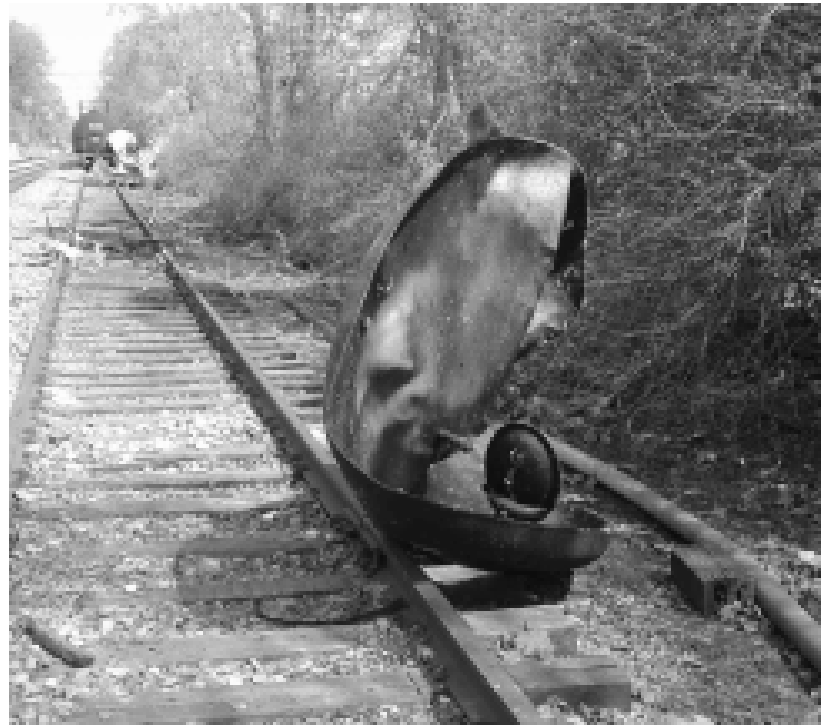
The top head separated at the weld seam and flew approximately 100 yards to the west, landing on the CSX rail line on the north side of the facility.
Chronology of Accident
At approximately 2:00 a.m., the second operator observed caramel color product running out of the agitator shaft seal at the top of Tank #2 and down the sides. This indicated excess temperature and pressure on the tank (forcing the product out past the shaft seal). It is likely that the caramel liquid also flowed into the 1 – inch vent line pipe, filling and plugging it. The operator called the lead operator over from the packaging area (to see what was happening) and, as they were discussing the situation, one of the tank insulation retaining bands snapped (indicating possible overpressure). The lead operator asked the second operator to get the night – shift maintenance mechanic (presumably to seal the shaft) and then moved to the southwest side of Tank #2, (presumably to read the temperature) where the only temperature gauge was located. As the second operator left the spray dryer area to locate the maintenance mechanic, Tank #2 exploded. The lead operator ’ s death was caused by massive trauma (from the consequences of the explosion).
CLICK HERE for the full CSB Report
CLICK HERE for the State of KY Report