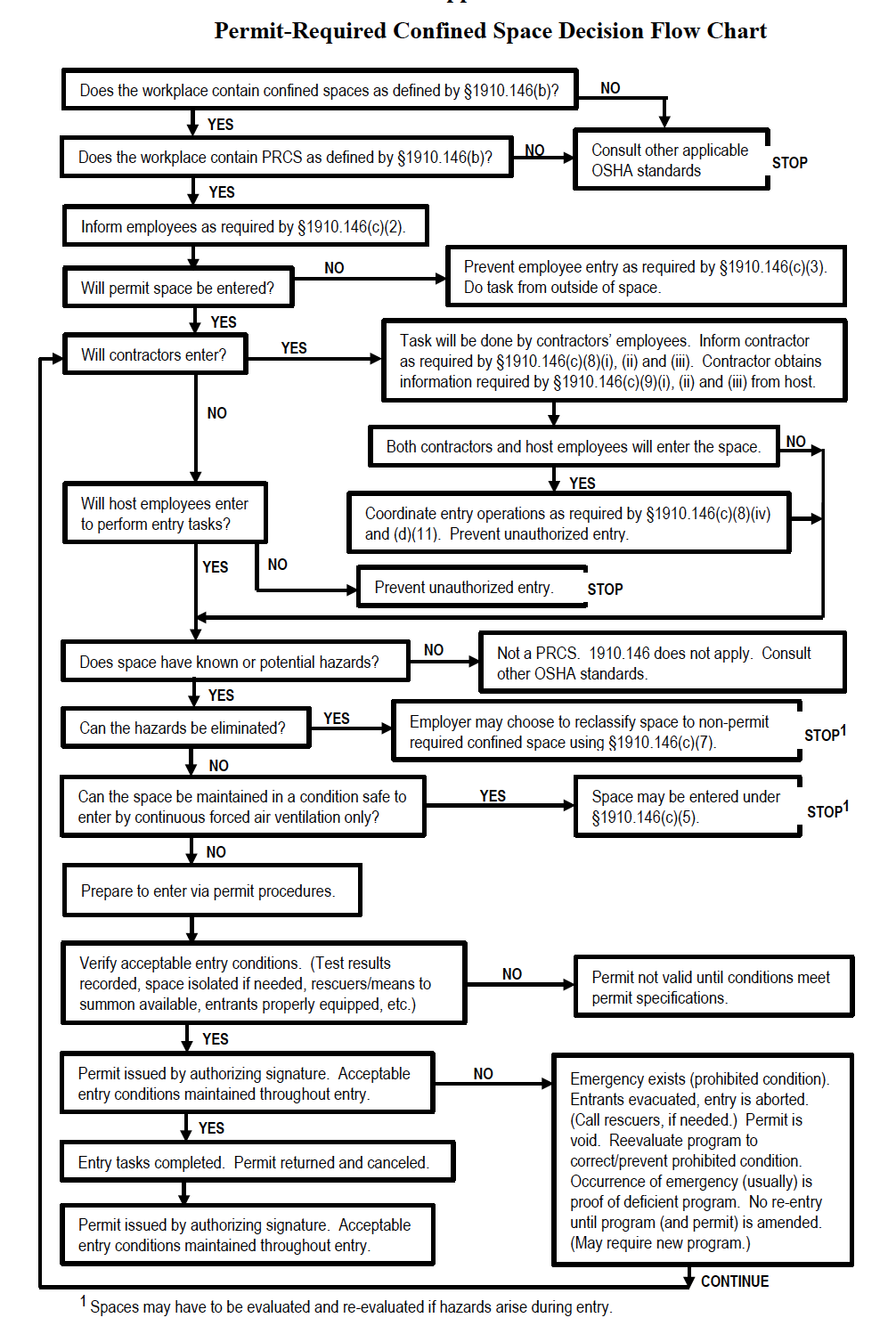
This is not the first time I have suggested using other government regulations to improve our baseline safe work practices. But WorkSafe BC has done such a nice job in this publication that we all need to cut and paste these isolation requirements into our current confined space entry program. These isolation requirements are just OUTSTANDING practices that offer a much higher level of CS Entry safety and should be considered by all – regardless of where the space is located. For anyone who is looking for some concrete energy isolation practices to implement for entry into their PRCS these are, without a doubt, the best.
Substances entering through piping
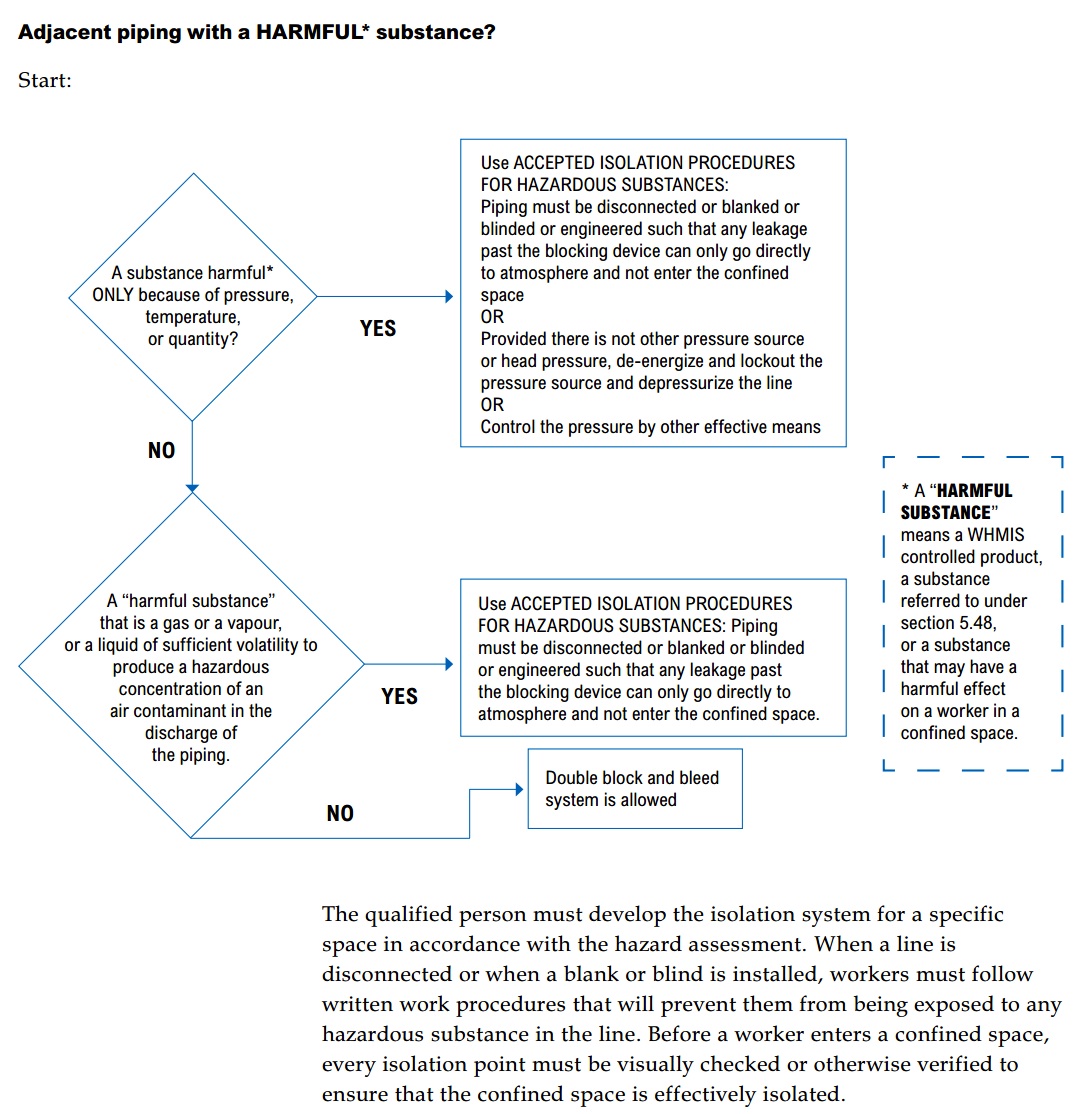
Adjacent piping means a device such as a pipe, line, duct or conduit which is connected to a confined space or is so located as to allow a substance from within the device to enter the confined space. Workers must be protected from harmful substances (solids, liquids, and gases) that could be discharged from pipes or conduits adjacent to or leading to the confined space. If adjacent piping contains (or has contained) a harmful substance that has the potential for entering the confined space, the substance must be controlled using isolation procedures.
Isolating means ensuring contaminants inside piping will not enter a confined space. The following are means of isolating:
- Disconnecting the piping
- Inserting a blank or blind in the piping
- Using an equivalent engineered system to isolate the piping from the confined space
- Using a double block and bleed system in certain circumstances
Closing one or more valves and locking them in the “off” position is not considered to be adequate isolation (except when it is used as part of a double block and bleed system).
The employer must keep a record that identifies the location of every isolation point. If locks are used, the written lockout procedure must include instructions for applying and removing locks. Employees must be trained in lockout, including use of a lockout board.
Disconnecting a pipe
Isolating includes disconnecting a pipe, which can be done by removing the bolts that hold the pipe flanges together or by loosening unions that connect threaded pipe sections. If the piping will be left disconnected, the sections of the pipe that have been disconnected also must be misaligned to prevent overflow material from getting into the space.
Blanks and blinds
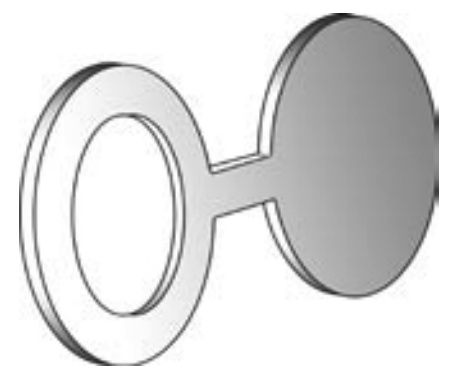
A blank is a solid plate installed through the cross-section of a pipe, usually at a flanged connection. A blind is a solid plate installed at the end of a pipe where it has been physically disconnected from a piping system. The point of installation must have a visual indication that a blank or blind has been installed. Typically a “spectacle” (as shown in the following diagram) is used as a visual indication that a blank has been installed.
A blank or blind must be:
- Designed with an allowance for corrosion if it will be used in conditions where it can corrode
- Stamped with its pressure rating or otherwise indicate its pressure rating
- When necessary to prevent leakage, install gaskets on the pressure side of a blank or blind. Flanges must be tightened.
A blank or blind must be manufactured according to the specifications of one of the following standards or other standard acceptable to WorkSafeBC:
- ANSI Standard API 590-1985, Steel Line Blanks
- ANSI Standard ASME/ANSI B16.5-1988, Pipe Flanges and Flanged Fittings
- ANSI Standard ASME B31.1-1992, Power Piping
- ANSI Standard ASME B31.3, Chemical Plant and Petroleum Refinery Piping
Blanks and blinds not meeting these standards may be used if a professional engineer has certified that they will provide adequate safety for the particular conditions of anticipated pressure, temperature, and service. If one of these alternative blanks or blinds is used, the employer must keep a record of its certification, location, and conditions of service.
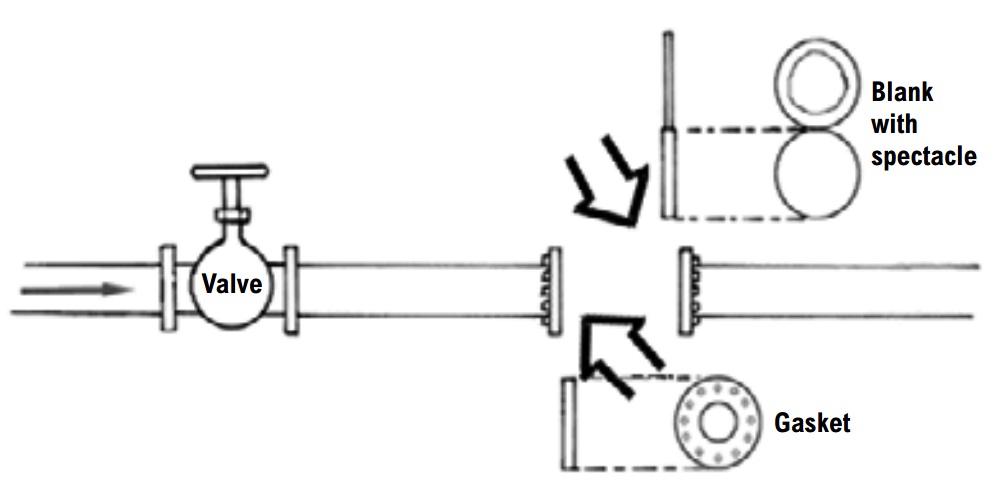
A blank must be able to withstand the pressure of the substance inside the piping system. A gasket is often inserted on the upstream side to prevent leakage.
Written procedures for blanking and blinding must be specific to the confined space, the location of the pipe, and the hazards involved. The following simple example gives basic instructions for installing a blank in a pipe carrying caustic soda. Specific instructions for the situation would be needed, such as those suggested after each step.
Procedure for installing a blank in a six-inch piping system carrying caustic soda
-
- Provide atmospheric testing, warning devices, and protective equipment if toxic or flammable air contaminants could be discharged at a disconnect point. (For example, wear goggles, neoprene, PVC, or rubber coveralls, gloves, and boots to protect against contact with caustic soda.)
- Shut off the appropriate upstream valve. (For example, shut off valve #5 in west end valve chamber.)
- Apply personal lock to ensure no one will turn the valve while a blank is being installed. (For example, apply lock to valve #5 by placing lock in position on valve cover.)
- Depressurize the line. (For example, open relief valve #6.)
- Clear the line. (For example, open drain valve #7.)
- Remove the gasket(s) while preventing the worker from being exposed to any toxic contents that may remain in the piping system. (For example, remove gasket(s) at flange #1101. Ensure personal protective equipment is worn including goggles, neoprene, PVC, or rubber coveralls, gloves and boots to protect against contact with caustic soda.)
- Insert and secure the blank in the pipe. (For example, insert spectacle #25 rated for 200 psi pressure with closed end across opening of pipe.)
- Insert a gasket on the pressure side to ensure no leaks.
- Tighten flanges to make the blank effective.
Double block and bleed
You may use a double block and bleed system if the harmful substance in the piping is NOT one of the following:
- A gas
- A vapour
- A liquid volatile enough to produce a hazardous concentration of an air contaminant from the discharge from the piping
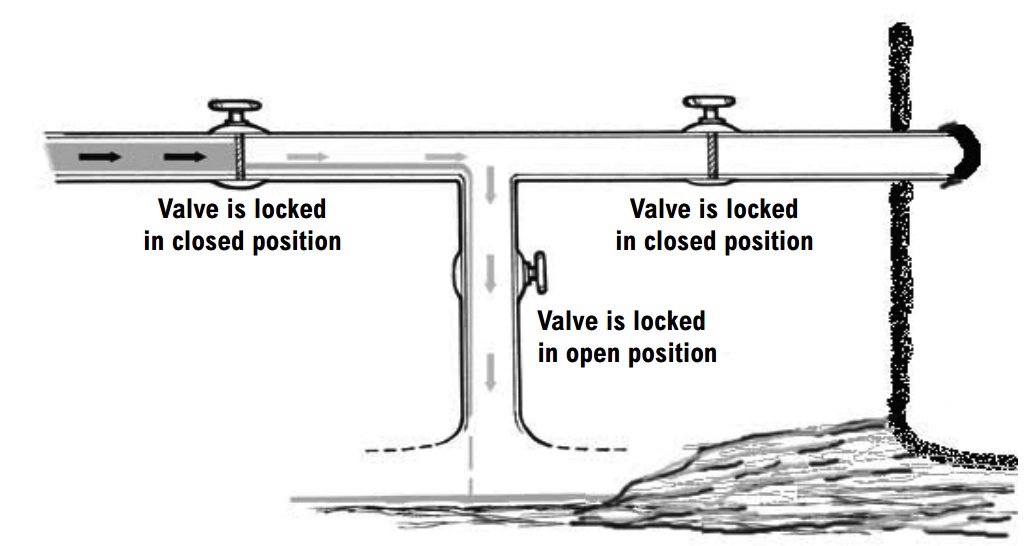
As shown in the drawing, double block and bleed involves closing valves in the piping by locking out a drain or vent valve in the open position in the line between two locked-out valves in the closed position. The written lockout procedures must identify the specific lockout points and valves by name. The names on the procedure must match the markings on the piping system.
The following requirements MUST be met when using double block and bleed:
- The downstream block valve must be checked to ensure that it is capable of safely withstanding the line pressure. This could be done by shutting the downstream valve first and checking to see if there is any flow.
- The diameter of the bleed line must be no less than the diameter of the line being isolated, unless an engineer certifies otherwise.
- The bleed for a liquid system must be at a lower elevation than the block valves.
- All valves must be locked out in their proper open or closed position.
- The bleed must be checked to ensure that it is clear and remains clear of obstructions while the confined space is occupied. This can be done either by continuous automatic monitoring or by manually checking within 20 minutes before worker entry (or before re-entry after the confined space has been vacated for more than 20 minutes).
- If the bleed line discharges because of failure of the upstream block valve, there must be a system in place that notifies those who have entered the confined space. All workers must immediately exit the confined space and the pipe must be effectively re-isolated before a worker enters the space.
Other procedures acceptable to WorkSafeBC
If isolation using the measures outlined in this section is not practicable, the employer may implement alternative methods. Prior to undertaking the work, the alternative procedures must be submitted to and accepted by WorkSafeBC. All workers affected by alternative methods must be informed of the measures taken and instructed in safe work procedures.
For more GREAT safety items related to PRCSs, visit