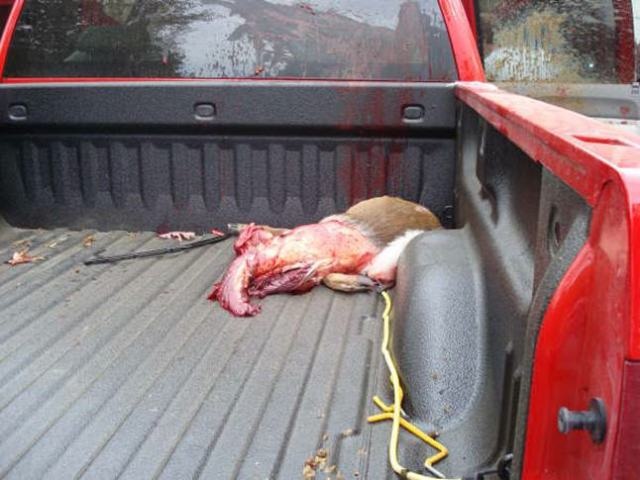
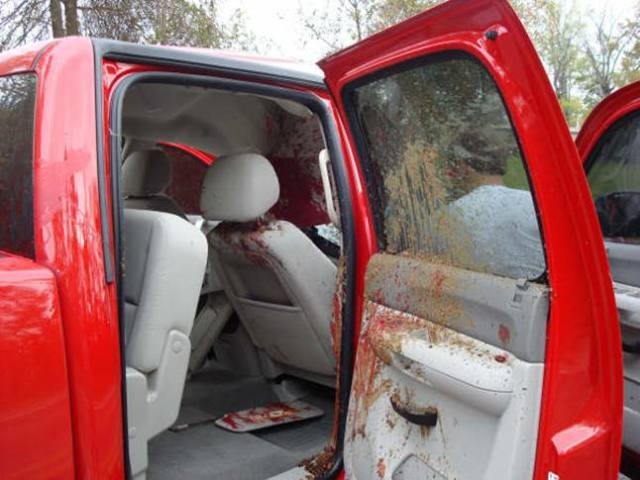
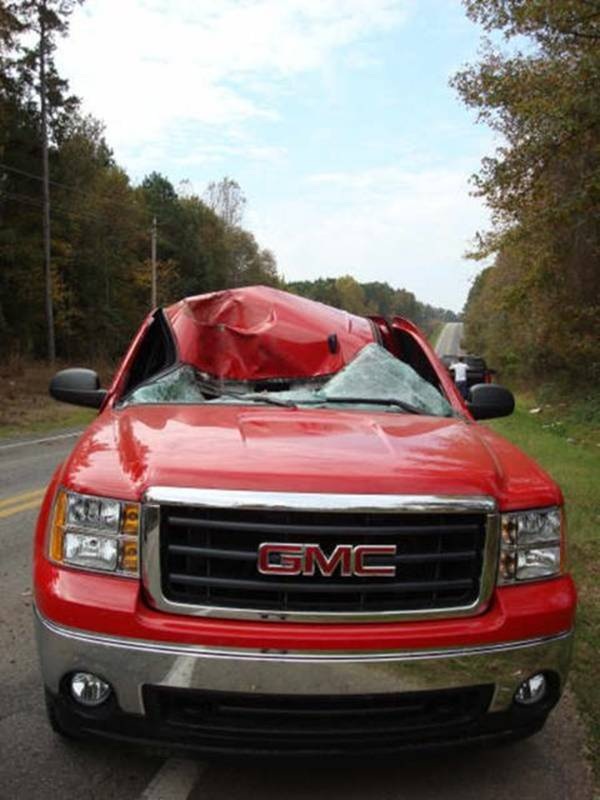
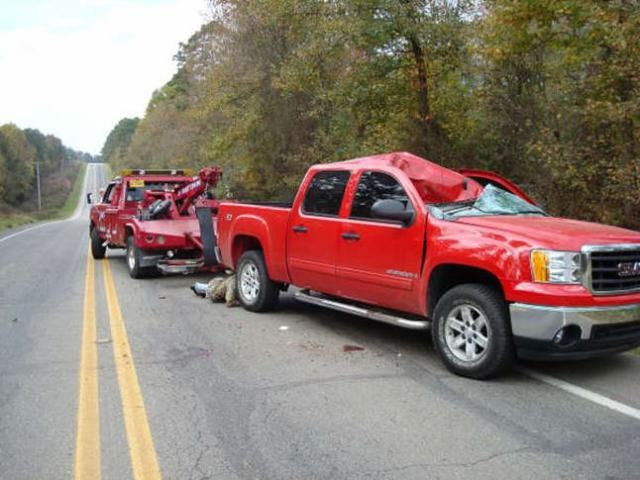
With the Fall Season upon us, Deer Hits will begin increasing at an alarming rate. The best we can do it make our family, friends and co-workers AWARE the deer begin their social season in the fall and carries over into the winter and with this comes their increased movements. This takes them directly into our paths and this can be DEADLY for both us and the deer. There were no human fatalities in the accident depicted here, but the truck sustained signifcant damage.
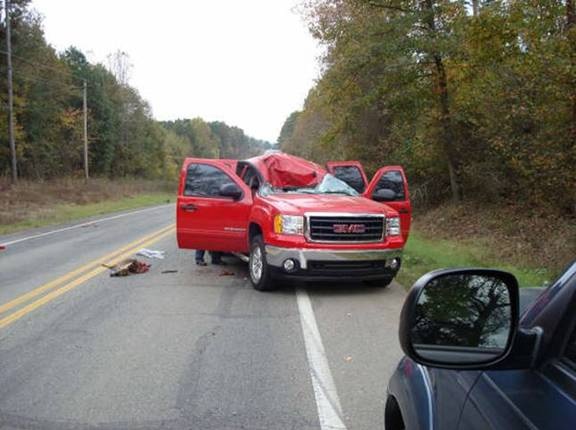
Photos are NOT to be associated with the State Farm press release – they are mine and State Farm has nothing to do with them!!!
Deer-Vehicle Collision Frequency Up 21 Percent in Five Years
Michigan 3rd on the Collision Likelihood List
While the number of miles driven by U.S. motorists over the past five years has increased just 2 percent, the number of deer-vehicle collisions in this country during that time has grown by ten times that amount.
Using its claims data, State Farm®, the nation’s leading auto insurer estimates 2.3 million collisions between deer and vehicles occurred in the U.S. during the two-year period between July 1, 2008 and June 30, 2010. That’s 21.1 percent more than five years earlier. To put it another way, during your reading of this paragraph, a collision between a deer and vehicle will likely have taken place (they are much more likely during the last three months of the year and in the early evening).
Likelihood of Deer-Vehicle Collisions
For the fourth year in a row, West Virginia tops the list of those states where a driver is most likely to collide with a deer. Using its claims data in conjunction with state licensed driver counts from the Federal Highway Administration*, State Farm calculates the chances of a West Virginia driver striking a deer over the next 12 months at 1 in 42.
Iowa is second on the list. The likelihood of a licensed driver in Iowa striking a deer within the next year is 1 in 67.
Michigan (1 in 70) is third. According to the Michigan Deer Crash Coalition, October and November are the two most dangerous months in Michigan for deer/vehicle crashes. In 2009, Michigan experienced an increase the number of total vehicle/deer crashes. According to the Michigan State Police Criminal Justice Information Center, there were 61,486 deer/vehicle crashes in 2009, up from the 61,010 crashes reported in 2008. However, officials note that many crashes also go unreported, so actual crash numbers are much higher.
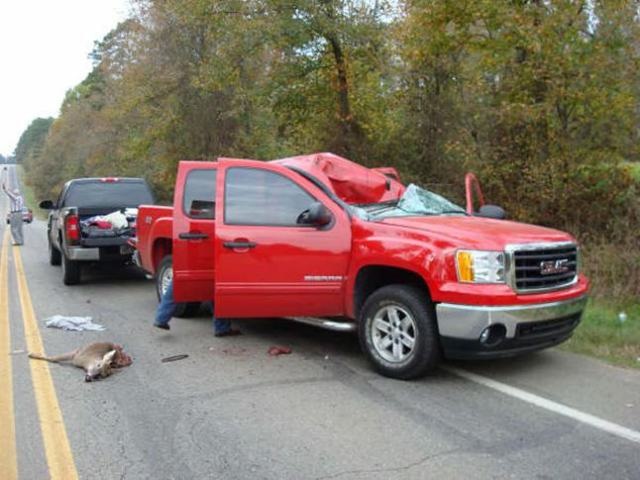
Vehicle/deer crashes can cause more than just damage to the outside of the vehicle. The 61,486 crashes last year resulted in 1,571 injuries and 10 deaths in the state. The MDCC found that In 2009, Kent County once again topped the state’s counties in the number of car-deer crashes with 2,164 crashes. The remaining top nine were Oakland (1,947), Jackson (1,877), Calhoun (1,659), Montcalm (1,641), Lapeer (1,455), Clinton (1,428), Genesee (1,420), Eaton (1,384) and Ottawa (1,300). According to the Insurance Institute for Highway Safety, the average property damage cost of these incidents was $3,103, up 1.7 percent from a year ago.
The state in which deer-vehicle collisions are least likely is still Hawaii (1 in 13,011). The odds of a Hawaiian driver hitting a deer between now and 12 months from now are roughly equivalent to the odds of finding a pearl in an oyster shell.
U.S. map showing likelihood of deer-vehicle collision by state
According to the Insurance Institute for Highway Safety, deer-vehicle collisions in the U.S. cause about 200 fatalities each year.
The average property damage cost of these incidents was $3,103, up 1.7 percent from a year ago.
Avoiding Deer-Vehicle Collisions
These collisions are more frequent during the deer migration and mating season in October, November and December. The combination of growing deer populations and the displacement of deer habitat caused by urban sprawl are producing increasingly hazardous conditions for motorists and deer.
“State Farm has been committed to auto safety for several decades and that’s why we want to call attention to potential hazards like this one,” said Angie Rinock, State Farm Spokesperson in Michigan.
“We hope our updated information will inspire motorists to make safe decisions.”
Here are tips on how to reduce the chances that a deer-vehicle collision involving your vehicle will be part of the story we tell in next year’s version of this news release:
- Be aware of posted deer crossing signs. These are placed in active deer crossing areas.
- Remember that deer are most active between 6 and 9 p.m.
- Use high beam headlamps as much as possible at night to illuminate the areas from which deer will enter roadways.
- Keep in mind that deer generally travel in herds – if you see one, there is a strong possibility others are nearby.
- Do not rely on car-mounted deer whistles.
- If a deer collision seems inevitable, attempting to swerve out of the way could cause you to lose control of your vehicle or place you in the path of an oncoming vehicle.
Click Here to see the State Farm release.